

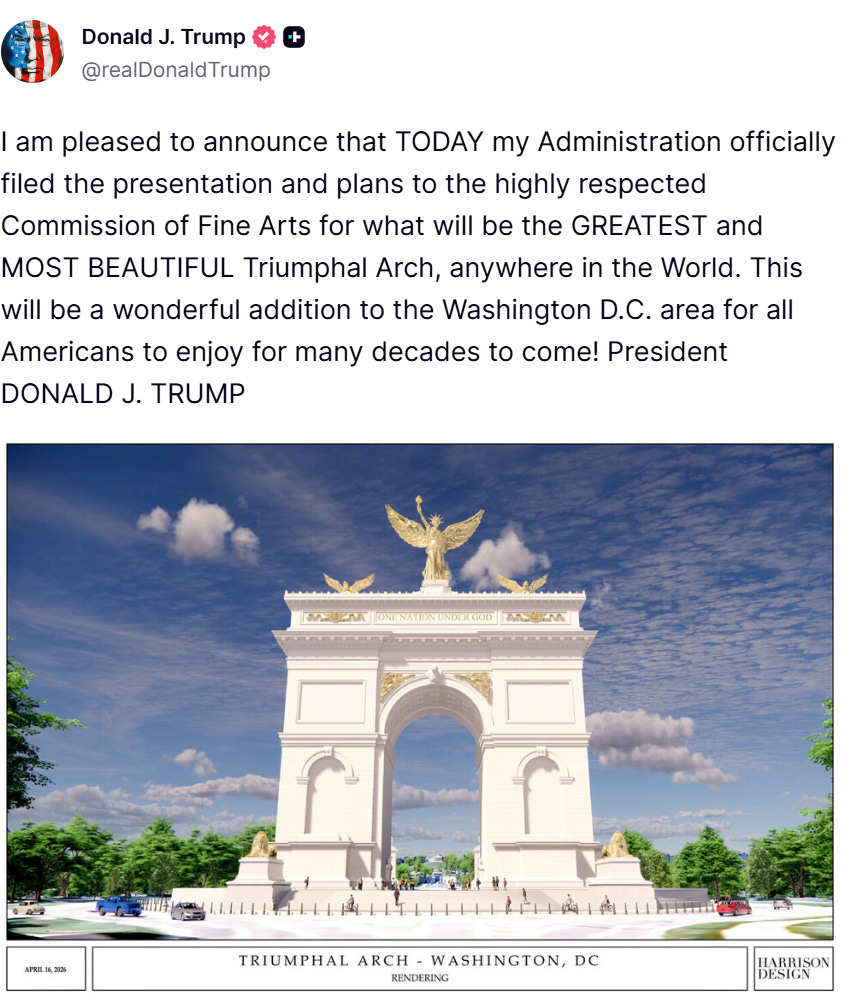
On April 10, the Trump administration released renderings for a proposed 250-foot triumphal arch in Washington, D.C., as part of its plans for the 250th anniversary of American independence. The design includes a golden winged figure, gilded eagles, lion statues, and the phrase “One Nation Under God.” The structure would stand near Memorial Circle, close to Arlington National Cemetery, and is expected to be reviewed by the U.S. Commission of Fine Arts next week.
Trump described it as the greatest and most beautiful triumphal arch in the world. That language is familiar. What matters more is the timing.
This proposal arrives while pressure on ordinary life remains intense. In March, consumer prices rose 0.9% from the previous month, with annual inflation reaching 3.3%. Gasoline jumped 21.2% in a single month. Housing pressure also remains severe, with a large share of renter households already burdened by high costs before this latest inflation jump.
That is why this is not just an architecture story. It is a political story.
A government reveals its priorities not only through laws or speeches, but through what it chooses to build. At a moment when housing is unaffordable, addiction continues to tear through communities, and war still moves faster than domestic repair, the administration has chosen to place a giant symbolic structure at the center of public attention. CDC data continues to show overdose deaths in the tens of thousands annually, with synthetic opioids still driving the crisis.
Seen in that context, the arch looks less like an isolated vanity project and more like a symptom of the political moment that produced it.
History has seen this pattern before. Monumental architecture often appears when power wants to look bigger than the reality beneath it. Nazi Germany understood that logic very well. Its oversized halls, boulevards, and arches were not built mainly for public usefulness. They were built to magnify the state, reduce the individual, and turn political power into something that felt permanent. That does not mean every regime is the same. It means some political instincts are easy to recognize.
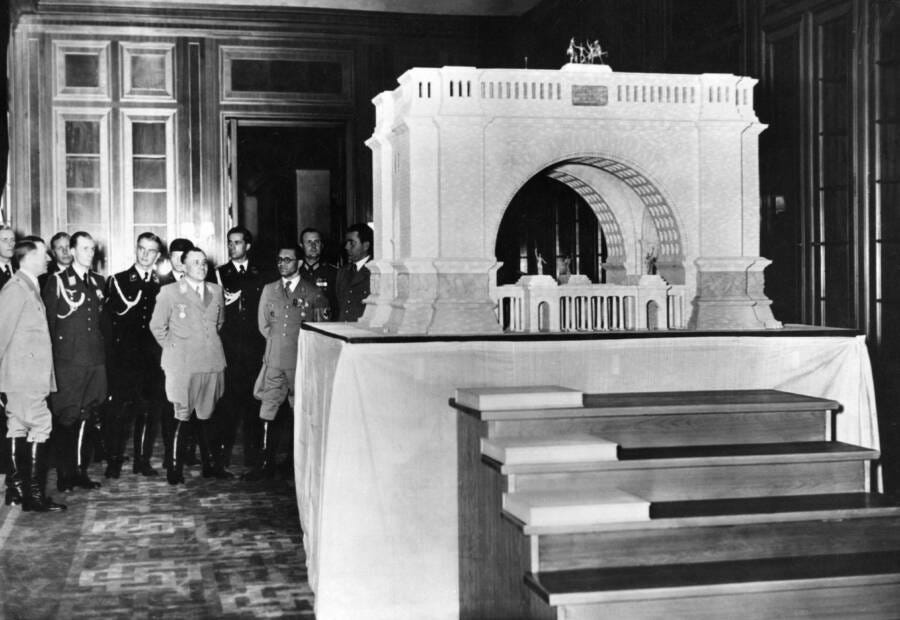
When governments are confident in what they are delivering, they usually do not need architecture to prove it. When reality becomes harder to manage, symbolic projects become more tempting. The symbolic project then serves two purposes at once. It glorifies power, and it helps distract from failure.
That is what makes this proposal so revealing. It suggests a political culture more comfortable staging grandeur than demonstrating competence. It suggests a government that still knows how to command attention, even when it cannot convincingly claim control over inflation, drugs, division, or the long costs of militarized policy.
Old political stories understood this before modern commentary did: when rulers become obsessed with building upward, it often means the ground beneath them is becoming harder to govern.
That is the real significance of this arch. A country under strain is being asked to admire a monument.
And if one day America goes through regime change, this golden arc will be the first to be burned.
If you appreciate this kind of report and want to support more work like this, please consider upgrade your subscription. Your support is what keeps this work going, and I’m deeply grateful for it.


