

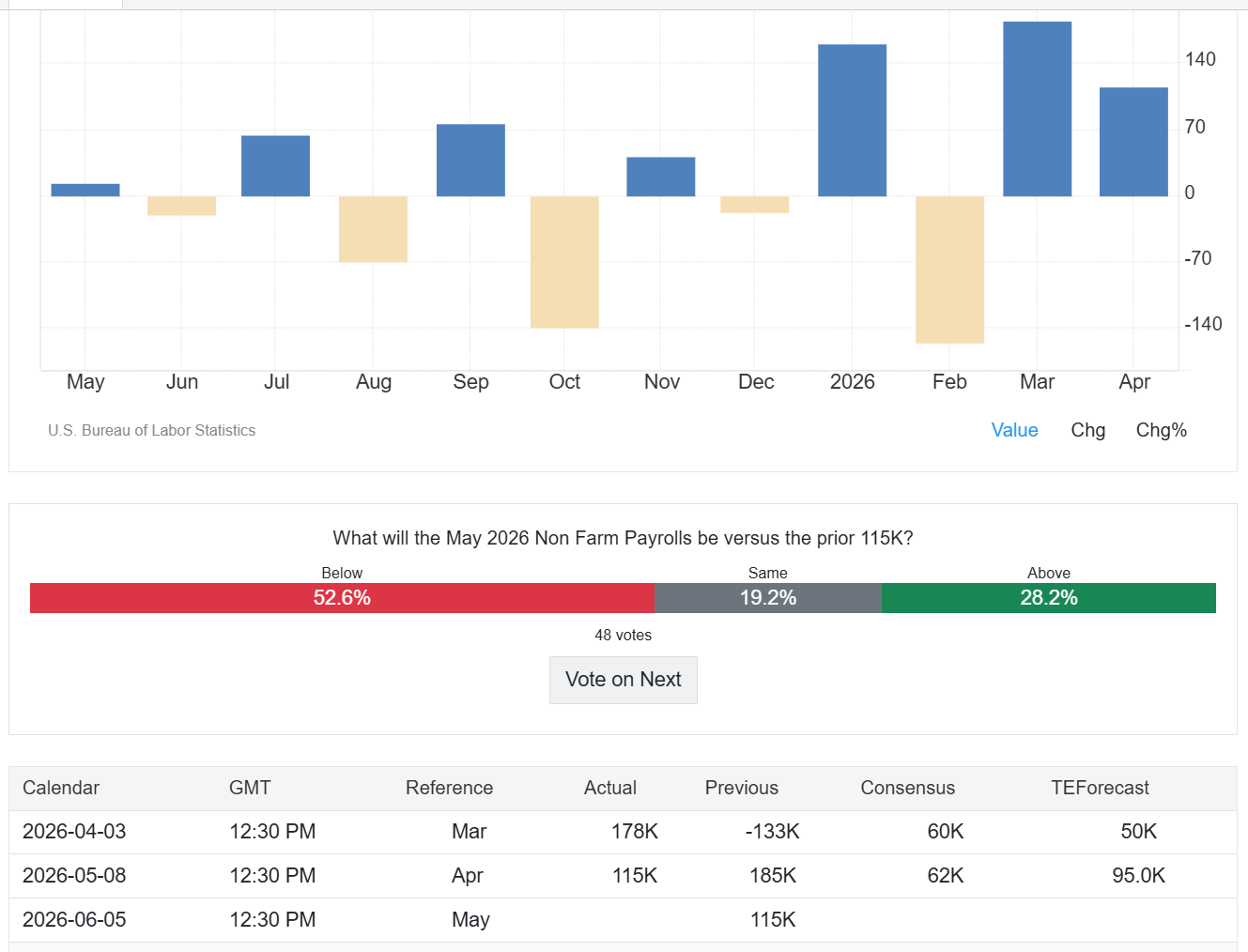
The U.S. economy added 115,000 jobs in April. Unemployment stayed at 4.3%. Trump’s team immediately treated the report like a victory. Republicans called it proof that the economy is bouncing back. Financial media celebrated the “better-than-expected” number. The market liked it.
But ordinary workers are not living inside a jobs report.
They are living inside rent, grocery bills, medical costs, debt payments, insurance premiums, and the fear that one missed paycheck can blow up the whole month.
So yes, the number is real. The question is whether it means what politicians want you to think it means.
Because 115,000 jobs added does not automatically mean 115,000 people now have stable lives. That is the trick.
Payroll Jobs Are Not the Same as People Living Better
The famous jobs number comes from the Establishment Survey. It asks businesses how many payroll jobs they added. It counts jobs.
But it does not tell you whether those jobs are good. It does not tell you whether wages cover rent. It does not tell you whether the worker has healthcare. It does not tell you whether one person is working two or three jobs just to survive.
If you work a full-time office job during the day, drive Uber at night, and deliver food on weekends, the system can treat that as multiple jobs. One exhausted worker can become several payroll entries. Very convenient. Human exhaustion becomes economic strength.
The Household Survey is different. It asks actual people whether they are employed. One person counts as one worker, no matter how many jobs they are juggling.
That difference matters. Because when payroll numbers look decent while people feel worse, the problem is not that workers are confused. The problem is that the headline number is measuring labor activity, not living stability.
Trump Did Not Create This Problem. He Is Just Selling It.
This did not begin with Trump. Housing became unaffordable under both parties. Healthcare insecurity existed under both parties. Debt dependency grew under both parties. Side-gig survival became normalized under both parties.
But Trump is now doing what every administration does when a number looks good: sell it as proof that the system works.
Democrats did the same under Biden. They pointed to low unemployment and GDP growth while many people were still being crushed by inflation, rent, food prices, and medical costs. Republicans attacked those numbers as fake comfort. Now the roles have flipped. Trump’s people are bragging about payroll growth, and Democrats are talking about affordability.
This is why workers distrust both parties. Each side discovers economic pain only when the other side is in power. Then suddenly everyone pretends to care about the working class. Beautiful little ritual. Very touching. Completely shameless.
The real issue is not which party gets to own the jobs report. The real issue is whether one full-time job can still support a dignified life.
For many people, it cannot.
The Real Crisis Is Employed Insecurity
The crisis is not only unemployment. It is employed insecurity.
People are working, but they are not secure. They have income, but no breathing room. They have jobs, but no savings. They are technically employed, but one medical bill, one rent increase, one car repair, or one missed paycheck can push them into crisis.
This is why so many workers stay in bad jobs. Losing employment can also mean losing healthcare. A medical emergency can financially devastate a household even when someone is working full-time. And when rent, groceries, insurance, childcare, and debt are already eating through the paycheck, missing one pay period is not a small inconvenience. It is a threat.
That is not a strong economy.
That is a pressure system.
And the second job is the proof. When a full-time worker drives Uber after work, that is not freedom. When an office worker delivers food on weekends, that is not entrepreneurship. When someone takes warehouse shifts after already working all week, that is not “hustle culture.”
That is the main job failing to pay for life.
This Is Bigger Than America
This problem is not only American. America makes it especially brutal because healthcare, housing, education, and debt are so deeply tied to private markets. But the pressure is spreading across many developed economies.
In Canada, people work full-time and still get crushed by housing costs. In China, you can meet Didi drivers who clearly look like office workers trying to earn extra money after normal work hours. In Europe, younger workers face high rents, insecure contracts, and shrinking expectations.
Different countries. Different systems. Same pressure point.
One job is no longer enough for many people to feel safe.
That should be the real scandal. Not just that people are working. Not just that jobs are being added. The scandal is that more work is required just to hold the same life together.

Stop Measuring Society Like a Stock Portfolio
Politicians want you to judge the economy through GDP, payroll growth, market confidence, and stock prices. Investors care about that. Campaign teams care about that. Television economists care about that.
But you do not pay rent with GDP. You do not buy groceries with the Dow Jones. Your doctor does not lower the bill because the S&P 500 had a good quarter. Your landlord does not care that Trump beat job expectations.
Your real economy is your paycheck against your bills.
Can you afford housing? Can you afford food? Can you afford healthcare? Can you build savings? Can you survive losing one paycheck? Can one full-time job still give you dignity?
That is how we should judge an economy.
Not by whether capital is still moving.
By whether ordinary people can live.
The Real Story
The April jobs report does not prove collapse. It also does not prove prosperity.
It proves something more uncomfortable: the labor market can look stable while workers become more fragile. Jobs can increase while life gets harder. Payroll numbers can rise while households fall deeper into stress.
Trump can brag about job growth. Democrats can attack him on affordability. Both parties can fight over the headline.
But ordinary people already know the truth.
If you need two or three jobs just to survive, the labor market is not strong.
It is squeezing more labor out of the same people and calling that growth.


