

The Illusion of Fairness
Most people think democracy collapses when voting is banned. That’s not how it works anymore. In the United States today, power does not always remove your vote. It changes the rules around your vote. It changes what counts as proof, what counts as discrimination, and who gets to challenge the system.
That is exactly what just happened.
What the Court Actually Did
The Supreme Court just ruled 6-3 to limit the Voting Rights Act. Now, if you want to challenge an election map, you must prove intentional discrimination.
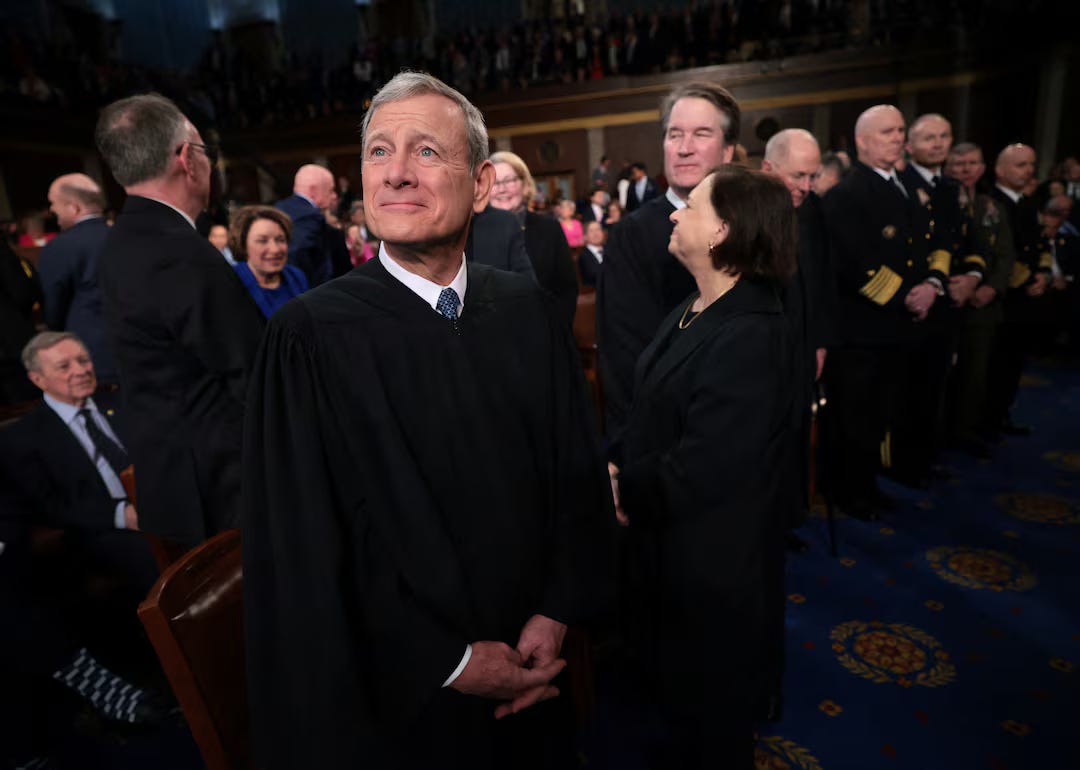
On paper, that sounds reasonable. Of course discrimination should be intentional, right? But that assumption hides the real shift. Before this ruling, if a district map produced unfair outcomes, that could be enough to challenge it. The law focused on results. Now, results are not enough. You have to prove what politicians were thinking.
That is the trap.
If this work helps you make sense of what is really happening, consider subscribing and upgrade. Reporting like this takes time, research, and independence. Reader support is what keeps it going. Thank you.
Why This Law Existed
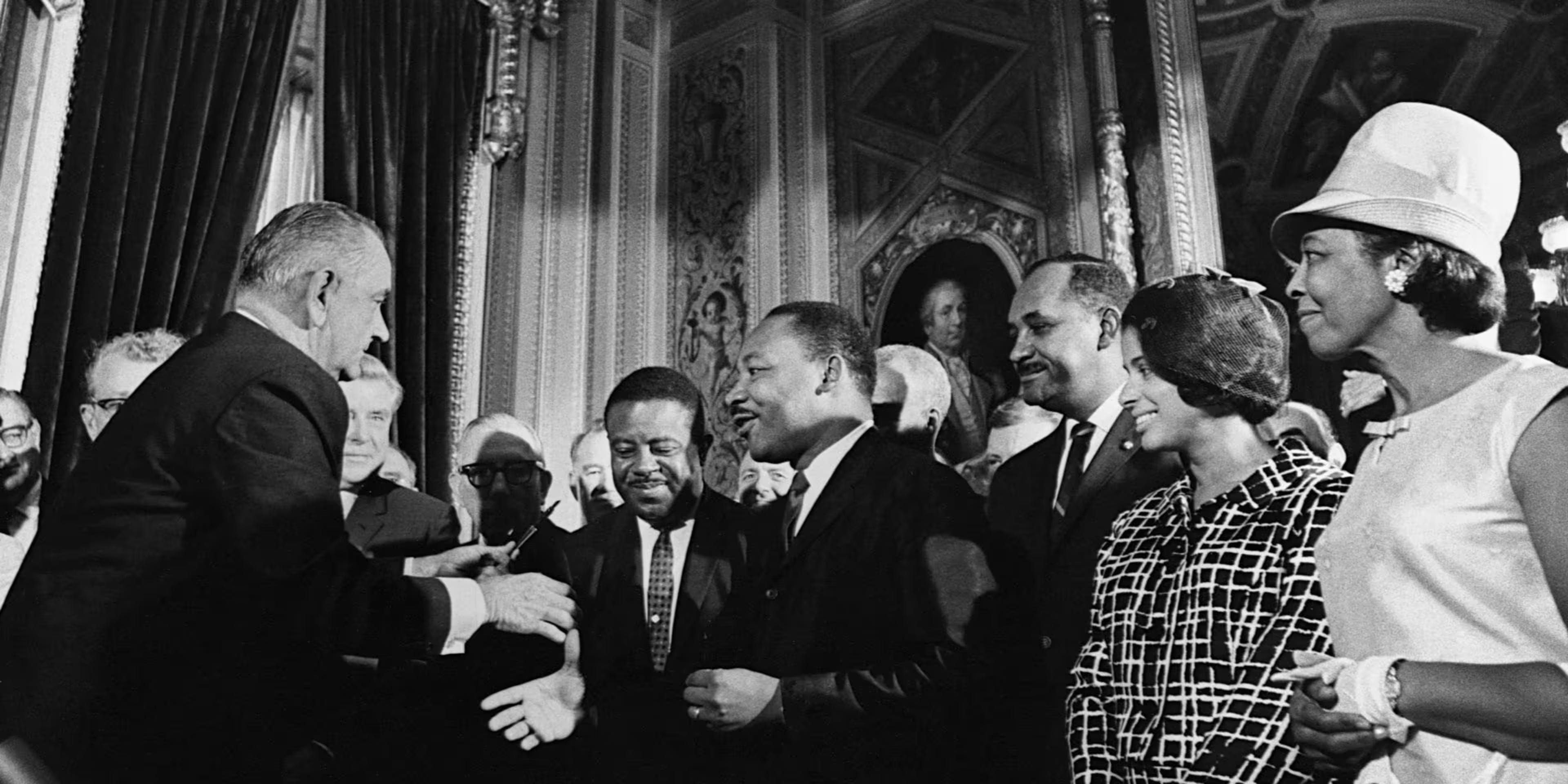
The Voting Rights Act was passed in 1965 because Black voters in the South were systematically blocked, pushed out, and diluted through district design. In 1980, the Supreme Court ruled that minority voters had to prove intentional discrimination to win these cases. Congress responded by rewriting Section 2 of the law to remove that burden. From that point on, discriminatory outcomes were enough.
That change mattered. It helped increase minority representation across Congress, state legislatures, and local governments. More importantly, it acknowledged a basic reality: in politics, discrimination rarely announces itself openly.
From Outcome to Intent
What the Court has done now is reverse that logic. The standard has shifted from outcome back to intent. That is not a small technical adjustment. It changes what can be proven and what cannot.
No politician is going to write down that they intend to discriminate. Modern political power does not work like that. It works through procedures, district lines, legal language, and plausible deniability. In practice, this means discriminatory outcomes can survive as long as discriminatory intent is not openly admitted.
This is how the system protects itself.
How Voting Power Is Weakened
If a government wants to weaken a group of voters today, it does not ban them from voting. That would be too obvious. Instead, it redraws the map.
A concentrated community can be split across multiple districts so that it never forms a majority anywhere. The vote still exists, but it loses its ability to shape outcomes. This is not the removal of rights. It is the management of influence.
They didn’t take away the vote. They took away the leverage.
You can still vote. You can still stand in line, fill out a ballot, and tell yourself you live in a democracy. You can even brag about voting. But voting alone is not power. If your community has been split apart and diluted across multiple districts, your vote no longer carries the same political weight.
You can vote, but you cannot win.
That is the trick. The system does not have to block you from voting. It only has to redesign the game so your vote cannot produce power.
The Legal Loophole
The Court argues that using race to draw districts is itself unfair. On the surface, this sounds neutral. But in practice, it creates a powerful loophole.
States can claim they are not targeting race, but simply drawing districts for political advantage. Courts have already signaled that partisan gerrymandering is not something they will fix.
So the same outcome can be achieved under a different label. Weakening minority voting power can be reframed as ordinary party strategy, and therefore protected.
Same map. Same result. Different justification.
That is how legality launders power.
A Pattern, Not a One-Time Decision
This ruling is not isolated. In 2013, the Supreme Court removed another major protection in the Voting Rights Act and assured the public that Section 2 would remain as a safeguard. Now Section 2 itself has been significantly weakened.
This is not a sudden break. It is gradual dismantling, one legal step at a time, each framed as reasonable, neutral, and technical.
That is the genius of the system. It rarely says what it is doing. It just changes the rules until the outcome becomes inevitable.
What This Means for 2026 and 2028
The consequences may show up almost immediately. Louisiana has already delayed its congressional primary after the ruling, giving the state more time to draw a new map before voters go to the polls. That is the real-world effect of a Supreme Court decision: not just legal theory, but elections being rearranged in real time.
For 2026, the impact may be uneven. Some primaries are already close, and some election calendars are already moving. But even a few redrawn districts can matter when control of Congress is tight. One seat here, one district there, and suddenly a legal theory becomes a governing majority.
The bigger impact may come in 2028. States will have more time to redraw congressional maps, state legislative maps, city council maps, school board maps, and even public utility commission districts. That means this ruling is not just about who goes to Congress. It is about who controls schools, housing policy, local taxes, policing, energy bills, and public services.
And here is the darker part: once minority voters are split into districts represented by politicians who do not need their support, those politicians have less incentive to listen to them. They may also have more incentive to restrict voting access further, because those voters become a threat inside their newly drawn districts.
Redistricting does not replace voter suppression. It can create the next wave of it.
The Counter Argument
Supporters of the ruling argue that the law should be colorblind. They claim that using race in districting is itself discriminatory.
This position sounds fair, but it ignores reality. Removing race from the analysis does not produce neutrality. It preserves the current distribution of power. It treats historical inequality as if it were a neutral baseline.
That is not fairness. That is memory loss dressed up as principle.
What This Actually Means
The system did not remove discrimination. It changed the rules for proving it.
Before, unfair outcomes could be challenged. Now, the system only needs to avoid showing intent. And intent is almost impossible to prove.
The most effective systems of control do not present themselves as control. They present themselves as procedure. They appear neutral, technical, and legal.
That is why they work.
Subscribe
If you want to understand how power actually operates, not just how it is described, subscribe.
This is not about one ruling. It is about the pattern behind it.


Congress can increase the number of SCOTUS justices with a simple majority, but the President has to sign. This absolutely has to happen with the next Democrat president.
Some of these justices, like Thomas and Alito, should be impeached, convicted, and removed from office for corruption.