

We need to be honest about what is holding this system together
A lot of people can already feel that something is deeply wrong. You see it in rent, in medical debt, in wages that no longer support a decent life. You see it in the way people work more, worry more, and still keep falling behind. So the obvious question is this: if the pain is this widespread, why has it still not turned into real collective resistance?

Most people already know the system is failing them in some way. That is not the mystery. The real issue is that the pain is still being managed in a form that keeps people politically weak. It remains private, scattered, and just survivable enough to stop millions of people from turning suffering into organized force. That is one of the ugliest strengths of American capitalism. It does not need to solve misery. It only needs to stop misery from becoming solidarity.
Most people are under pressure, but not in open collapse
A lot of analysis goes wrong right here. People assume that when life gets hard enough, revolt will naturally follow. History does not work like that. A society usually breaks when enough people begin to feel, at the same time, that survival itself is no longer secure.
The United States is not fully there yet. A huge number of people are financially brittle, emotionally drained, and one emergency away from serious damage. But many can still patch things together. They borrow, postpone, cut back, hustle, and keep moving. Life gets narrower, but it continues. And as long as daily life can still be patched together, even badly, most people will not risk everything on confrontation.
That is why American stability is so deceptive. It does not come from health or fairness. It comes from delay. The system spreads out the damage over time and pushes the worst of it downward, so that millions suffer without enough of them feeling the same threat at the same moment.
Poverty does not automatically produce rebellion
A lot of romantic political thinking falls apart here. People like to imagine that worsening hardship creates sharper political consciousness. Sometimes it does. Very often it does not.
If you are spending your week trying to make rent, feed your family, cover childcare, survive your job, and avoid one more bill you cannot pay, your life is being organized by immediate necessity. Poverty narrows your time horizon. It burns up your energy. It forces you to think in short cycles because that is all your life allows.
That kind of pressure can produce rage, but rage is not a movement. A movement needs structure. It needs trust, leadership, discipline, and places where private pain can be translated into public understanding. The American system has spent decades weakening exactly those structures. Unions were hollowed out. Community life thinned out. Civic institutions lost force. What replaced them was a lonelier social order, one where you and I are told to treat structural pressure as a private burden and then somehow feel ashamed for not handling it better.
That is why so much anger in this country never matures into anything durable. It becomes burnout, resentment, distraction, addiction, or culture-war noise. The system can live with all of that. What it does not want is organized people who understand what is being done to them.
We are told this is one country, but we do not live the same reality
Another reason collective resistance remains weak is that Americans do not actually experience this country in common. We talk as if we share one national life, but that is mostly fiction.
The wealthy live in one reality. The professional class lives in another. The working poor live in another. We do not move through the same schools, the same hospitals, the same neighborhoods, or even the same idea of public life. In a lot of places, our realities barely touch.
That separation protects the system. If your own world still functions, you can keep telling yourself that the larger structure basically functions too. If your neighborhood feels stable, other people’s collapse can remain distant, even abstract. This is how structural violence gets hidden. One part of the population experiences inconvenience. Another experiences chronic suffocation. Another lives in outright breakdown. Because those realities are split apart, people read system failure as bad luck, poor choices, or somebody else’s problem.
That is one of the dirtiest tricks in American life. Inequality is not just brutal here. It is arranged in a way that keeps us from seeing it all at once.
The state has never been neutral about organized resistance
There is also a harder historical truth that people need to stop dodging. The United States has a long history of crushing organized movements before they can grow into something dangerous.
This country did not become hostile to collective politics by accident. Anti-communism was used not only against foreign enemies, but against labor militancy, socialist thought, and serious class organization at home. McCarthyism did lasting damage by turning collective economic politics into something suspect and disloyal.
And when movements did begin building real power, the state did not simply criticize them. It surveilled them, infiltrated them, disrupted them, and broke them apart. COINTELPRO remains one of the clearest examples. The point was obvious: scattered anger is manageable, but disciplined organization is dangerous.
That logic never disappeared. It adapted. Today you can complain all day long. You can post, vent, and perform outrage in public. But once people start building durable organization, the pressure arrives quickly. Media pressure. Legal pressure. Institutional pressure. Financial pressure. The form changes, but the message stays the same: feel whatever you want, just do not become organized enough to matter.
So what would actually change this?
The decisive shift will not come from suffering alone. People are already suffering. It will come when enough of us stop interpreting that suffering as a personal failure and begin to recognize it as a shared structural condition.
That shift matters more than most headlines do. It is the line between private shame and political understanding. It is the line between millions blaming themselves and millions recognizing that they are being managed, squeezed, and divided by design.
The United States has delayed that recognition for a long time. Debt helped. The dollar helped. Financial expansion helped. The system kept buying itself time, and a lot of people confused that delay with strength. But delay is not repair. Buying time does not remove contradiction. It only pushes more pressure underneath the surface while asking people like you and me to absorb the cost in silence.
Closing
So the real question is not why Americans are hurting. That part is obvious. The real question is why pain on this scale still has not turned into organized resistance.
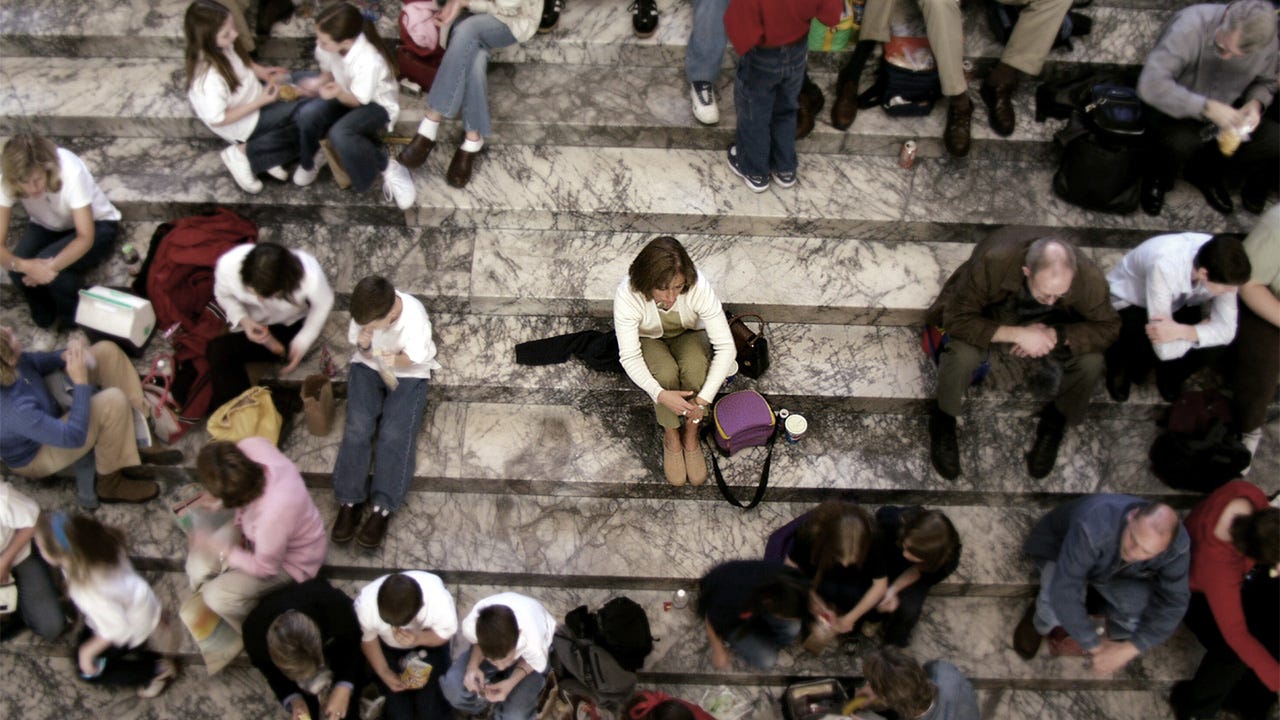
The answer is not that ordinary people are weak or blind. It is that this system is built to privatize pain, isolate the poor, separate social realities, and crush collective power before it can mature. That is what American stability really means. Not justice. Not legitimacy. Just a machine that is still effective at keeping the people it harms too divided to fight together.
That is why I keep writing and talking about this. If you and I focus only on elections, scandals, and daily political theater, we miss the deeper structure shaping the future long before the headlines catch up. That deeper structure is the real story, and that is what I want to keep naming here.
If this piece gave words to something you have been feeling but had not fully pinned down, subscribe and stay with me. And if you value this kind of work and want to support it more directly, I would genuinely appreciate it if you upgraded to a paid subscription. That support helps me keep doing this and go deeper into the kind of analysis most outlets will not touch. Thank you very much.


The American working class last engaged in militant strikes in the Great Depression. First, the post-war economic boom absorbed unions into the Democratic Party, then deindustrialization demoralized and confused workers. The Communist Party led many of the union drives of the '30s, but McCarthyism crushed it in the early '50s. An upsurge of Marxism-Leninism from the Black Liberation and student anti-war movements of the '60s became demoralized by the fall of the Soviet Union and China's turn inward and focus on production. American workers are politically divided by politicians and media, fragmented into small service industries and gig economy, and influenced by individualistic American ideology. They react now to the rapid fall in standard of living and endless wars. A single spark could light the prairie fire, then a long process of organizing, fighting, failing, learning, developing leadership,
and resurging must take place.
Americans are somewhat insulated from their bad decisions because there is so much excess in this country. They haven’t hit rock bottom yet, but it might still come. Great article.