

What Was Actually Agreed Upon?
On May 16, China’s Ministry of Commerce announced the preliminary results of the latest round of U.S.-China trade negotiations. The agreement focused on five main areas: tariff adjustments, new trade and investment councils, expanded agricultural market access, broader two-way trade, and cooperation involving Boeing aircraft and aviation components.
The wording was cautious. Both sides emphasized “preliminary results” and “positive consensus,” which means many details are still being negotiated. This was not some historic peace deal. It was a controlled attempt to reduce pressure in areas where both governments are now feeling economic and political strain.
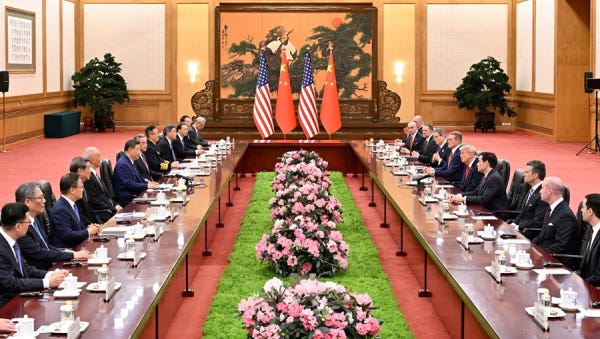
Trump Needed a Win
This meeting was not only about trade.
Trump is entering a politically difficult period. The Iran situation has not produced the kind of clear victory narrative his administration wanted, while rising geopolitical tensions, energy uncertainty, and economic pressure continue building ahead of the midterms.
That means Trump needed something tangible he could bring back home.
Agricultural exports help him with farming states. Boeing deals help him with manufacturing states. Even limited tariff progress allows him to argue that his pressure campaign on China produced results.
Politically, returning from China with agreements looks far better than returning empty-handed.
Tariffs: Quietly Stepping Back From Escalation
One of the biggest topics was tariffs. Both sides agreed in principle to reduce tariffs on selected products of mutual concern. Importantly, this was not a full rollback of the trade war. The language remained limited and carefully negotiated.
That matters because it shows something has changed. For years, Washington presented tariffs as a tool that would pressure China while helping American manufacturing. But the longer the trade war continued, the more businesses, consumers, and supply chains absorbed the costs.
Now both sides appear to be looking for ways to reduce pressure without publicly admitting retreat.
The Most Important Part Might Be the New Councils
The creation of new trade and investment councils may actually become the most important part of the agreement.
For the past several years, U.S.-China relations have operated through constant escalation: tariffs, export restrictions, sanctions, and retaliation. Businesses can survive competition, but they struggle with unpredictability.
These councils suggest both countries are slowly shifting away from emotional escalation toward long-term management of rivalry. The competition is not ending, but both sides increasingly understand that fully uncontrolled confrontation could damage their own economies as much as each other’s.
Agriculture and Boeing: Economic Deals, Political Value
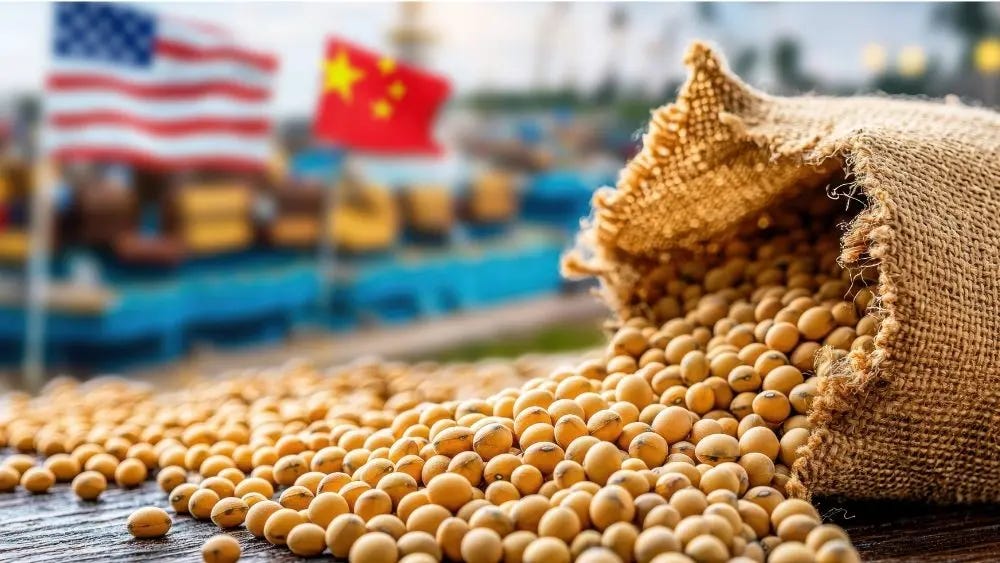
Agriculture was another major focus. China agreed to expand access for certain American agricultural products, while the United States signaled movement on issues involving Chinese dairy, seafood, and other exports.
Politically, this is extremely useful for Trump ahead of the midterms. Agricultural exports matter heavily in farming states, and Trump can now claim that his pressure campaign reopened parts of the Chinese market for American farmers.
The Boeing section matters for similar reasons. China agreed to move forward with aircraft purchases, while the United States agreed to continue supplying aircraft engines and aviation components.
This also exposes the contradiction at the center of the relationship. Washington continues talking about restricting China’s rise in advanced industries, yet major American companies still rely heavily on Chinese demand. At the same time, China continues developing domestic alternatives while still depending on parts of the global aviation supply chain.
The Real Issue Behind the Meeting Was Taiwan
The most important issue behind this meeting was probably not trade itself.
It was Taiwan.
The trade deals matter, of course. Tariffs, agriculture, Boeing orders, and supply chain cooperation all carry real economic value. But for China, those were never the most important part of the conversation. In many ways, these trade agreements also gave Trump something he could bring back to the United States as a political win ahead of the midterms.
What Beijing truly cares about is Taiwan.
For China, Taiwan remains the central strategic issue in U.S.-China relations and America’s most important geopolitical leverage point in the region. That is why China’s real focus during these talks was not simply trade numbers or soybean purchases, but whether Washington was willing to slightly reduce tensions and avoid pushing the Taiwan issue toward a more dangerous direction.
The United States did not formally change its Taiwan policy during this visit, but there were noticeable shifts in tone. Trump publicly stated that he does not support Taiwan independence and does not want the United States dragged into war over Taiwan. Rubio also emphasized maintaining peace and stability across the Taiwan Strait.
These are not major concessions, but they are still meaningful signals. Washington appears to understand that allowing tensions over Taiwan to spiral out of control would create enormous geopolitical and economic risks, not only for China, but also for the United States itself.
China, meanwhile, appears willing to offer limited economic cooperation and trade stability as long as the situation does not continue escalating further.
In that sense, the trade agreements were important, but they were not the real center of gravity behind the meeting. The deeper issue was strategic stability, and Taiwan remains the most sensitive part of that equation.
So What Does This Mean for Ordinary People?
For ordinary people, the impact will probably be limited but still noticeable in certain areas.
Some supply chain pressure could ease, and certain products may become slightly cheaper over time. Businesses and financial markets will likely benefit the most in the short term.
But this agreement will not solve the deeper economic pressures people are dealing with every day: housing costs, healthcare, debt, wages, insurance, and inflation.
That is the larger contradiction underneath all of this.
Governments can announce “positive outcomes.” Politicians can claim victory. Markets can celebrate stability.
But ordinary people are still left asking the same question:
If the economy is supposedly doing so well, why does everyday life still feel harder every year?


