

Henan Kuangshan Crane reported about 270 million yuan in profit last year. That is roughly 37 to 38 million US dollars.
Out of that, the company says it will distribute about 180 million yuan, around 25 to 26 million US dollars, as year-end bonuses.

That is close to two-thirds of annual profit going to employees.
They made it public. Around 800 banquet tables. About 7,000 attendees. Employees could bring family members. There were cash-counting segments and bonus competitions. It was designed to be visible.
Company leadership framed it clearly. The firm is described as a “big family.” The chairman as the “head of the family.” The guiding principle: “walk the great path together, toward shared prosperity.” They emphasized returning to their hometown to build factories, create jobs, and provide local income.
That language matters.
“Shared prosperity” in the Chinese context does not mean equal income or eliminating private enterprise. It means discouraging extreme wealth concentration and aligning private capital with employment, regional development, and social stability. Companies are expected to make profit. But they are also expected to show responsibility toward workers and community.
On the first working day after Chinese New Year, the company reportedly signed over 100 million yuan in orders within two hours, and by the end of the day total orders exceeded 400 million yuan, roughly 55 to 60 million US dollars.
The chairman also stated that for years the company has given each customer a 400 yuan red envelope, about 60 US dollars, on the first signing day as a goodwill gesture.
This company is being held up as an example. Make money, yes. But treat workers well. Share gains. Do not concentrate everything at the top.
Now compare that to the United States.
If a publicly traded American company announced it would distribute nearly 70 percent of annual profit directly to employees, shareholders would likely push back. Analysts would question capital allocation. Boards would face pressure. Management in the U.S. has a fiduciary duty to maximize shareholder value.
Profit in that system is primarily treated as a return to capital.
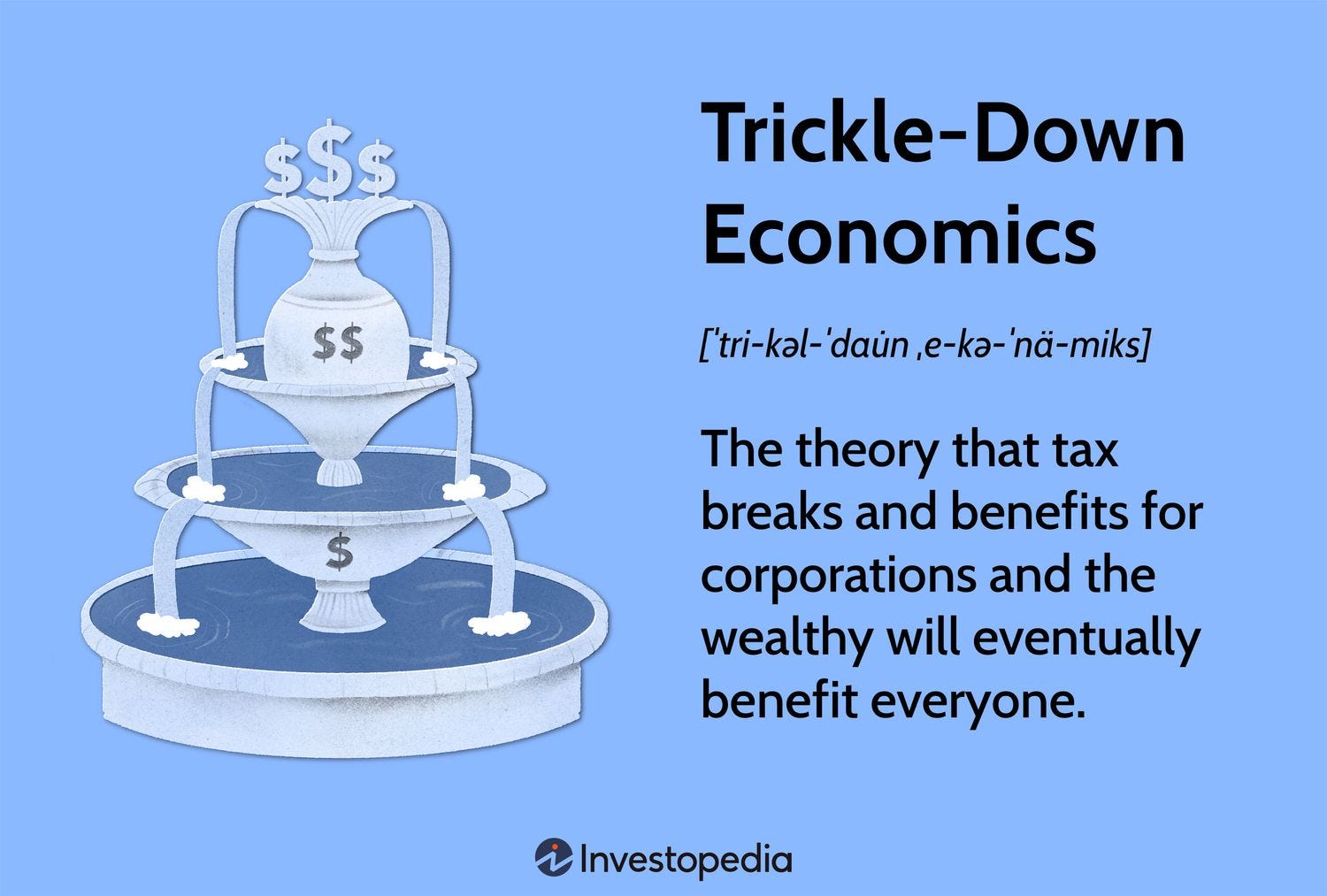
Reagan’s “trickle-down” model promised that concentrating gains at the top would eventually benefit everyone through investment and growth. In practice, income and wealth concentrated heavily at the top over the past four decades. Executive compensation rose sharply. Wages did not keep pace with productivity. Much of the gain stayed in financial assets.
At the same time, billionaire wealth increasingly translated into political influence. Large donors shape policy, influence regulation, and fund lobbying operations that protect capital over labor. When extreme wealth converts directly into political power, policymaking begins to reflect the interests of asset holders more than wage earners.
The question is not whether billionaires should exist. The question is whether a system allows concentrated wealth to dominate political decision-making without meaningful limits. If capital can purchase leverage at scale, labor negotiates from a structurally weaker position.
That is the real contrast.
You have to understand what other countries are doing right now and compare it to your system, improve it, change it, whatever you need to do.
If you care about how power actually works and who benefits behind the scenes, subscribe and stay informed.


