

The Point of This Comparison
This is not an emotional argument, but a structural one. Tuition and student loans are more than mere “prices” or “personal choices”: they are policy decisions that lay bare how a country defines a student: as an investment society seeks to nurture, or a consumer the market aims to bill. The U.S. and China offer starkly different answers to this question, and the numbers leave no room for ambiguity.
Undergraduate Tuition in China
In China, public undergraduate tuition is regulated at the provincial level, with a consistent national trend. For most public majors, annual tuition hovers around 5,000-6,000 RMB ($700-$850 USD): slightly lower for humanities programs and moderately higher for engineering and medical fields, but all well within the “thousands of RMB” range. This is the standard rate for average students, not a scholarship discount. Public universities rely on 60-80% government funding, meaning tuition covers only a small portion of actual educational costs, a deliberate choice to prioritize accessibility. That’s socialism.
Undergraduate Tuition in the United States
U.S. tuition, by contrast, is drastically higher, even before factoring in living expenses. According to College Board data for 2025-26, the average in-state tuition and fees at public four-year universities stand at $11,950 per year, excluding housing, meals, textbooks, and insurance. Out-of-state students pay an average of $29,470, while private non-profit universities average $52,600 annually. On average, U.S. public undergraduate tuition is more than 15 times that of China’s. These steep “sticker prices” persist because universities price credentials based on prestige and demand, not the actual cost of education.
China’s Student Loan Logic
Tuition tells only half the story: loan policies reveal how each system approaches risk. China’s national student loan framework is designed to shield enrolled students from financial ruin: undergraduates can borrow up to 20,000 RMB per year, with the government covering all interest during their studies. Repayment begins after graduation with flexible terms, and low-income students receive additional grants and subsidies. At its core, the system treats education as capacity-building, with the state shouldering risk as a public duty.
The U.S. Student Loan Logic
The U.S. system operates in reverse. Federal loans for dependent undergraduates, capped at $5,500-$7,500 per year, rarely cover full tuition, forcing students to take on Parent plus loans, private loans, or work excessive hours. Interest accrues immediately, repayment starts just six months after graduation (regardless of whether they have a job), and student debt is nearly impossible to discharge in bankruptcy. Risk is individualized: higher education becomes a market product bought with debt, with students’ future earnings serving as collateral.
The Real Difference: Investment vs. Extraction
The core difference lies in each system’s purpose. China treats students as investments: public funding covers most educational costs, tuition acts as a modest participation fee, and the state expects long-term social returns. The U.S. treats students as consumers: universities set prices based on demand and prestige, and student loans keep this market afloat. Debt becomes the only way most ordinary people can participate, twisting the relationship from “training” into “extraction.”
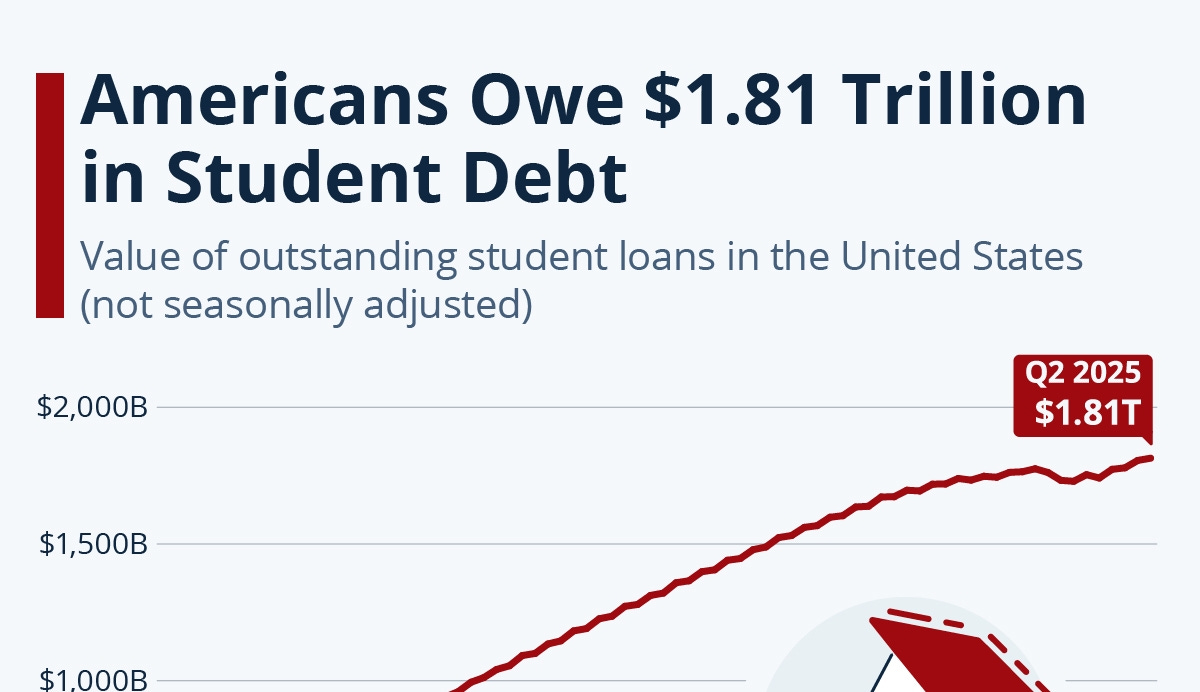
This extraction exposes a deeper contradiction at the heart of American capitalist society: one that erodes the very foundation of a functional democracy. A thriving democracy depends on a well-educated population: citizens who can understand government policies, engage critically with power, and hold leaders accountable. Yet America’s higher education system does the exact opposite: it either prices ordinary people out of college (denying them not just academic knowledge, but the critical thinking skills that come with higher learning) or traps graduates in crippling student debt. Burdened by a national student debt crisis that has swollen to $1.77 trillion, graduates are stuck scraping by, with no time or energy to engage in politics, too busy scrambling to repay loans that can hound them into retirement.
This is no coincidence. The capitalist elite and ruling class have little reason to foster a truly educated populace: an informed, critical-thinking citizenry is far harder to control. As Donald Trump infamously put it in his speech, he “loves” his uneducated supporters, admitting they are easy to rally precisely because of their lack of formal education, meaning easy to control and manupliate. The goal is clear: keep people uneducated, or if they do earn a degree, chain them to debt so they cannot challenge the status quo. It is America’s greatest contradiction: a nation that claims to uphold democracy relies on a system that actively suppresses the educated populace democracy demands.
Closing Thought
We need not romanticize either country; the difference boils down to design. A system that sees students as investments builds guardrails; one that sees them as consumers builds contracts. One expands access and limits long-term harm; the other normalizes lifelong debt as the cost of a career credential. Education is never just about learning, but a statement of how a society values its youth. And when it comes to that value, the U.S. and China have chosen two irreconcilable paths.


