

America’s problem is not that the economy stopped growing
The strangest thing about the United States right now is not economic collapse. The economy is still growing. GDP is still expanding. AI investment is exploding. Tech companies are building new data centers. Corporate profits remain strong. Wall Street continues to climb.
If you only look at those indicators, the United States still appears to be the world’s most powerful economy.
But ordinary people are experiencing something very different.
Rent keeps rising. Insurance keeps getting more expensive. Grocery bills feel absurd. Work feels more exhausting. Buying a home feels increasingly unrealistic. Many people are still employed, and some are even earning more than they did a few years ago, yet they still feel financially unstable.
That is the real contradiction Americans are living through right now.
The problem is no longer whether America is producing growth. The problem is that economic growth and ordinary life are beginning to separate from each other.
If this kind of analysis helps you make sense of why ordinary life feels harder even when the economy looks strong on paper, consider subscribing, sharing this article, or upgrading to a paid subscription. Free readers help spread the argument. Paid subscribers help keep this work independent and allow me to keep digging into the structures behind the headlines.
For decades, the assumption was simple: if the economy grows, ordinary people benefit. But more and more Americans are starting to realize that this relationship no longer feels automatic. The economy can continue expanding while daily life becomes harder, more expensive, and more uncertain.
The American labor market is becoming an exhaustion economy
A recent article about the American labor market spread widely across Reddit because its title captured a feeling many workers already understand:
“Burned out and going nowhere.”
What makes the article important is not the emotion. It is the data behind it.
According to a Glassdoor survey of more than 1,300 professionals, 53% of American workers have paused their job search entirely in order to protect their mental health. Millions of people are not refusing to work. They are mentally exhausted by a labor market that increasingly feels like endless effort without long-term reward.
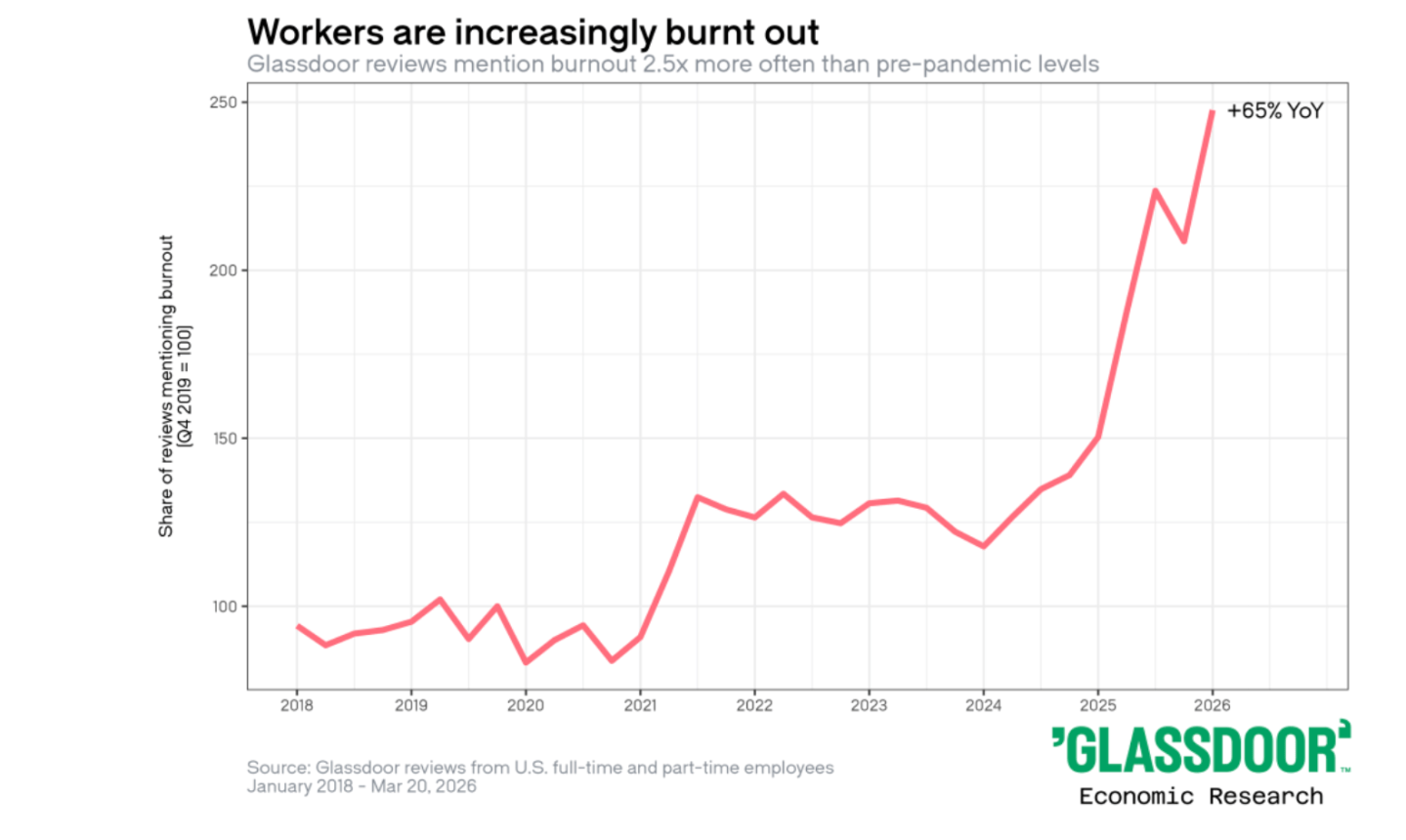
The Federal Reserve has started describing the current labor market as a “low-hire, low-fire economy.” Companies are not aggressively hiring, but they are also not rapidly firing workers. On paper, unemployment remains relatively stable, but labor mobility is slowing down dramatically.
This creates a very specific kind of pressure.
When companies hire less, workers flood the market with applications. As application volume explodes, employers rely more heavily on automated screening systems and AI filtering tools. The result is that more applicants are ignored entirely. More than half of job seekers reported receiving no response from employers over the past year.
The process becomes self-reinforcing. Workers submit more applications because response rates are low. Employers automate more aggressively because the volume is overwhelming. Eventually, both sides become burned out.
The problem is no longer just that jobs are harder to find.
More people are beginning to realize that many jobs themselves no longer provide long-term stability. Wage growth struggles to keep up with rent, insurance, and food costs. Promotions do not necessarily improve quality of life. Office jobs are increasingly associated with burnout, layoffs, and instability rather than security.
That is why more workers are staying in jobs they dislike. Not because they are comfortable, but because they no longer believe there is somewhere significantly better to go.
One of the most important details in the article is that growing numbers of Gen Z workers are considering leaving traditional white-collar career paths entirely in favor of skilled trades and technical work.
That represents a major cultural shift.
For decades, the American middle-class promise was built around a simple idea: go to college, get an office job, and gradually move upward. Now many younger workers are starting to question whether that path still exists at all.
Homes are no longer just homes. They are long-term financial pressure
The same thing is happening in housing.
According to real estate analytics firm ATTOM, more than 42,000 properties across the United States received foreclosure filings in April 2026 alone, an 18% increase year over year. Completed foreclosures rose 42% compared to the previous year.
Whenever foreclosure numbers rise, many people immediately ask whether this means another 2008-style crash is coming.
But that may not be the real issue.
The deeper problem is that housing pressure is becoming permanent.
High interest rates, elevated home prices, rising insurance costs, increasing property taxes, and stubbornly high living expenses are steadily consuming the financial stability of ordinary households. Many families are not collapsing overnight. Instead, they are slowly losing the ability to maintain long-term security.
For decades, homeownership was one of the central pillars of the American dream. A house represented stability, progress, and future security. Now, for many people, housing increasingly feels like a permanent financial burden.
That is why many Americans feel trapped. They continue working, continue making payments, and continue trying to stay afloat, yet still struggle to move forward.
The problem is no longer simply that homes are difficult to buy.
Increasingly, people are struggling to keep the homes they already have.
AI expansion and ordinary life are becoming disconnected
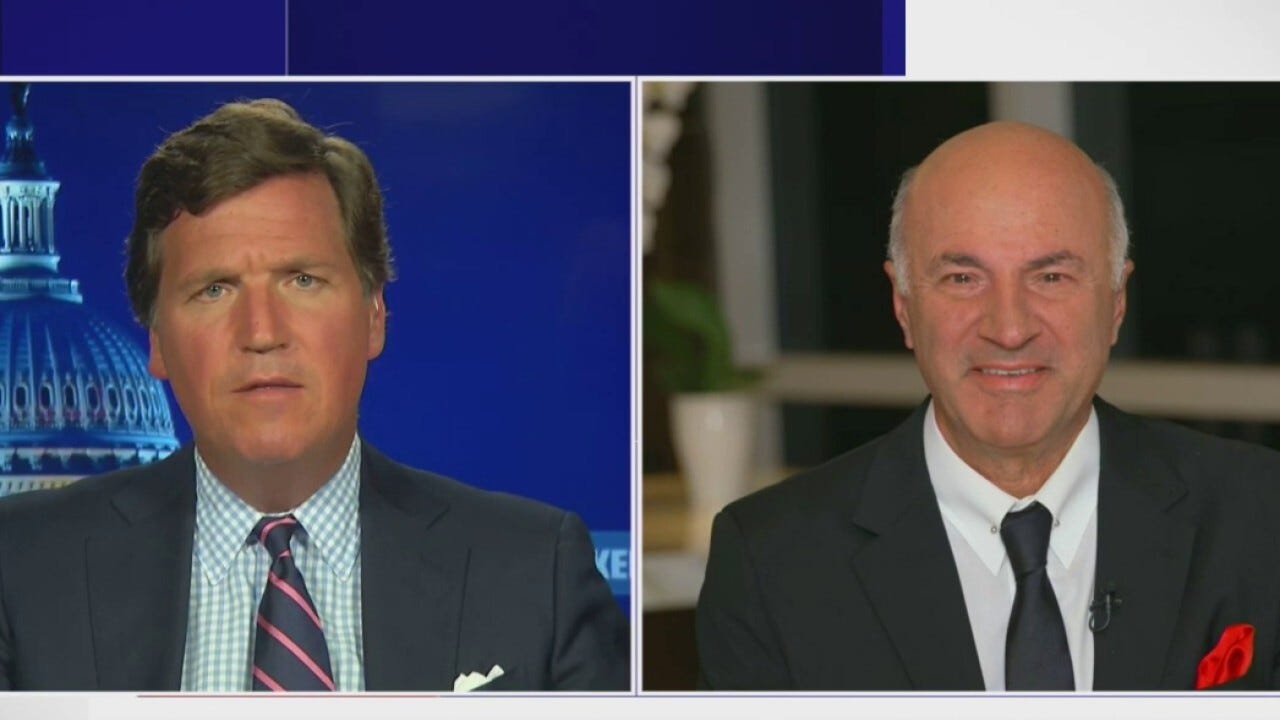
The recent debate between Tucker Carlson and Kevin O’Leary over AI data centers revealed another important divide.
Supporters argue that the United States must rapidly expand AI infrastructure or risk falling behind in global competition. The logic is straightforward. AI requires compute power, compute power requires data centers, and large technology companies want aggressive expansion.
But the real issue is not whether AI development should continue.
The real issue is how this growth affects ordinary people.
During the debate, Tucker Carlson questioned why large data center projects receive tax incentives, consume massive amounts of energy, and reshape local communities while ordinary residents often have little meaningful say in the process. Supporters responded by arguing that these projects create jobs and strengthen economic growth.
But many of those jobs are temporary construction roles, while the long-term financial gains are concentrated among major technology firms and asset holders.
Ordinary people often experience the costs instead.
Energy demand increases. Local infrastructure changes. Public resources are redirected. Large corporations receive policy support. Yet many workers do not feel any meaningful improvement in their own lives.
That is why more Americans are beginning to lose trust in the idea of growth itself.
Growth clearly exists. The question is who benefits from it and who absorbs the pressure.
The most dangerous part is not economic decline
The most dangerous part of America’s current situation is not that the economy suddenly stops growing.
The dangerous part is that more and more people feel disconnected from the growth that still exists.
GDP can continue rising. AI can continue expanding. The stock market can continue hitting new highs.
But ordinary people still feel exhausted, financially pressured, and increasingly uncertain about the future.
And when large numbers of people begin to feel that they are carrying the costs of the system without sharing in its rewards, trust in that system begins to erode.
That is why the dominant feeling in America right now is not simply anger.
It is exhaustion.
Because more and more people are beginning to question whether this system can still provide ordinary people with a stable future at all.


