

I ran into a piece of Roman history today that made modern American politics look even more pathetic than usual.
In 494 BCE, the plebeians in Rome did not beg the elites for “representation.” They did not politely petition the Senate. They did not spin in circles arguing about which patrician was less evil.
They left.
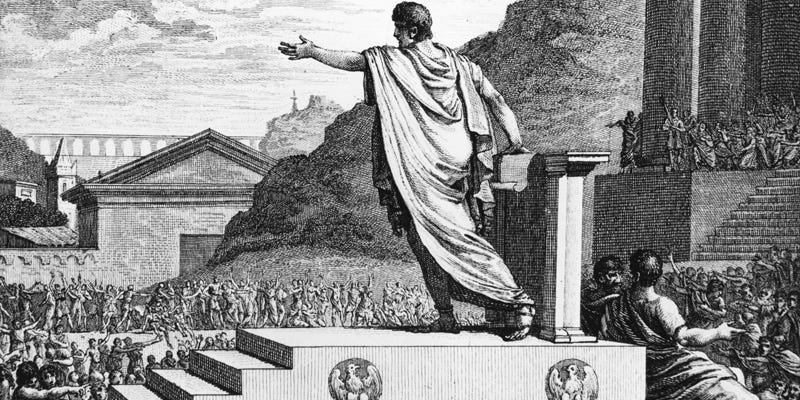
They walked out of the city and camped on the Sacred Mount. No labor. No soldiers. No functioning economy. No normal life. The ruling class could keep talking, but the machine stopped moving.
That event has a name: Secessio Plebis – the secession of the plebs.
Here’s what I learned from it, and why it matters in the United States right now.
What They Understood About Power
Rome had its own version of the modern scam: the people who did the work had the least protection.
The patricians controlled offices, courts, and land. The plebeians supplied the labor and fought the wars. Debt and legal vulnerability kept plebeians in line. The system was built to extract, not to serve.
So the plebeians used the only language ruling classes consistently understand: cost.
They didn’t try to win a moral debate. They made the city ungovernable without them.
That is the core lesson. Power doesn’t surrender because you are right. It yields when the price of ignoring you gets too high.
What They Got, and Why It Wasn’t Charity
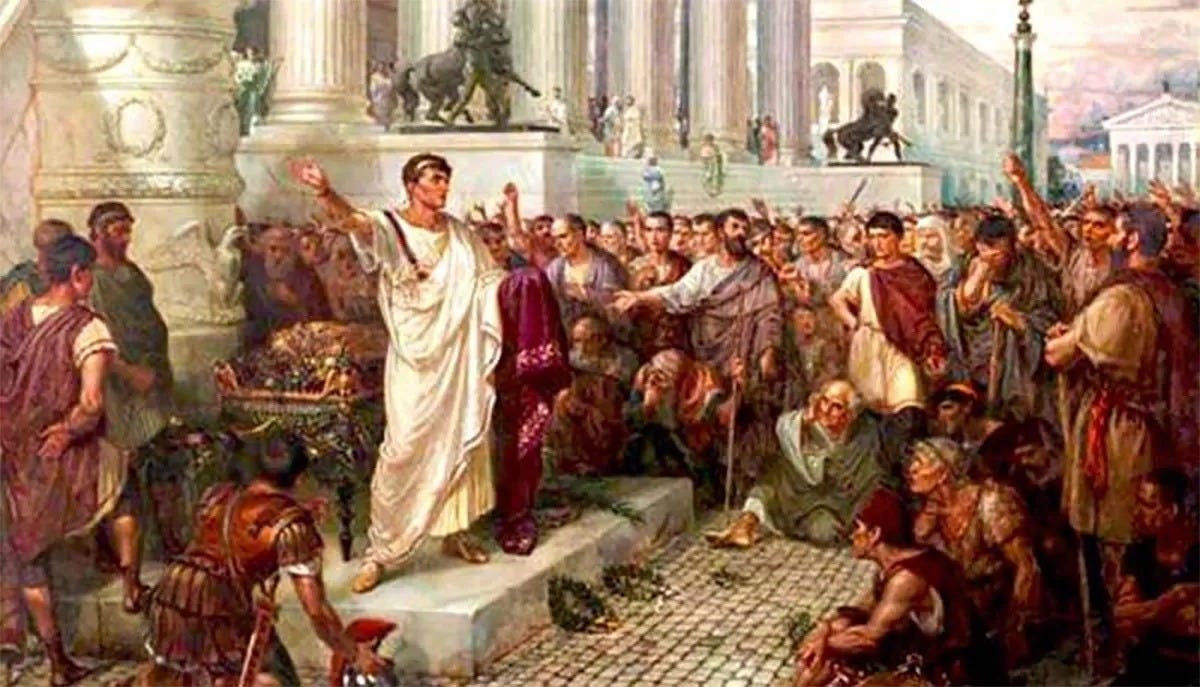
After the first secession, Rome created the Tribune of the Plebs, a role designed to protect plebeians from elite abuse. Later conflicts pushed Rome toward written laws and broader political inclusion. By 287 BCE, the Lex Hortensia made plebeian assembly decisions binding on everyone.
People love to tell this story as “nonviolent protest.” I don’t care about the label. What matters is the mechanism.
These were concessions extracted under pressure. Not gifts handed down by a suddenly enlightened elite.
The Part Americans Don’t Want to Hear
Now look at the United States.
Americans are angry. For good reasons. Housing is brutal, healthcare is a financial ambush, wages lag behind everything, debt is permanent, and politics is a reality show.
But the machine keeps running.
Why? Because participation never stops.
People still show up to work. People still service debt. People still pay premiums. People still funnel attention into partisan theater. The system can absorb outrage as long as it keeps getting supply.
Rome’s plebeians didn’t “express anger.” They interrupted supply.
That is the difference between politics as performance and politics as leverage.
Why Modern “Walkouts” Are So Hard
If someone reads this and thinks “so we should all just leave,” they’re missing the point.
Modern America is not Rome. The supply lines are more complex and the punishment tools are more advanced.
The system ties survival to compliance. In the U.S., your health insurance is often tied to your job. Your housing is tied to your credit. Your credit is tied to your debt repayment. Your debt repayment is tied to your wages. Miss one step and the system can punish you fast.
That’s not accidental. That is governance by hostage-taking.
This is why Americans can be furious and still feel trapped. The system doesn’t just exploit people. It disciplines them.
So What Would a Modern Secession Look Like?
Not symbolic outrage. Not “raising awareness.” Not another round of “vote harder.” A modern version of secession would mean coordinated pressure on real supply points.
Labor is one supply point. Strikes work when they’re coordinated and hit sectors that can’t easily be replaced. But random, isolated strikes get punished.
Debt is another. The financial system is addicted to repayment streams. But debt resistance without organization is just individual self-destruction. If you want debt leverage, you need collective scale, legal defense, and mutual support.
Consumption can matter, but most consumer boycotts are weak because they are scattered. Unless you hit a concentrated node, you’re just venting.
Political loyalty is a supply line too. Parties count on automatic votes. If votes become conditional, negotiated, and punish broken promises, that is leverage. If votes are treated as moral purity, that is surrender disguised as virtue.
Notice the common requirement in all of these: coordination. Alone, you get crushed. Together, the cost shifts upward.
The Uncomfortable Conclusion
The Roman story isn’t inspiring because it’s ancient. It’s insulting because it’s simple.
Those people understood what modern Americans keep dodging: power is not impressed by your opinion. It responds to disruption.
In the U.S., the ruling structure survives because ordinary people are fragmented into tribes, distracted into culture wars, and financially pinned down so tightly that collective action feels impossible.
That’s not a “polarization problem.” That’s a control system.


The good news is General Strikes work. The bad news is the older woman at the demonstration carrying the sign saying "I can't believe I'm still carrying this goddam sign".
Mass demonstrations at the White House are an effective first step. After invading Cambodia, mass anti-war protests visible outside the White House scared Nixon--Kissinger described this. Black Lives Matter protests at the White House in May/June 2020 sent Trump into hiding in his bunker. He ordered the army to intervene, but his Secretary of Defense delayed carrying the order out until Trump moved on. A peaceful protest against the Russian Tsar in 1905 led to a massacre by troops, Bloody Sunday, beginning the Russian Revolution of 1905. The series of mass strikes, sustained political working class strikes, was described by Rosa Luxemburg as a strategy for proletarian revolution.