

When Gavin Newsom openly admitted that he was working behind the scenes to kill a proposed “California Billionaire Tax” ballot initiative before it reached voters in 2026, this stopped being a routine state policy story.
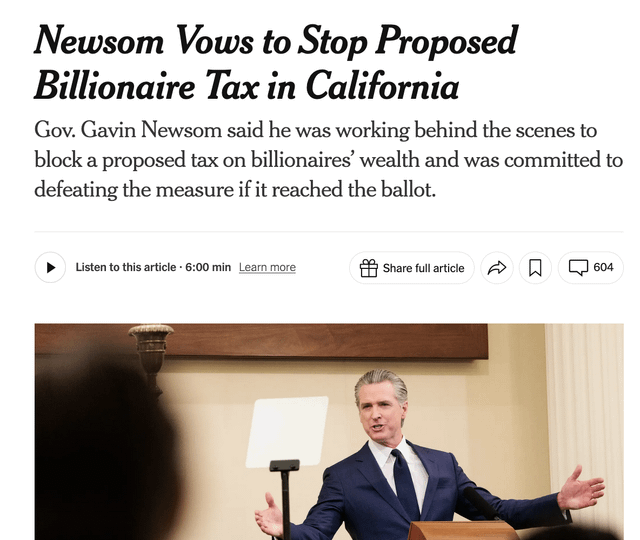
This was a class-position statement.
Newsom was not debating how the tax could be improved, refined, or made more enforceable. His first instinct was to stop it from existing at all. Not to fix it. To bury it.
1. What This News Actually Means
This proposal is a ballot initiative, not a standard bill. If voters approve it, the governor cannot veto it with a signature.
That matters.
It means Newsom has only two options:
Block it early by preventing it from collecting enough valid signatures to reach the ballot.
Or, if it reaches the ballot, mobilize money, media, and political networks to defeat it at the polls.
That is not neutral governance. It is the state’s power machinery moving directly against a bottom-up proposal. And it sends a clear signal: when a policy threatens top-level wealth, California’s political system closes ranks fast.
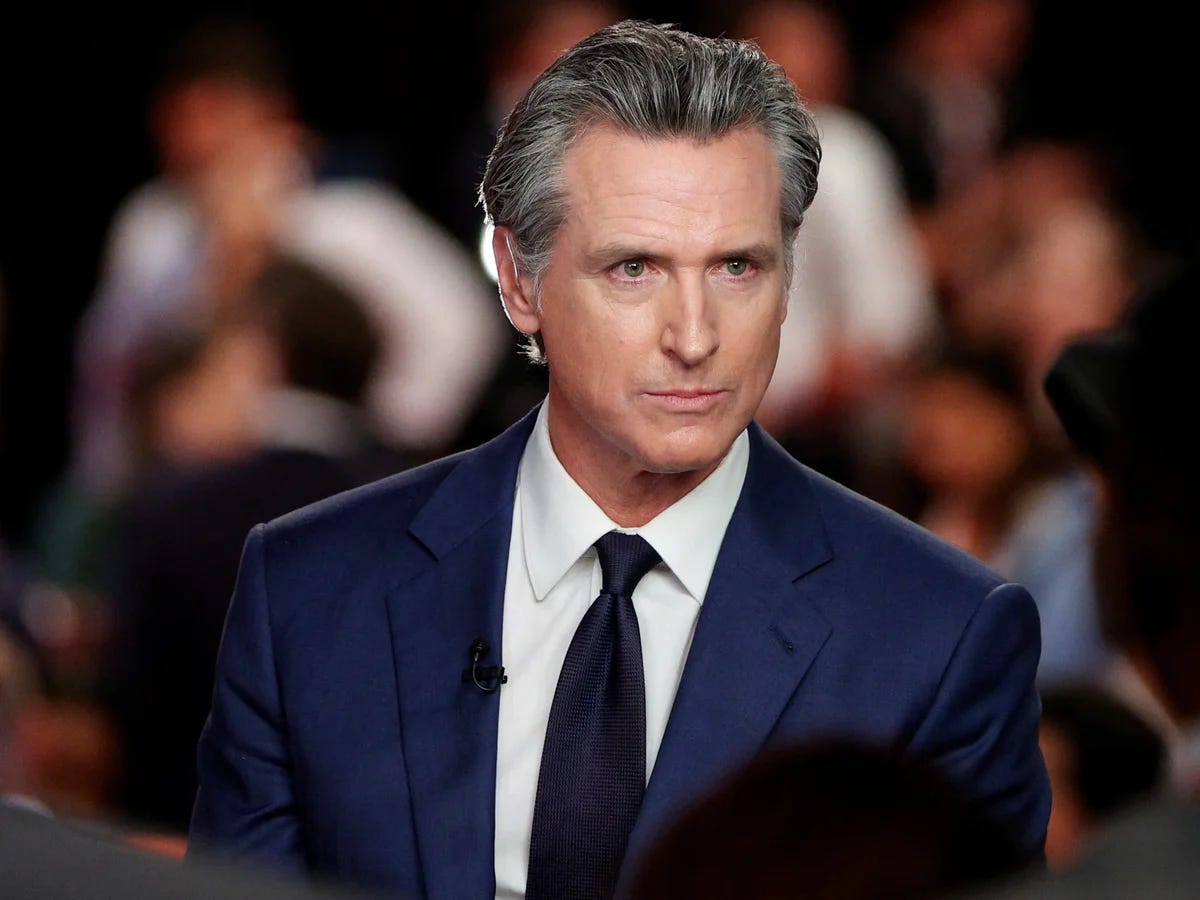
2. What the “Billionaire Tax” Actually Targets
The proposal is straightforward. It does not raise income tax rates. It proposes a one-time wealth tax of up to roughly 5 percent on the net worth of a very small group of ultra-wealthy Californians and related trusts, with installment payment options.
The affected population is tiny. Roughly two hundred people, by most estimates.
Supporters frame the revenue as a stopgap for strained public systems like healthcare, public education, and food assistance. These systems already depend heavily on taxes paid by ordinary workers.
The proposal’s design can be debated. Its language can be criticized. But what it clearly does is cross a political red line: it targets accumulated wealth, not wages.
3. From a Working-Class Perspective, This Is About Rule Enforcement
When working people owe taxes, the state does not philosophize.
Penalties. Interest. Wage garnishment. Account seizures. The process is efficient and unforgiving.
But when someone proposes that billionaires contribute once from their stored wealth, the language suddenly shifts:
Complexity. Valuation challenges. Executability. Capital flight. Investment climate.
Translated into class terms, the message is simple:
Rules are enforced downward. Upward, they are negotiated.
This is not a technical difference. It is a power difference. The law is rigid for workers and flexible for wealth.

4. “Execution Difficulty” Is Real, but It Is Also a Shield
Yes, wealth taxes are harder to administer than payroll taxes. Asset valuation is contentious. Private equity, trusts, and non-liquid holdings create legal battles.
But here is the real question: if this were only a technical problem, why was Newsom’s response not “fix the design” but “kill the proposal”?
Because the real fear is not litigation costs. It is precedent.
If society accepts that billionaires can be taxed on accumulated wealth, even once, the door opens. Not just to higher rates. Not just to broader groups. Not just to California.
That is the line power wants sealed shut.
5. Newsom’s Political Nature, Clearly Defined
This is not about personal hypocrisy. It is about political type.
Newsom is a textbook order-maintenance liberal.
Progressive on cultural issues that do not threaten capital.
Aggressive against the far right when it is politically safe.
Cautious to the point of paralysis when redistribution enters the room.
His skill is not restructuring economic power. It is managing conflict. Calming voters while reassuring donors. Preserving stability while appearing oppositional.
For working people, this is the most dangerous kind of leadership. It creates the impression of movement while leaving the underlying distribution untouched.
6. Why the Mainstream Media Is Suddenly Quiet
Many people have noticed it: where is the aggressive media scrutiny?
The explanation is not mysterious. Mainstream media is embedded in the same economic ecosystem. Advertising revenue, ownership structures, foundation funding, elite access.
And right now, Newsom is acting to protect billionaire wealth by blocking a 5 percent tax. A politician defending top-tier capital is not a threat to media institutions shaped by that same capital.
So coverage becomes cautious. Balanced. Procedural. The knives stay sheathed.
Media criticism tends to stop exactly where donor interests begin. That is not conspiracy. It is structural reality.
Conclusion: A Simple Class Test
When working people owe taxes, enforcement is absolute.
When billionaires face a one-time wealth tax, the governor personally intervenes to stop it.
At that point, party labels no longer matter.


Obscene accumulations of wealth must be expropriated (taxed) immediately and periodically thereafter to the treasury, but not without laws to allocate those assets & funds to the public welfare (per our Constitution) and , in consistent fashion, to the reduction of our national debt. Resistance should, in politically convenient cases, be dealt with brutally.
Nuisance's position is predictable since these 200 parasites are buttering his bread and determining if they will let him eat it. Let's see if the bottom-up initiative actually gets to a popular vote. Not probable, but, if anywhere, California.