

Over the past few weeks, the same question has kept coming back whenever the Iran conflict escalates: why is China not doing more for Iran? In some versions, the question sounds like frustration. In others, it sounds like accusation. Why will Beijing not step in militarily? Why does a country that calls Iran a partner refuse to act the way Washington acts for its allies?
The problem is that this question already assumes too much. It assumes China should think like the United States, treat partnership like military alliance, and see war as the natural proof of seriousness. That is where the analysis goes wrong.
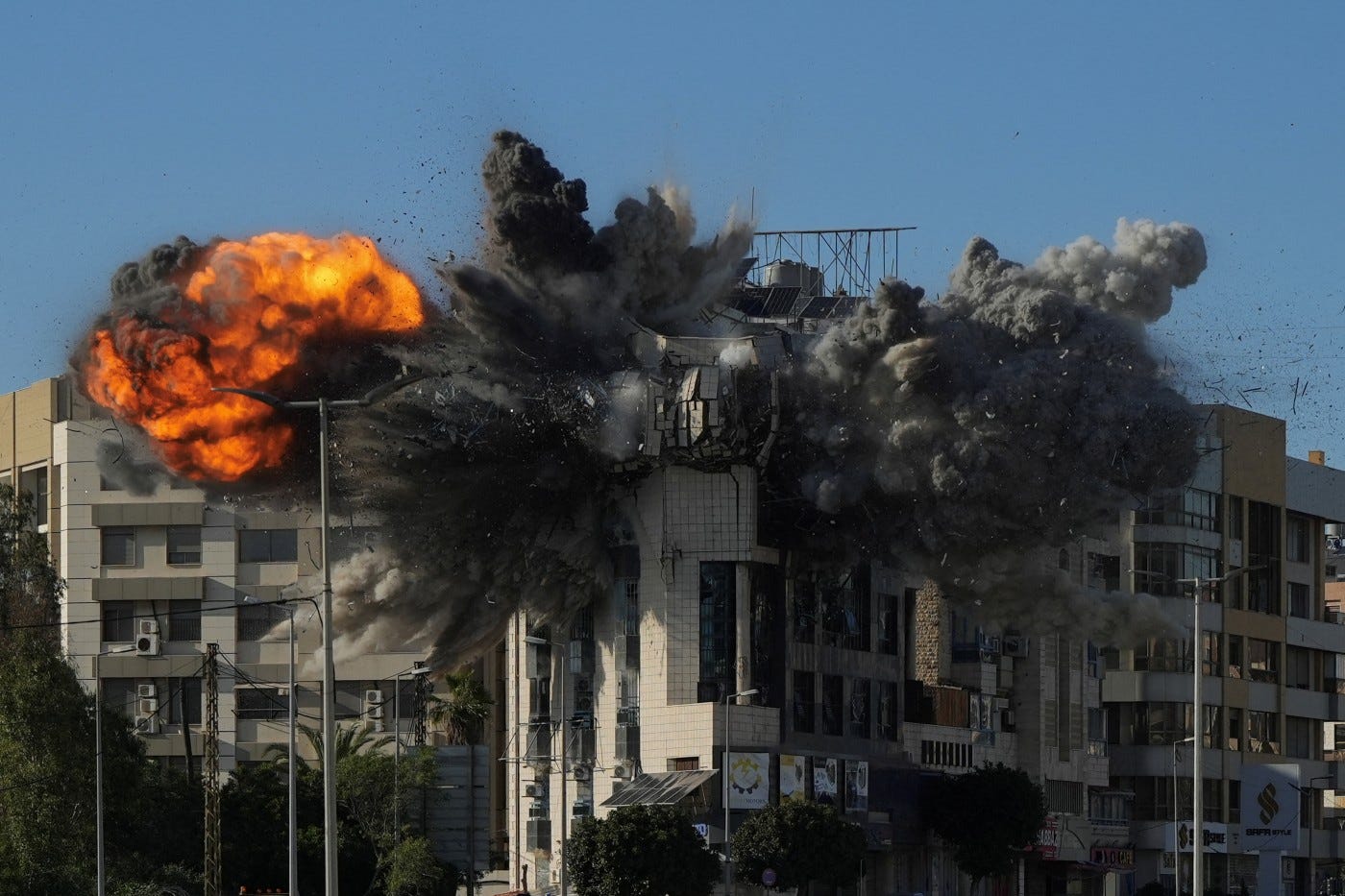
Part of the pressure comes from a broader fear. Many people are not looking at Iran as a single isolated crisis. They see sanctions, oil routes, Venezuela, regional wars, and wider U.S. pressure on states outside Washington’s order as part of one larger pattern. Once that frame takes hold, it becomes easy to argue that China should act now before the pressure moves even closer to its own doorstep.
That anxiety is real. But anxiety is not a strategy.
China does not operate through alliance logic
A great deal of the confusion comes from judging China through American strategic habits. The United States built a global system around military alliances and force projection. NATO is the clearest example, but the same logic extends across Asia and beyond. When a crisis breaks out, people shaped by that model immediately ask who will intervene, who will retaliate, and who is supposed to prove commitment through force.
China does not present itself that way. Its foreign-policy language has long centered on sovereignty, territorial integrity, non-interference in internal affairs, and political settlement over military intervention. That does not mean China is passive. It takes positions, protects interests, and supports outcomes that serve its long-term goals. But it does mean Beijing does not begin from the assumption that overseas crises should automatically be answered through direct military action.
That difference matters because it changes the whole argument. Asking why China does not intervene for Iran is really asking why China does not abandon the principles it has repeated for decades and start behaving like the United States.
China’s external relationships also do not work like American alliance blocs. They have layers, but they are not all military obligations.
North Korea remains the closest thing to a treaty-level security relationship.
Pakistan occupies an unusually high-priority position with deep military cooperation.
Russia belongs to the top tier of strategic coordination.
Iran matters too, especially in energy and regional positioning, but it still sits within a partnership framework, not a mutual-defense structure.
That is the point many people refuse to make clearly enough. Partnership is not alliance. Closeness does not mean automatic intervention.
A Chinese military intervention would widen the war
If China were to intervene militarily on Iran’s behalf, the conflict would not become more manageable. It would become larger and more dangerous. What is now understood mainly as a regional confrontation would move much closer to an open major-power struggle. Energy markets would tighten further, shipping routes would face greater risk, sanctions pressure would grow, and the U.S.-China rivalry would take on a more openly military character.
That is why the slogan of “helping Iran” needs to be treated carefully. In practice, it could mean expanding a regional war into something far harder to contain. Once that is admitted, the debate becomes more serious. The question is no longer whether China is willing to act. The question is whether widening the war would serve any rational objective at all.
Strategic patience is not passivity
In China, there is an old saying: when two tigers are fighting, you sit on the mountain and watch.
The point is not passivity. The point is that serious states do not rush into fights that serve other people’s interests more than their own.
That matters here. A country that lets others choose the battlefield, the timing, and the costs is not being brave. It is being manipulated. Much of the commentary around Iran is driven by emotional reflex. People see conflict and assume strength means immediate entry. They pay much less attention to who benefits from escalation and who absorbs the long-term consequences.
Seen in that light, Chinese restraint looks less like hesitation and more like control. Waiting is not always weakness. Sometimes it is the refusal to accept a script written elsewhere.
The U.S. would benefit more from Chinese impulsiveness than Chinese restraint
For Washington, a China that keeps growing, keeps trading, and keeps building industrial and military capacity while avoiding premature direct conflict is a difficult rival. A China that can be pulled into the wrong war at the wrong time is much easier to pressure.
This does not require conspiracy talk. It is the normal logic of great-power competition. A rival stretched by external conflict becomes more vulnerable to sanctions, market pressure, diplomatic isolation, and military containment. Its resources are consumed and its focus is divided. In that context, one of the worst mistakes China could make would be to let outside pressure decide where it must fight and when.
That is why dramatic calls for action should be treated with suspicion. They often sound bold, but boldness is not the same thing as intelligence.
Iran matters, but China’s primary theater is still East Asia
None of this means Iran is irrelevant to China. It is not. Iran matters in energy terms, in regional access, and in the broader shaping of a world less dominated by Washington. But however important Iran may be, it is still not China’s central strategic theater.
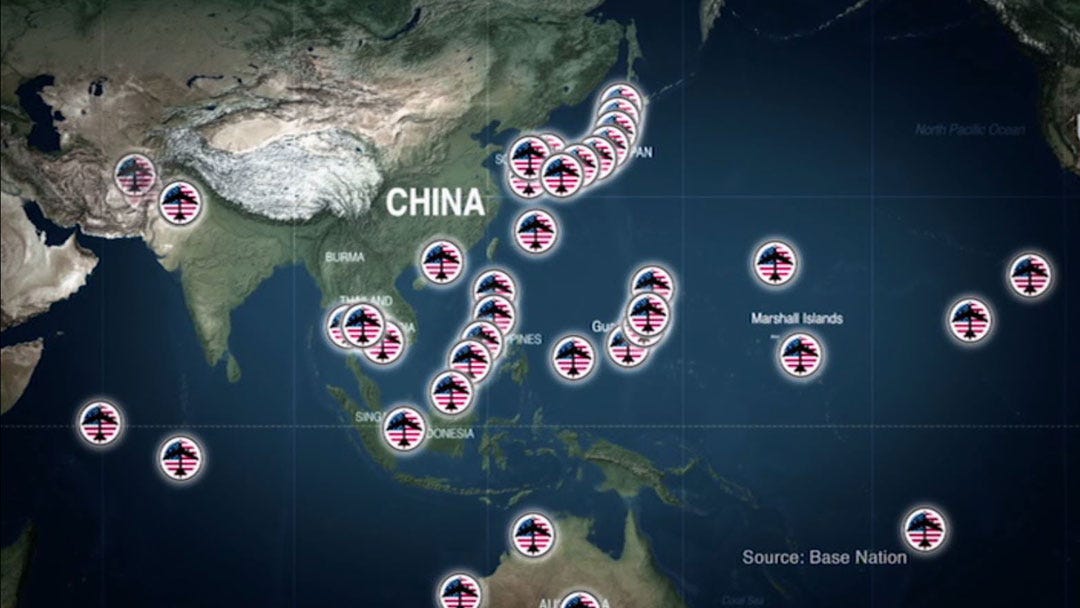
That remains East Asia. Taiwan, the South China Sea, the Western Pacific, and the network of U.S. military presence around China’s periphery continue to define the most serious long-term pressures Beijing faces. A state that loses clarity on that point risks strategic overextension. It begins fighting on secondary fronts while its primary environment becomes more dangerous.
That is why so much of the online pressure campaign misses the point. It confuses symbolic militancy with strategic seriousness. It assumes that refusing to escalate must reflect fear. In reality, serious states survive by knowing which fights matter most and which fights are designed to drain them.
Final thought
The real question is not why China has not gone to war over Iran. It is why so many people have been taught to think that expanding a war is what serious countries do.
China is not performing loyalty for an audience. It is preserving room to maneuver, avoiding a larger confrontation, and refusing to let others set the terms of its involvement. You can call that cold. You can call it self-interested. Calling it weakness just misses the point.
Beijing is not standing still. It is refusing to move on someone else’s command.
If you’re tired of pundit theater and want analysis rooted in power, structure, and real strategic logic, subscribe. Free subscriptions help grow this project. Paid upgrades help keep it independent and make deeper work possible.
Thank you for all the support.
-Grumpy Chinese guy, Neil Zhu
More stories you might missed…


Our western frame of mind only lets us recognize our own logics of resistance (in this case belic oriented). In our narcissism, eurocentric fashion we think our way to fight is the only one. They should see the Bruce Lee monologue on water..
You’re right to highlight the differences between China and the US. China is a powerful country at the forefront of an emergent, multipolar world. The US is an empire of a dying, unipolar order. They play different games. The failing imperial aggression of the US and its proxy Israel is a sign of the old order passing and a new, different one coming to be.