

The Georgia Case Exposed the Real Hierarchy
Residents in Fayette County, Georgia were told to conserve water during drought conditions. Some complained about low water pressure. Local households were warned to cut back usage as the region dealt with worsening dryness and wildfire conditions.
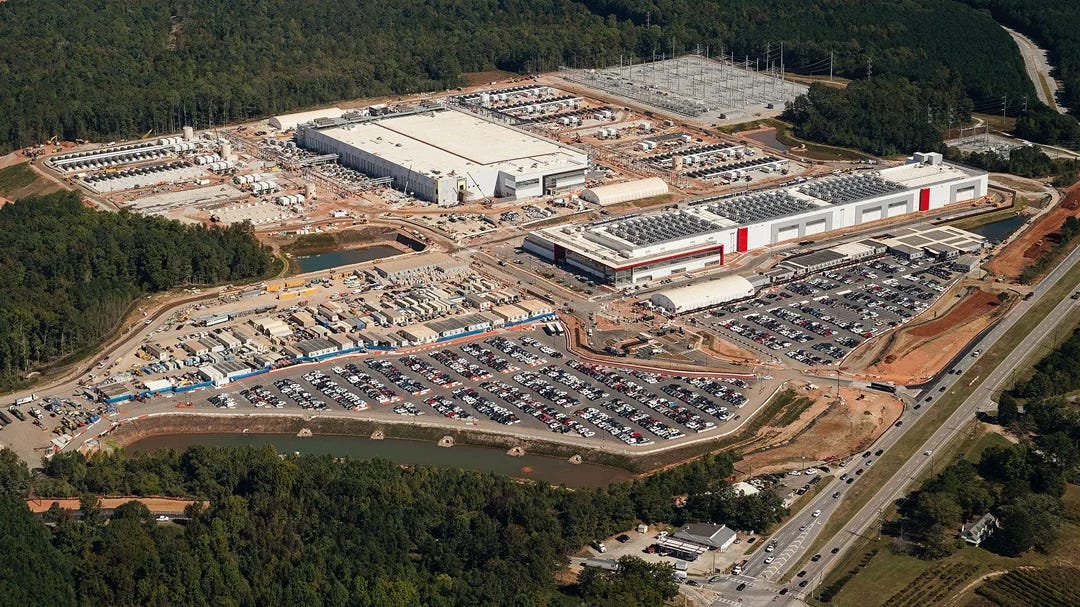
At the same time, a massive AI data center campus operated by QTS quietly used more than 29 million gallons of water without proper billing. County officials later admitted that two major water connections tied to the project were either improperly monitored or not connected to billing systems at all. One connection reportedly existed without the utility even knowing about it.
When officials finally discovered the issue, the company received a retroactive bill of roughly $147,000. No serious penalties. No major punishment. One local official explained the decision clearly: QTS is their “largest customer.”
There it is. Ordinary people get restrictions. Corporations get partnerships.
The Cloud Has a Water Meter
Silicon Valley spent years selling the public the fantasy of “the cloud,” as if AI exists in some clean digital space floating above reality. But AI is not weightless. It is deeply physical.
Every chatbot response, every AI-generated image, every automated system depends on massive server warehouses running nonstop. Those facilities consume enormous amounts of electricity and generate extreme heat that requires industrial-scale cooling systems. Cooling requires water. A lot of water.
Some AI companies are now discussing building their own dedicated power systems because local electrical grids cannot keep up with demand anymore. The future apparently looks like giant corporations arriving with private energy infrastructure because public systems are already buckling under AI expansion.
But there is one thing they cannot privately manufacture next to every server farm: water.
You can ship semiconductors across the world. You cannot ship a river into a drought zone.
The AI Boom Is Colliding With Reality
The Georgia incident is not isolated. Across the United States, data centers are rapidly expanding into communities that were never built to support industrial-scale computing. Many of these regions already face water stress, grid pressure, or both.
At the same time, utility companies are extending fossil fuel power plants because AI electricity demand is growing faster than renewable infrastructure can keep up. So the same tech industry that spent years lecturing ordinary people about sustainability and carbon footprints is now helping drive industrial-scale electricity consumption.
Paper straws for you. Gas-fired server farms for them.
And despite all this resource consumption, many data centers create surprisingly few permanent jobs once construction ends. Communities absorb the infrastructure pressure while corporations capture most of the long-term profits.
The profits remain private. The infrastructure burden becomes public.
China Shows What Planning Looks Like
China has not magically solved the data center problem either. AI still consumes huge amounts of electricity, cooling capacity, land, and water. Physics does not care about government slogans.
But China is approaching the issue more like national infrastructure planning instead of pure market expansion. Through the “Eastern Data, Western Computing” strategy, Beijing is trying to move large amounts of computing demand toward regions with more renewable energy, more land, and better natural cooling conditions.
China has also set national efficiency targets for data centers, including lower PUE standards. PUE, or “Power Usage Effectiveness,” measures how much electricity is wasted outside actual computing. The lower the number, the less energy is burned simply cooling the machines.
That is the difference. In the United States, a data center can overwhelm local infrastructure first and governments react afterward. In China, at least the state is trying to ask basic questions ahead of time: where should these facilities go, what power will support them, and can local resources handle the pressure?
Ordinary People Pay for the Future They Do Not Control
The AI economy is not just creating software. It is reorganizing water systems, electrical grids, land use, and public infrastructure around corporate technological demand.
Ordinary people are expected to conserve resources while trillion-dollar companies are treated as strategic partners too important to challenge.
That is why the Georgia story matters. It exposed the political hierarchy underneath the AI boom.
When residents use too much water, they get warnings. When giant AI corporations consume industrial-scale resources during drought conditions, governments quietly work backward to accommodate them.
The cloud was never floating above society.
It was always connected to somebody else’s water meter.


