

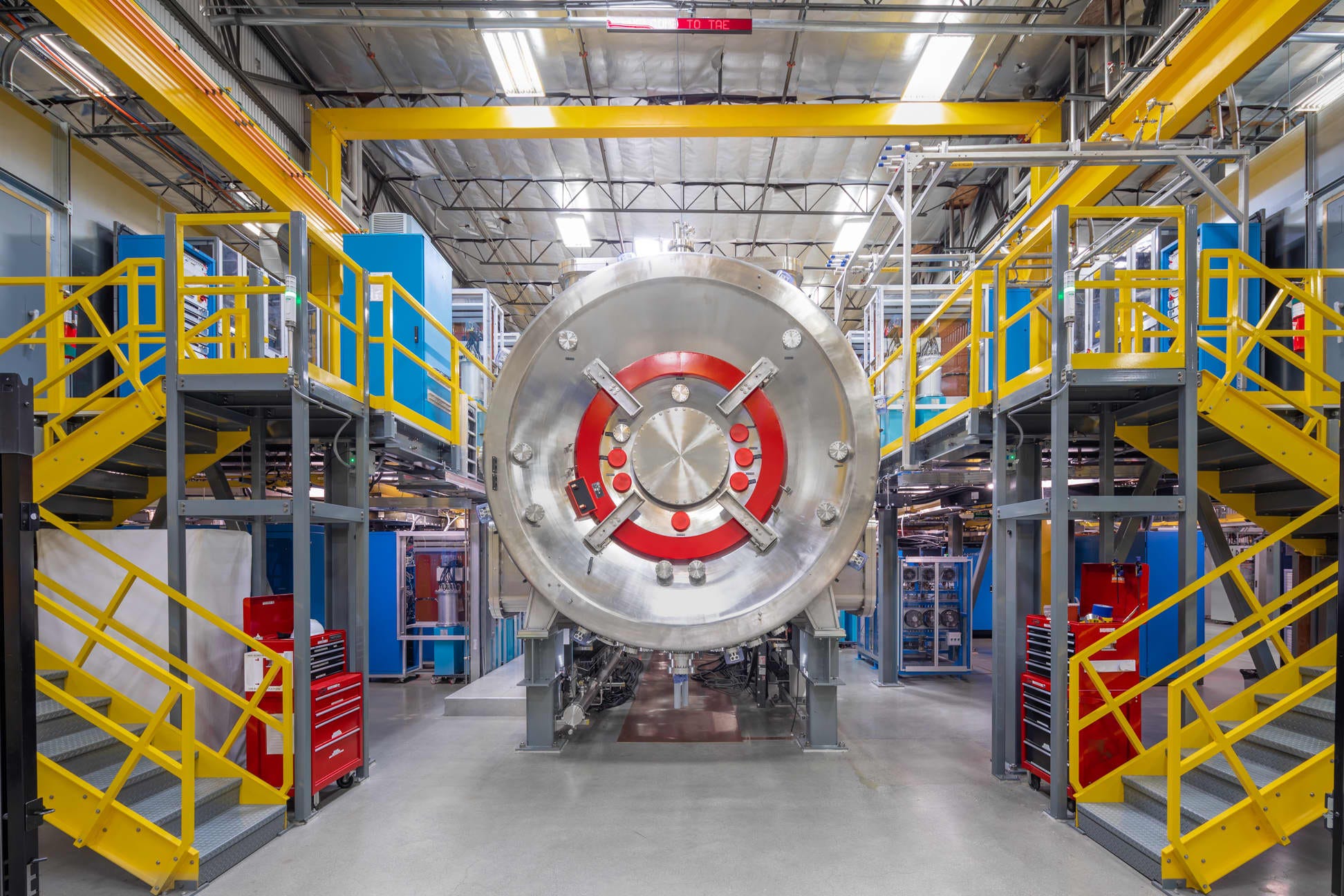
Trump Media just announced a merger with a private nuclear fusion company, TAE Technologies. The deal is being talked about as a roughly $6 billion stock transaction, with a pitch that sounds simple: fusion power for AI data centers. Trump’s family ends up with a seat at the table
.
If this were only about science, it would be one kind of story.
But this is about ownership, policy, and who gets to cash in on “the future.”
AI’s real bottleneck is electricity
People talk about AI like it is just chips and software.
In the real world, AI runs on electricity. A lot of it. Data centers need stable, nonstop power. They also need a lot of water for cooling. That is not ideology. That is physics.
And the U.S. grid is already strained in many places. Demand is rising faster than upgrades. Local communities get stuck dealing with the expansion, the permitting fights, and the rising bills.
So when AI companies and their backers look ahead, they are not just asking, “How do we build better models?”
They are asking, “Where do we get the power?”
Fusion’s hidden advantage is that it can stay “ten years away” forever
Here is the uncomfortable part. Fusion is not commercial today. It has huge engineering and scientific hurdles. That is not a smear. That is the reality of the field.
But in finance and politics, that uncertainty is useful.
A technology that is always “almost there” is hard to audit. Hard to grade. Hard to hold accountable. You can keep raising money, keep writing headlines, keep telling the public it is coming soon, and nobody can force a clear pass-fail moment next quarter.
That makes fusion a perfect story to attach to AI’s growing energy needs. Not because it solves the problem tomorrow, but because it keeps the future open long enough for everyone involved to keep moving.
In plain terms: fusion can act like a delay button for the AI bubble.
When policy starts moving, ownership starts mattering
This is the part where people get defensive and say, “So what? Companies invest in energy all the time.”
Sure. But this is not just any company.
When government policy starts accelerating approvals, reshaping energy priorities, creating new offices, signaling federal support, and changing regulatory posture, the question is not only “Is this good for innovation?”
The question is: who benefits from the policy tailwind?
If the upside flows into a political family’s business structure, that is not a normal market story. That is political power blending into private ownership. It is the state helping define the next infrastructure era, while the profit channels stay private.
That is not “the free market.” That is an engineered advantage.
This is not just Trump. It is American political capitalism
If you make this a simple “Trump is corrupt” story, you miss the real issue.
This is how American political capitalism works when it is functioning, not when it is breaking. Influence becomes access. Access becomes deals. Deals become assets. Assets get wrapped in patriotic language like “energy leadership” and “national competitiveness.”
And because the mechanisms are often legal, it becomes harder to stop. People argue about personalities instead of the structure.
The structure is the story.
The question people avoid
Here is the question that matters, and it is not comfortable.
If fusion works, who owns it?
If fusion fails, who pays?
If this becomes a real piece of the energy system, does it end up as public infrastructure that lowers costs and stabilizes the grid, or does it become another private toll road for the AI era?
And if it never delivers, who eats the cost? Investors with exits, or the public through policy subsidies, regulatory shortcuts, and opportunity cost?
One last thing
This is not a call to hate fusion. Fusion research can be valuable. The point is simpler:
When “the future” gets tied to political families and policy leverage, you should assume the incentives are not clean.
I have more stories here,


