

What changed
For years, the American right treated solar as a cultural irritant rather than a serious industrial question. Trump mocked it, framed it as ugly and inefficient, and helped turn energy policy into another front in the culture war. If liberals liked solar, then much of the MAGA world felt obliged to treat it with contempt. That posture worked as politics for a while. It helped draw lines, energize a base, and turn a material issue into a tribal one.
Now that line is breaking down. Not because the right suddenly discovered climate science, and not because anyone had a moral awakening, but because the material conditions changed. Electricity demand is rising fast, AI data centers are putting real pressure on the grid, and power has become a hard constraint rather than a background issue. Once that happens, the old slogans stop carrying the same weight.
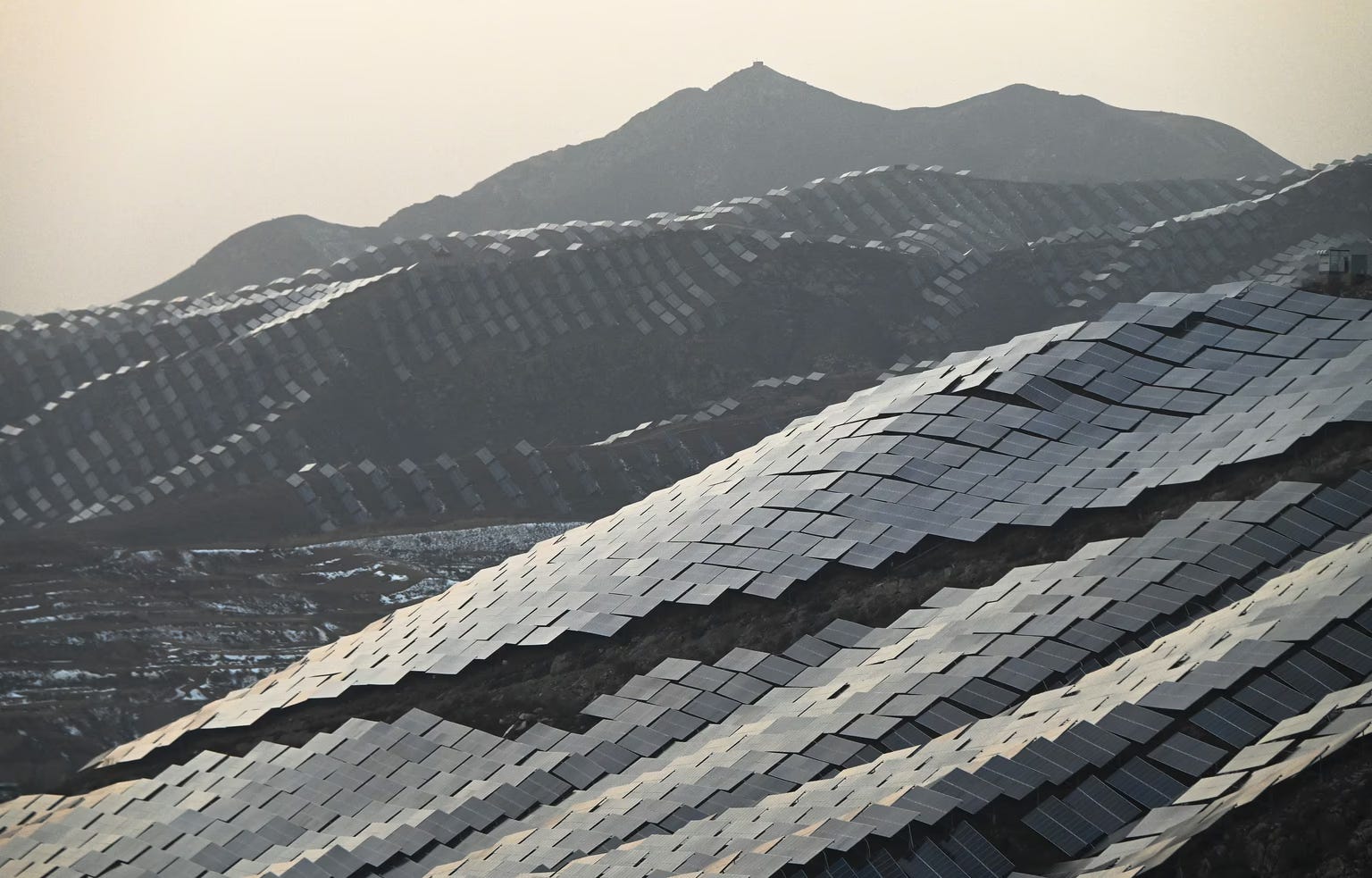
Why they are changing their tone
This is why people inside Trump world have started talking differently. Katie Miller is suddenly praising solar. Other Republican figures have softened their line. Musk is pushing large-scale solar manufacturing in the United States. None of this means they became environmentalists. It means they are responding to pressure that can no longer be spun away.
Solar did not suddenly become useful this year. It was useful before they admitted it. What changed is that they now need power that can come online relatively quickly, and solar is one of the few sources that can do that at scale. When electricity demand starts colliding with industrial policy, grid stress, and competition with China, old ideological habits become harder to maintain. They are not moving because they were persuaded. They are moving because the ground under them shifted.


Who pays while elites adjust
This part matters, because too many articles stay trapped in policy language and never come back to real life. Ordinary people feel this long before politicians admit it. Families notice it when the monthly bills keep climbing. Small businesses feel it when another basic cost cuts into margins that were already tight. Towns that want new projects and new jobs run into the same wall: power is harder to secure, more expensive, and less reliable than the people in charge like to pretend.
Meanwhile, the people with the most money can keep competing for supply. Big tech companies can chase power, sign new deals, and absorb costs that would crush everyone else. Regular people do not have that flexibility. They just live with the consequences. That is why this story matters. It is not just about what energy source gets approved. It is about who gets protected, who gets squeezed, and who is expected to quietly absorb the cost of elite misjudgment.
The deeper problem America cannot talk its way out of
Even now, the bigger problem is not hypocrisy. Hypocrisy is easy to spot and easy to mock. The harder truth is that the United States cannot simply decide to care about solar and instantly catch up. Talking differently is easy. Building industrial capacity is not.
The manufacturing base needed to scale solar quickly and seriously is not fully under American control. The equipment, the production experience, and much of the supply chain depth are still concentrated in China. That is why American companies still look to Chinese suppliers when they want to expand. The uncomfortable part is not just that the U.S. fell behind. It is that after years of treating solar like a joke, it now has to confront the fact that wanting more of it is not the same as being able to produce it.
Why China holds the stronger position here
This is where the story stops being about solar in the narrow sense and starts becoming a story about industrial leverage. China is not just producing panels. It sits much higher up the chain. It has manufacturing scale, integrated supply chains, and in some cases the equipment needed to make advanced production possible in the first place.
If Beijing restricts exports of advanced solar manufacturing equipment, the issue changes immediately. At that point, this is no longer just an energy story. It is about industrial power. The side that controls the equipment and the supply chain can move faster. The side that does not gets slowed down, boxed in, and forced to talk about industrial revival without the means to make it real.
That matters because the United States still likes to imagine that political will is enough. It is not. Capital helps. Policy matters. But if the industrial ecosystem is somewhere else, then rhetoric can only go so far.
What this says about American politics
To me, this is the real lesson. America did not just fall behind because China worked harder or moved faster. Part of the damage was self-inflicted. Too many strategic questions were turned into culture-war props. Solar could have been treated as a long-term industrial sector. Instead, it got folded into partisan theater, where mocking it became easier than building around it.
That kind of politics may still work on a stage. It may even work in an election cycle. But it does not build factories, train workers, or create the industrial depth needed when the pressure turns real. By the time the need becomes obvious, years have already been lost. Then the same people who helped waste that time turn around and call their late adjustment pragmatism.
It is not pragmatism. It is a delayed correction under pressure.
Final thought
What we are looking at is not just a shift in attitude toward solar. It is a familiar American pattern. A strategic problem gets absorbed into domestic political theater. Serious capacity erodes while everyone argues over symbolism. Then reality forces a correction, but by then the ground has already shifted.
That is where the United States is now. It finally admits solar matters, but the industrial keys are no longer fully in its hands. And once that happens, changing the message is much easier than changing the balance of power.


The naysayers found a scapegoat to blame. The first issue is that they HAD to talk about, oh GASP! these are made in China! At the same time with embarrassing undertones of why didn't we think about that? I like how you talk about energy that be put to use at scale. Indeed.
I don't know if solar panels are strong enough to handle the hail storms in Denver. I live in a complex with 30 buildings. Why not solar? Probably because the maintenance manager is a lame, I wish I could live back in the days of classic rock.