

The Pitch: Trump Sells Jobs. The System Builds Factories Without Workers.
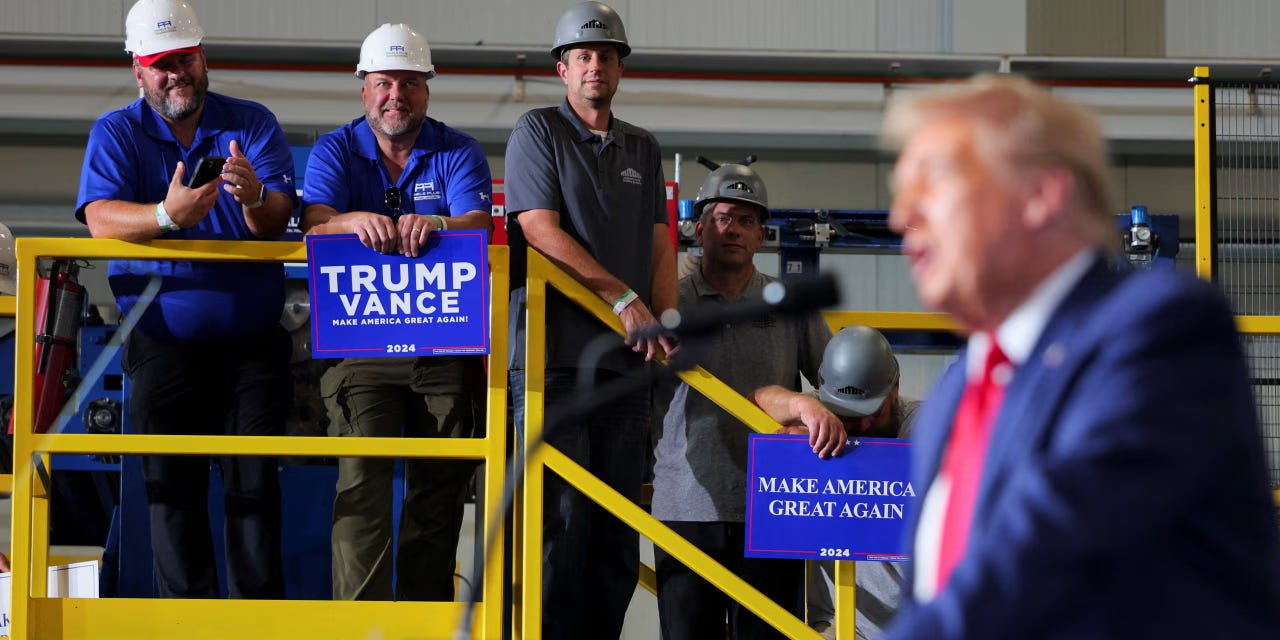
Donald Trump has been hammering the same talking point for years: slap tariffs on foreign goods, force companies to bring production back home, and American manufacturing jobs will come roaring back. Spoiler: It’s all smoke and mirrors.
Don’t get me wrong, It’s a *hell of a* political narrative. Deindustrialization gutted entire regions, and people are starving for factories, steady paychecks, and the dignity that comes with a real job. Who wouldn’t want that?

Let’s cut him some slack for a sec. Suppose tariffs actually work, like, really work, and pull some manufacturing back to the U.S., especially in the sectors that matter politically or strategically.
Even if one is being this generous, the jobs promise still falls flat.
Factories coming back doesn’t mean jobs come back. Full stop. And it definitely doesn’t mean stable, mass employment for regular Americans, you know, the people Trump claims to fight for.
The U.S. Does Not Lack Manufacturing Jobs. It Lacks a System That Works.
Let’s skip the slogans and get straight to the data. Because numbers don’t lie.
The broader U.S. labor market is slowing down. According to the Bureau of Labor Statistics’ (BLS) JOLTS report, total job openings dropped to 6.542 million (about 6.5 million) in December 2025, the lowest level since September 2020. That’s not a small dip; it’s a red flag.
Manufacturing, though, is dealing with a different kind of mess. It’s not that there aren’t enough jobs. It’s that there’s a huge disconnect between the jobs available and the workers who can (or want to) fill them.
Deloitte’s analysis spells it out: roughly 409,000 manufacturing positions sat empty in the U.S. in August 2025. These aren’t hypothetical “future jobs”; they’re real openings, right now, gathering dust. Looking ahead, Deloitte and The Manufacturing Institute project that between 2024 and 2033, U.S. manufacturing could need up to 3.8 million new workers, and about 1.9 million of those roles might never get filled if things stay the same.
Let’s translate Trump’s promise into plain English: The U.S. doesn’t have a shortage of manufacturing jobs. It has a shortage of a functional system, one that pays living wages, trains workers properly, and doesn’t make people choose between rent and groceries.
Tariffs won’t fix this. Photo ops with factory owners won’t fix this. Only real, structural change will, and that’s the last thing Washington wants to talk about.
Stop Blaming “Culture.” This Is About Bills and Bargaining Power.
When manufacturing jobs sit empty, politicians pull out their go-to excuse: “People are lazy, entitled, and don’t want to work.” Spoiler #2: That’s a load of crap.
It’s convenient, sure. It lets them avoid taking blame. But it’s also 100% dishonest.
The real reasons these jobs are empty are structural, not personal. Let’s break it down.
1) Wages Do Not Match Modern Life
For most manufacturing workers, the paycheck can’t keep up with the bills. Rent, healthcare, gas, and childcare have all skyrocketed, way faster than wages. A job that barely keeps you above water isn’t a “good job.” It’s a trap. And people are smart enough to avoid it.
People aren’t rejecting work. They’re rejecting a raw deal.
2) The Skills Gap Was Created, Not Discovered
The U.S. spent decades shipping factories overseas, and in that time, the country gutted the programs that trained workers for these jobs. Apprenticeships dried up. Community colleges lost funding. Corporations stopped investing in on-the-job training. Then politicians act shocked that workers aren’t magically qualified for jobs the U.S. abandoned.
You can’t ghost an industry for 30 years and then demand it come running back. The so-called “skills gap” isn’t an accident. It’s what happens when a country stops caring about working people.
3) Working Conditions Are a Dealbreaker
Most entry-level manufacturing jobs mean long, grueling shifts, physical pain, high injury risks, and zero room to move up. Young workers see this clearly: Bust your body for 10 years, and you’ll still be stuck in the same low-wage job. No thanks.
4) Geography Is a Real Barrier
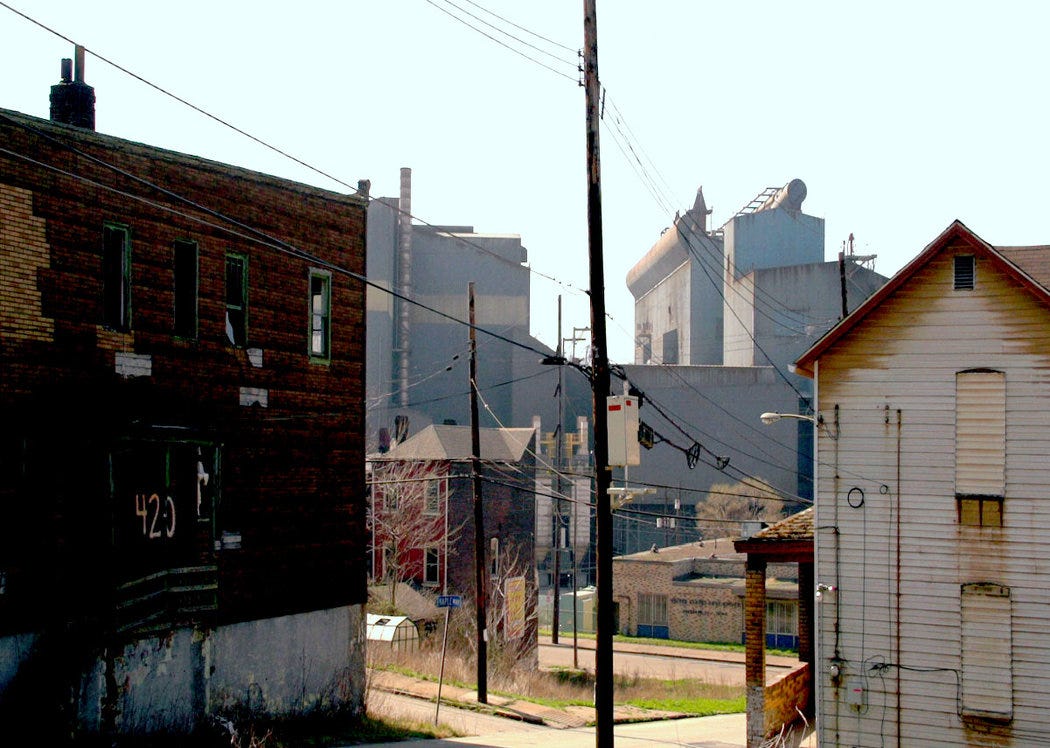
Manufacturing jobs are clustered in specific regions, usually far from where most people live. Moving isn’t cheap. Housing is scarce in these areas. And most people can’t just uproot their families because a politician says so. “Just move” is a lazy cop-out; it’s not a solution.
Even manufacturers admit this. Industry surveys consistently rank “attracting and keeping workers” as one of their top problems. This isn’t a “people problem.” It’s a system problem, and the U.S. created it.
Tariffs Do Not Automatically Bring Manufacturing Home.
Trump’s sales pitch is simple, catchy, and totally misleading: Tariffs → bring factories home → jobs for everyone.
Real life is way messier than his soundbites.
U.S. tariffs did cut down on imports from China, but most of that trade just shifted to other countries, not back to the U.S. Supply chains moved, but the U.S. didn’t rebuild its own industrial strength. It’s like moving the furniture around instead of fixing the house.
This matters. Cutting ties with one country doesn’t mean the U.S. is building up its own workforce. It just means Americans are buying from someone else.
Tariffs make corporations optimize their profits, not suddenly become patriotic. Let’s not kid ourselves.
If Factories Return, Automation Comes First.
This is the big contradiction Trump refuses to talk about. The elephant in the room, if you will.
Tariffs make things more expensive. Making stuff in the U.S. makes things more expensive. Corporations hate losing money, so they turn to the one thing that fixes this: automation.
When factories come back to the U.S. these days, they’re not the old-school, worker-heavy plants of the past. They’re high-tech, capital-heavy, and totally automated. Fewer workers. More robots. More software. Way fewer entry-level jobs.
Trump sells a story about workers winning. Corporations are building a world where workers aren’t even needed.
That’s where his promise falls apart. It’s a bait-and-switch, plain and simple.
AI and Automation Mean Labor Polarization, Not Revival.
Automation doesn’t just eliminate jobs randomly. It reshapes the labor market, and it’s terrible news for regular workers.
Entry-level, repetitive manufacturing jobs are first on the chopping block. These jobs used to be the first step on the ladder to a stable career. Now, that ladder is being pulled out from under people.
Middle-skill jobs are splitting into two: A small group of technicians and engineers will get paid more and have more leverage. Everyone else will get squeezed out by better, cheaper automation.
High-skill jobs will still be valuable, but there aren’t nearly enough of them to hire the millions of people who’ll lose their jobs.
Productivity will go up. Profits will go up. But workers won’t see any of that, unless policymakers step in. Without rules to protect workers, all the gains will go to the people who own the robots, the factories, and the tech.
This isn’t some far-off dystopia. It’s happening right now. And if the U.S. doesn’t fix the system, it’s only going to get worse.
Trump’s Core Contradiction.
Trump acts like he’s the champion of working people. But his policies only care about one thing: making sure factories exist, not making sure workers have jobs that pay the bills.
Factories may come back. But the capitalists who own them, and the profits they make, will stay the same. The rich get richer, and everyone else gets left behind.
Manufacturing will come back as an industry. But it won’t come back as a way to employ millions of people.
That’s not a working-class revival. It’s just making sure the wealthy keep winning, while everyone else struggles.
The Question Trump Never Answers.
Trump’s promise is simple: Bring manufacturing back, and all America’s problems go away. Easy, right?
Real life is way harsher than that.
Bringing factories back under Trump won’t fix unemployment. It’ll just rearrange it. It’ll move production to different places while making the gap between the rich and poor even bigger. It’ll give politicians something to brag about while speeding up a future where fewer people are needed to keep the economy running.
The real question isn’t whether manufacturing comes back.
The real question is: What happens to the millions of people the new factories don’t need anymore?
What a Real Jobs Strategy Would Actually Require.
If policymakers actually cared about creating good jobs for regular Americans, their plan would look nothing like Trump’s. Here’s what it would include:
Wages that let people live comfortably, not just barely keep up with inflation
Training and apprenticeships paid for by employers, not workers drowning in debt
Fixing healthcare and housing so people have more money left after paying bills
Tariffs and subsidies that reward companies for treating workers well, not just for building factories
Rules that make sure automation benefits workers, not just CEOs and shareholders
That’s not the conversation Trump is having. He doesn’t want to talk about real solutions.
He’s selling a story. The system is building something else entirely, something that leaves most people behind.
Closing
Factories may come back. Robots and automation will definitely come back.
For most people, job security won’t. And that’s by design.
More stories you might be interested in…


Nicely summarized. And yes, manufacturing will return, and it will be robotic assembly lines as much as possible.
The part of letting BYD electric cars into a market is that the cars are assembled completely by robots on the assembly line. The logistics tail is handled by robots. AI places the orders and manages the inventory. The only people involved are a handful of technicians and managers.
Compare that to the assembly lines in Detroit or Oshawa. 1500-2500 bodies putting in 8hr shifts. The BYD factory runs 24hrs a day.
So now the problem is how to have a customer base that can afford to buy a car. Henry Ford had to pay his workers a high wage to create a market for his car. This is the ‘elephant in the room’ for the elites. With out consumers, from where will their next loan come when their stock portfolio evaporates?
We are facing the possibility of the collapse of society so that cities are either ‘welfare islands’ or people are forced to spread out and become subsistence farmers again. Either way, it will hurt.
And the best cure for what ails us is the first target of the elitist scorn: education. It is no surprise that the Trumpists destroyed the Department of Education. The trade schools, community colleges and universities were all part of the ‘Liberal Arts’ system that provided people an education that taught them to critically think, adapt and most importantly educate themselves. This provided flexibility, both in thinking and adapting to changes in the world, and specifically the job market.
This old chestnut may become much more relevant in the future:
Ye reap what ye sow.
In the 1970s the ‘investors’ protested. The top notch greed and percentage pariahs began their 30 year- get- richer plan. Creative job destroyers lounge in the No Tax on Us Club. 55 years later these boys and girls rule the playgrounds.
The following is a from this Search term: living wages in the automotive factories in the 1960s
“Real wages and living standards of auto workers rose dramatically. Measured in constant dollars, the 1947 average weekly wage in the industry of $56.51 had doubled by 1960 to $115.21, and tripled by 1970 to $170.07”.
Strong unions were broken by the Profit over People (POP)movement.
As mentioned by Jim: Compare that to the assembly lines in Detroit or Oshawa. 1500-2500 bodies putting in 8hr shifts. The BYD factory runs 24hrs a day.
So where can one find the AI guide book of Baby Robot Names?