

A recent national survey shows that 66 percent of Americans believe the federal government has a responsibility to make sure everyone has health care coverage. That is not a marginal position. That is the majority.
Yet Congress just failed to act as millions of people face higher health care costs. The Senate refused to extend the Affordable Care Act’s enhanced premium tax credits. If those credits expire, health insurance premiums on the ACA marketplaces are expected to rise sharply, forcing many people to either pay more or lose coverage altogether.
This gap between what people want and what Congress delivers is not a mystery. It is the result of who lawmakers actually answer to.
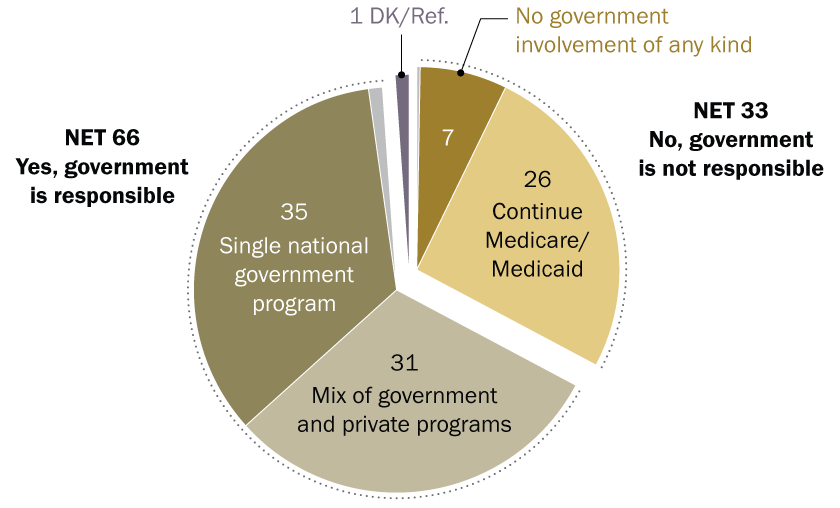
What Happened in the Senate
In December 2025, the Senate voted on two competing health care bills. One was a Democratic proposal to extend the enhanced ACA premium tax credits. The other was a Republican alternative built around health savings accounts instead of direct subsidies.
Both votes failed.
Each bill received a simple majority but fell short of the 60 votes required to overcome the filibuster. On the vote to extend the ACA subsidies, most Republicans voted no, even as a handful crossed party lines. Senate leadership allowed the subsidies to move closer to expiration, despite clear warnings about rising costs for working families.
The failure was not about lack of time or lack of information. It was a political choice.
Follow the Money, Not the Speeches
Over the past several years, pharmaceutical companies and health insurance companies have poured tens of millions of dollars into federal elections. This money flows through corporate PACs, executives, and industry-linked donors. It overwhelmingly targets lawmakers with power over health policy.
More than two-thirds of U.S. Senators have taken money from pharmaceutical industry donors. In the House, leadership and key committee members are among the biggest recipients of health-sector contributions. This is not limited to one party. It is bipartisan and structural.
When lawmakers depend on industry money to fund their campaigns, their incentives shift. Affordability becomes secondary. Profit protection becomes the priority.
Names Matter
This is not abstract. The same names appear again and again when campaign finance data is reviewed.
In the Senate, lawmakers such as Bob Casey, Jon Tester, Sherrod Brown, Chris Coons, Cory Booker, Patty Murray, Debbie Stabenow, Kyrsten Sinema, Joe Manchin, Marsha Blackburn, Bill Cassidy, Susan Collins, Lisa Murkowski, and Mitch McConnell have all received significant support from pharmaceutical and or health insurance interests over recent cycles.
In the House, leadership figures and committee power centers stand out. Hakeem Jeffries, Jason Smith, Brett Guthrie, Frank Pallone, Cathy McMorris Rodgers, Richard Neal, and Kevin McCarthy are among those whose campaigns have benefited from substantial health-sector backing.
These lawmakers are not observers. They decide which bills get hearings, which amendments survive, and which reforms never reach the floor.
This Is Not Polarization. It Is Alignment.
Americans are often told that health care reform fails because the country is divided. That explanation does not hold up.
The public wants affordability. The polling is clear.
What is divided is loyalty. Voters want lower costs. Industry donors want higher margins. Congress repeatedly chooses the side with money.
That is why subsidy extensions fail even when the consequences are obvious. That is why health care reform is always partial, temporary, or quietly reversed.
The system does not follow public opinion. It follows donations.
Focus on the Goal, Not the Distraction
Culture-war fights dominate social media and cable news. Left versus right. Red versus blue. These arguments consume energy but change nothing about premiums, deductibles, or access to care.
The goal is simple:
Affordable health care
Affordable education
Affordable housing
The obstacle is also simple:
Lawmakers who take industry money and protect industry profit
Political speeches are designed to win votes. Donor money is designed to shape behavior after Election Day.
So the most important question to ask your Representative and Senators is not what they say. It is:
Who funds them
How they vote after taking that money
If they refuse to answer, that is the answer.
Politicians do not fear online arguments. They do not fear culture-war debates.
They do fear losing funding and losing their seat.
That is where pressure works.
Some of my older posts are still worth taking a look at, here we go,
Elon Musk’s “America Party” Isn’t a Revolution. It’s a Rich Guy’s Game.

Musk Wants to Be a Political Hero. He’s Not.
God in the White House. Atheism in Beijing. Who’s Actually Running a Theocracy?

A Congressman leads a prayer on the White House lawn.
Why Does America Avoid Talking About Class? — An Outsider’s Perspective

When I moved from China to Canada, I expected culture shock. What I didn’t expect was how differently people talk about society, fairness, and what makes life “work” for ordinary people. The contrast…
How Social Class Is Really Formed – And Why Most People Never Escape

When people hear the word “class,” they often picture old-fashioned royalty and peasants, or maybe some outdated Marxist slogan. But social class is alive and well today—and it shapes nearly every as…
Why Are Democrats Losing the Working Class?

The Democratic Party used to be known as the party for workers, but today many working-class Americans feel left out. A recent poll by the Wall Street Journal shows that only 33% of voters view Democ…


