

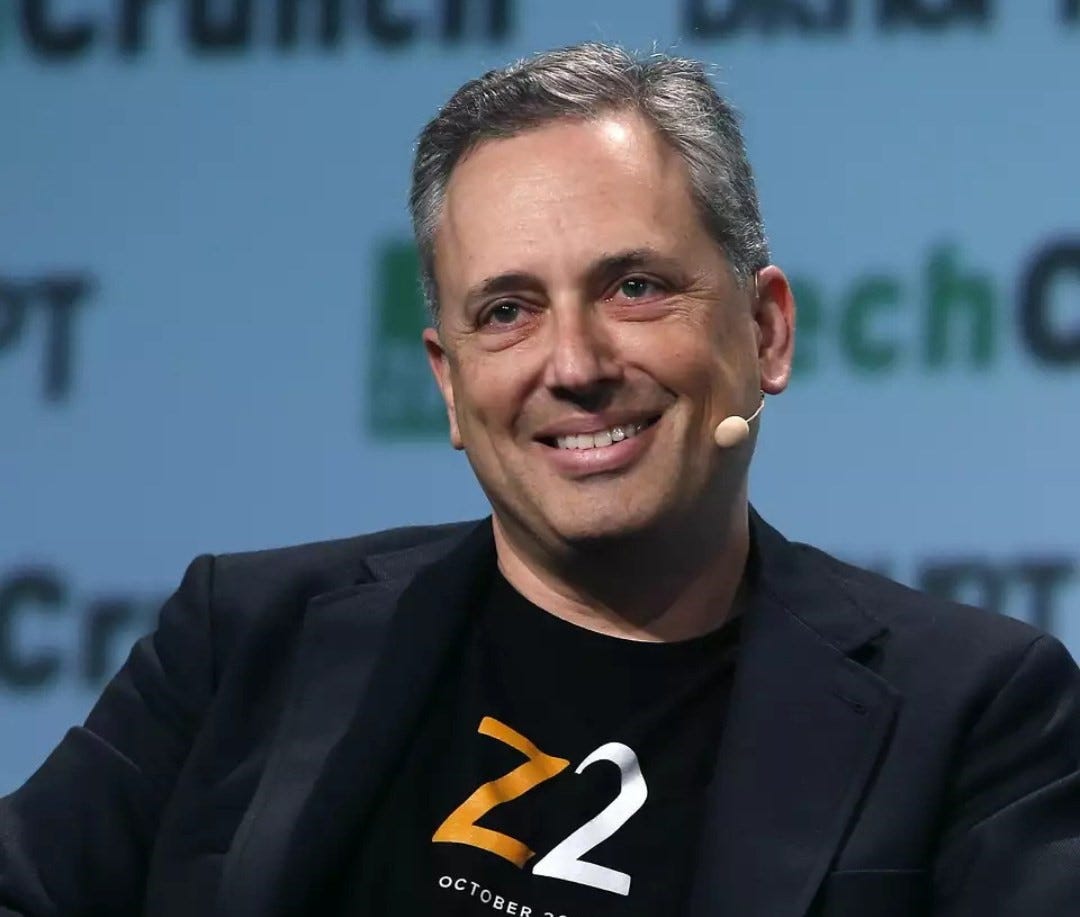
In the first quarter of 2026, the American economy looked like it was growing. David Sacks, who until recently served as Donald Trump’s White House advisor on AI and cryptocurrency, posted on social media that “in Q1, AI was already 75% of GDP growth.” Seventy-five percent.
Unemployment among young workers was elevated. Consumer spending was flat. Working people across the country were getting squeezed on rent, groceries, and healthcare. But the GDP number looked good, and Sacks wanted you to know why.
That gap between the headline and the reality is the whole story.
Most of the contents here is free, and I appreciate everyone who reads and subscribes. If you’d like to go a little further and support the work directly, becoming a paid subscriber means a lot.
Before we go further, you need to know who these people are.
David Sacks is a venture capitalist and founding-era executive at PayPal, part of the so-called “PayPal Mafia” alongside Peter Thiel and Elon Musk. He runs a private investment firm called Craft Ventures. When Trump made him AI and crypto czar, Sacks refused to stop running that firm. He served as a “special government employee,” a classification that requires no Senate confirmation and no full financial disclosure. Senator Elizabeth Warren noted publicly that Sacks was financially invested in the very industries whose policy he was shaping in the White House.
He was writing the rules for an industry in which he personally had money on the table.
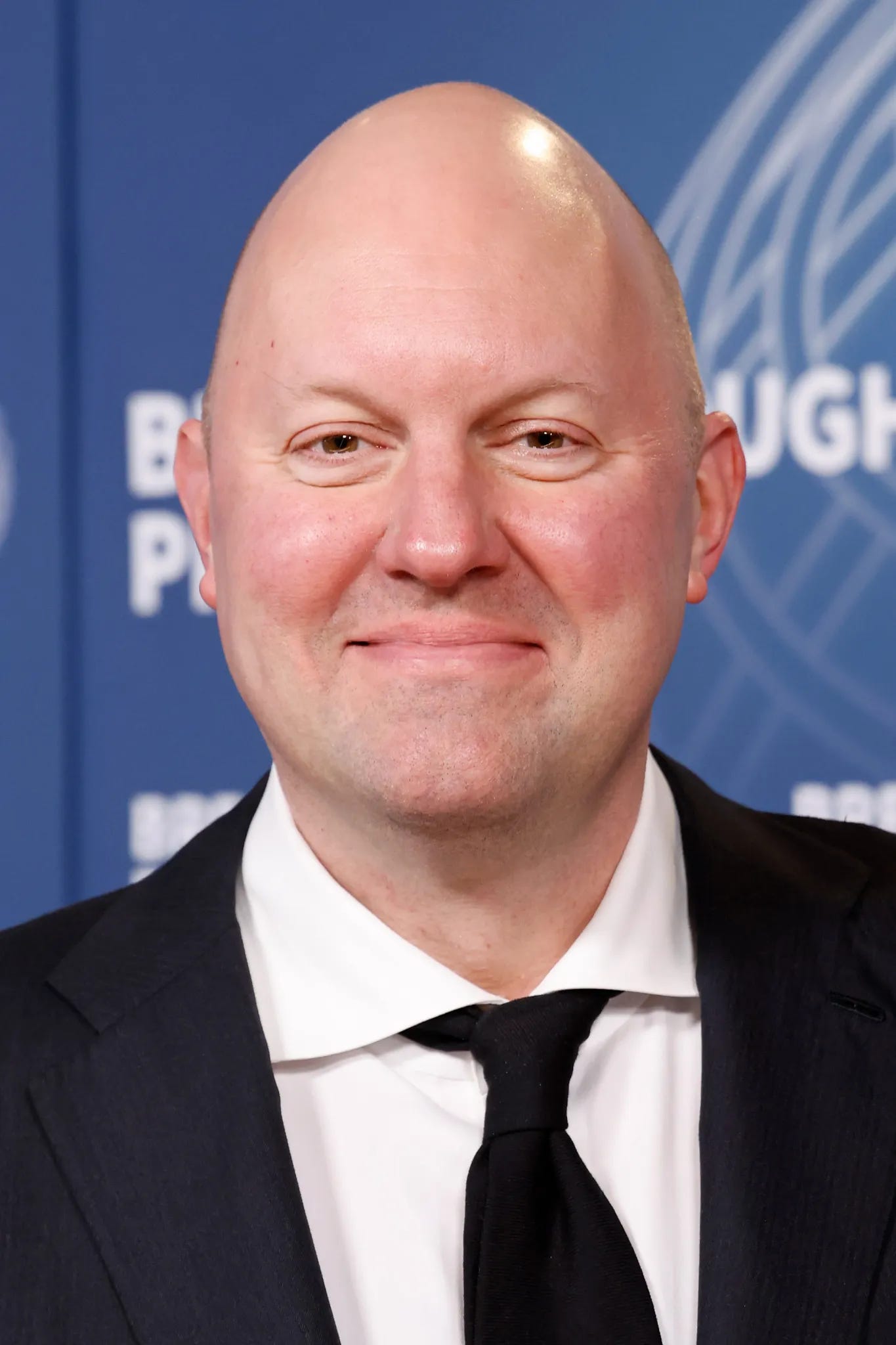
Marc Andreessen is the co-founder of Andreessen Horowitz, one of Silicon Valley’s most powerful venture capital firms, with deep investment in AI and cryptocurrency. In 2023 he published what he called a “Techno-Optimist Manifesto,” a 5,200-word document declaring that technology is “the glory of human ambition and achievement” and dismissing anyone calling for caution as part of a “mass demoralization campaign.” He listed sustainability, tech ethics, and safety teams as enemies. He wrote that pausing AI development to prevent potential harm “is a form of murder.”
These are not fringe voices. These are the people shaping policy and capital allocation for the most powerful technology in human history.
Now look at what that technology is actually doing.
The seven largest tech companies in the United States now account for more than one-third of the entire S&P 500’s market value. In 2025, these few companies drove the overwhelming majority of the market’s gains, while the other 493 companies in the index were largely flat. The market stopped being a measure of the economy. It became a bet on a handful of firms.
A single large AI data center can consume enough electricity in a year to power 500,000 ordinary American homes, according to the International Energy Agency.
The 22-to-25-year-old software developers who were told that learning to code was their ticket into the middle class saw their employment rate fall nearly 20% from its peak, according to a Stanford study. Not factory workers. Not truck drivers. The people who did everything right by the logic of the system that was sold to them.
This is not disruption. This is consolidation.
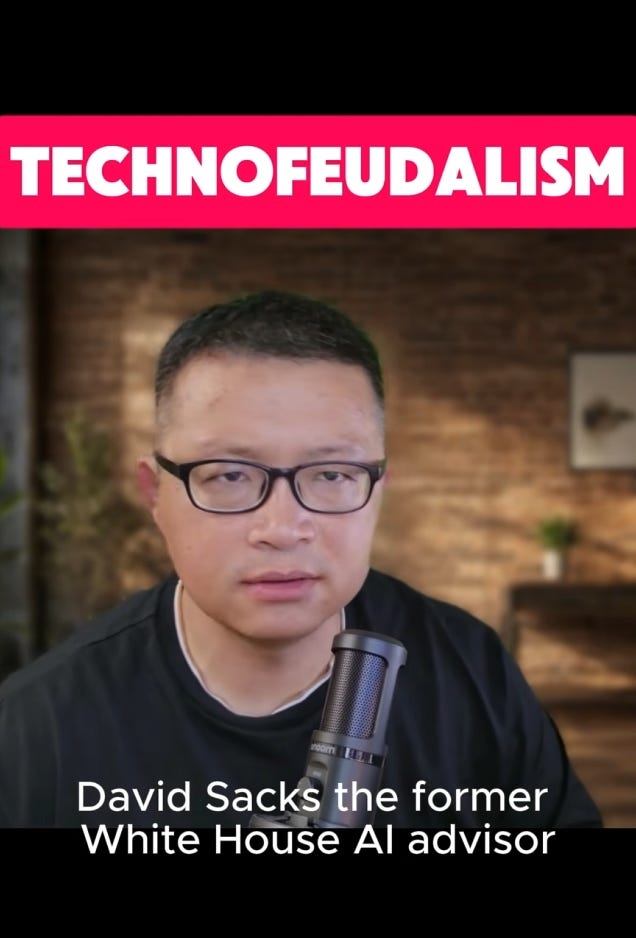
The structure being built here has a name. Economists call it techno-feudalism. The concept is straightforward. In the old feudal system, lords owned the land. Peasants worked it and paid rent to use it. The lords did not produce anything. They extracted.
In the AI economy, Nvidia owns the GPU chips. Microsoft owns the cloud infrastructure. OpenAI controls the frontier models. Any company, any developer, any working person who wants to participate in the AI economy has to rent access from these players. You do not own the means of production. You subscribe to them.
The landlord did not disappear. He just moved to a server farm in Virginia.
Andreessen says the alternative to this arrangement is stagnation. Sacks says it is what American competitiveness requires. What neither of them mentions is that Andreessen’s firm profits directly from the companies they are describing, and Sacks was making policy for an industry in which he held personal investments.
There is a word for this.
Corruption.
Working people have been through this before. When the steam engine arrived, the mill owners said it would create prosperity for everyone. It did create prosperity. For the mill owners. The ten-hour workday, the weekend, the minimum wage, child labor laws, none of that came from the goodness of capital. Every single one was extracted through organized labor, through strikes, through political struggle, through people who understood that technology’s benefits do not redistribute themselves automatically.
The question has never been whether technology changes things. It always does. The question is who captures the change.
The resistance is already happening. Amazon warehouse workers in Staten Island formed the first independent Amazon union in 2022 without the backing of any major labor organization. Google contract workers have organized. Hollywood writers went on strike specifically over AI and won protections. These are real victories.
But look closely at the pattern. Each of these fights was fought alone. The warehouse workers won something for warehouse workers. The writers won something for writers. Each industry secured its own corner and went home.
That is exactly the arrangement the ruling class can live with.
What terrifies capital is not a strike. Capital has survived strikes for two hundred years. What capital cannot survive is solidarity that crosses the lines between industries, between the coder and the warehouse worker and the delivery driver and the data labeler in the global South cleaning the training sets for poverty wages. The thing being done to all of them is the same thing. The owners are the same owners. But as long as each group fights only for itself, the people building the enclosure get to face them one at a time.
The AI economy is not ungovernable. It is ungoverned, by design, by the people who profit from the absence of governance.
What an alternative looks like is not complicated to describe. AI infrastructure built on public subsidy should have public accountability. Algorithmic systems making decisions about employment, credit, and housing should be subject to democratic oversight. The workers whose data trained these models have a legitimate claim on the value those models generate. These are not radical demands. They are the same structural logic that gave working people the eight-hour day.
None of this will come from Sacks or Andreessen. They have told you exactly who they are.
It will come, if it comes at all, from working people recognizing that the developer losing her job to an AI agent and the warehouse worker monitored by an algorithm and the data labeler in Kenya are not in separate struggles. They are in the same one. The ruling class already knows this. That is why they prefer you fight in pieces.
History is not encouraging about waiting. It is also clear about what has actually worked. Never the isolated trade. Always the many, refusing to be divided.
The Leak That Exposed America's Real Government

A Swiss hacktivist named maia arson crimew found a vulnerability in a website. What fell out was not a corporate database or a government file. It was the membership records of a secret society that has been operating at the center of American power for twenty years without a single public disclosure.
The Empire Blinked at Hormuz

This week the United States signed a document it spent decades swearing it never would.
Follow the Money in Maine: Who Is Actually Paying for This Senate Race

On June 27 of last year, private equity billionaire Stephen Schwarzman wired 2 million dollars to a Super PAC backing Susan Collins. On June 28, Collins cast a deciding vote to advance Trump’s tax bill. The vote was 51 to 49.
When the CEOs Start Warning You, It's Already Too Late

Last week, the CEOs of Kraft Heinz, McDonald’s, and Whirlpool all said the same thing within days of each other. Not the same general sentiment. The same actual message: American consumers are running out of money.
The Real Reason George Soros Wants to Defeat China Has Nothing to Do With Democracy.

George Soros has spent the last decade calling China the greatest threat to open society in the world. He says this at Davos. He says this in the Wall Street Journal. He has said, in his own words, that his interest in “defeating Xi Jinping’s China” goes beyond U.S. national interests.
China Assigned a Government Official to Every Poor Family. Here Is What That Actually Looks Like.

When people talk about China’s poverty reduction campaign, the conversation usually jumps straight to the big numbers. Hundreds of millions lifted out of extreme poverty. Massive infrastructure investment. Rural development at scale.
American Elites Sold the Future, Then Blamed China

There’s a story making the rounds: “We let China into the WTO. We gave them market access. We thought they’d become democratic. Instead, they stole our technology, manipulated currency, and became a superpower. We were too naive.”
The Economy Keeps Growing. So Why Does Ordinary Life Feel Smaller?

America’s problem is not that the economy stopped growing
Trump Didn’t Go to China Because America Won

For years, Washington treated China like a problem that could be solved with pressure. Raise tariffs, restrict chips, move factories, punish companies, and tell the public that “decoupling” would rebuild American industry and bring jobs back home.