

When people talk about China’s poverty reduction campaign, the conversation usually jumps straight to the big numbers. Hundreds of millions lifted out of extreme poverty. Massive infrastructure investment. Rural development at scale.
Those numbers are real. But they miss the part of the system that is actually interesting.
The interesting part is not the money. It is the accountability structure underneath it.
Before we go further, if you find this kind of analysis useful, subscribing keeps it going. All these are free to read. If you want to support the work and help keep it independent, consider becoming an upgraded reader. It genuinely makes a difference. Thank you for being here.
How it worked
Under China’s targeted poverty alleviation program, local governments did not simply identify poor households and send them aid. They built a registry. Every household below a certain threshold was classified by name, by condition, by specific problem: low-income household, special hardship household, household at risk of falling back into poverty, recently stabilized household under continued monitoring.
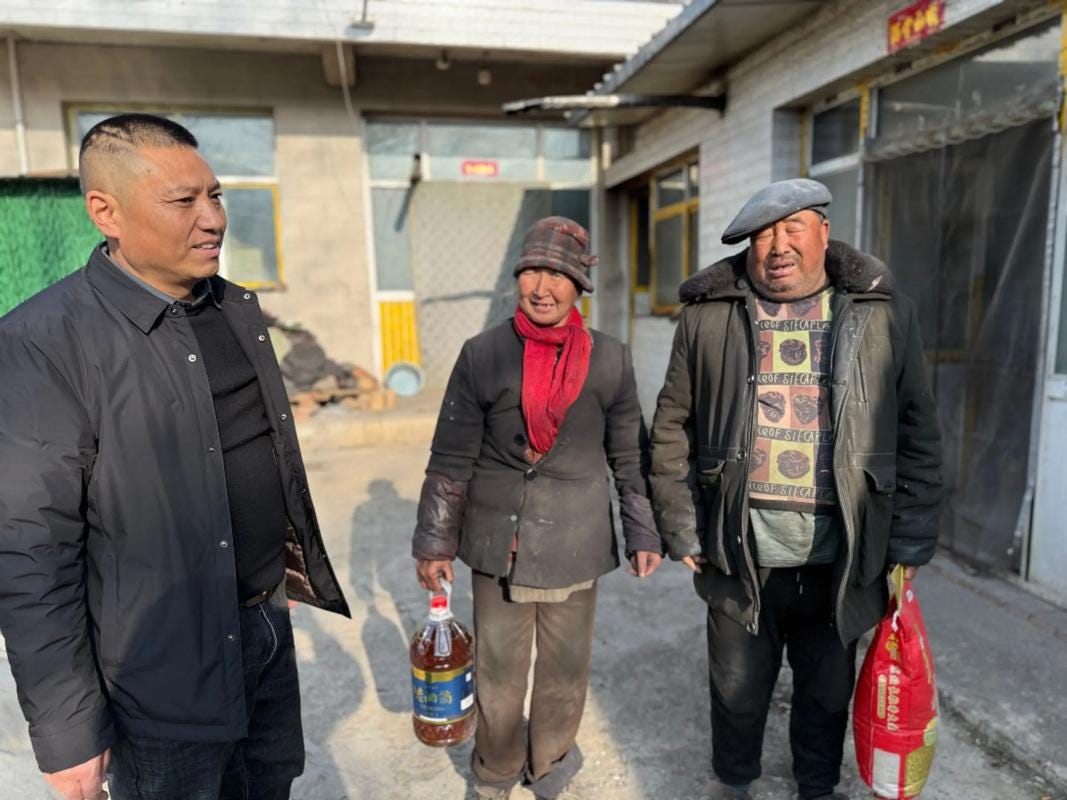
Then came the unusual part. Each registered household was assigned a specific government official as their personal accountability partner. This is the “one-on-one pairing” system. One cadre, one family. Or in some regions, one cadre and a small group of households.
This official was expected to make regular home visits. To understand whether the elderly parent had access to medical care. Whether the children were attending school. Whether the housing was structurally safe. Whether someone in the household had stable income. Whether the family was at risk of slipping backward.
These were not suggestions. They were documented, tracked, and reviewed.
The part that made it serious
Performance in poverty work was tied directly to career evaluation.
In China’s political system, local officials advance based on measurable outcomes. If your assigned households stabilized, that counted in your favor. If problems went unreported and unresolved, that followed you professionally. The system did not rely purely on goodwill. It created organizational pressure. It made poverty outcomes a personal career variable for hundreds of thousands of local officials.
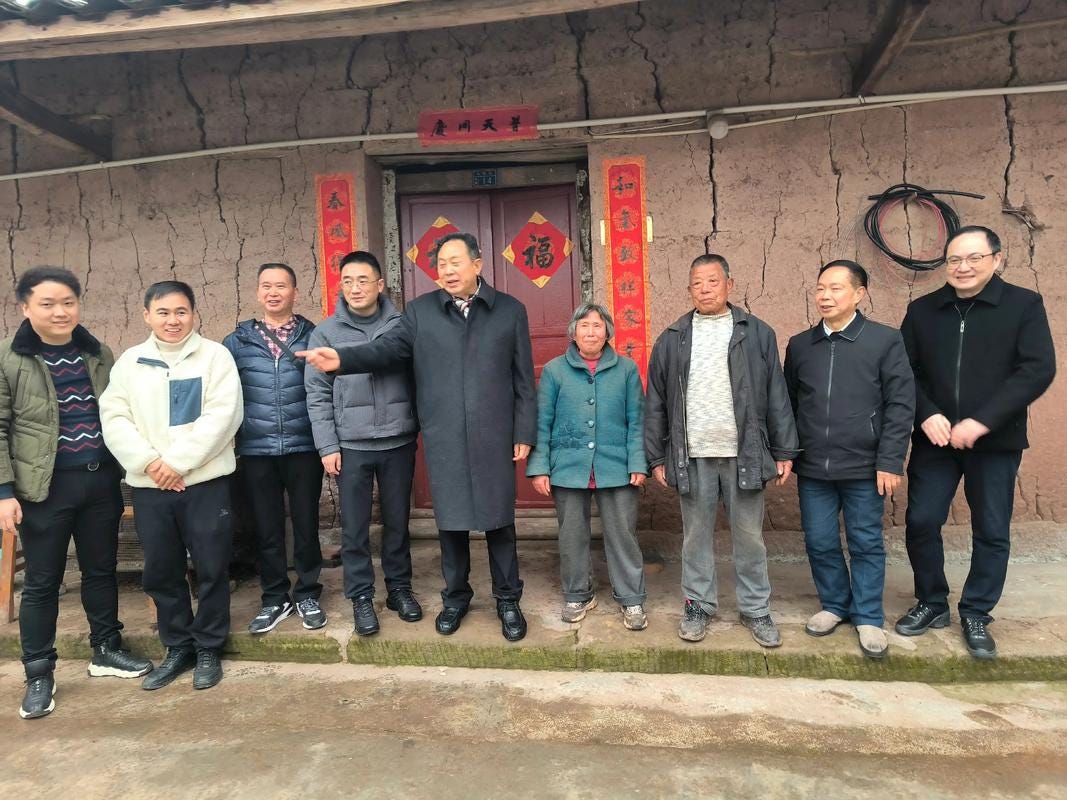
According to official government figures, over 775,000 cadres were deployed to villages under this program. Nearly 200,000 officials served as embedded “first secretaries” in poverty-level villages, often for years at a time.
“Poverty was no longer an institutional abstraction. It had a name, an address, and someone specifically responsible for it.”
Why the structure matters
There is a well-known problem in large organizations called diffusion of responsibility. When many people are theoretically responsible for something, the practical result is that nobody is specifically responsible. Everyone points to someone else. The problem remains.
China’s system attacked this directly. By assigning specific names to specific households, accountability stayed attached to a person rather than disappearing into a department.
The second advantage is information quality. Poverty is not a single condition. One family’s core problem is medical debt. Another’s is unstable employment. Another’s is a roof that is collapsing and they cannot afford to repair. An institution looking at aggregate data will not catch most of this. A person visiting the same household over years will.
The honest limitations
Some officials under pressure to show results produced paperwork instead of outcomes. Visits were recorded but not genuinely conducted. Families were marked as stable when they were not. Cadre quality varied significantly by region and by individual. These are real and documented problems. The system is not a template to copy wholesale. It is a mechanism to study seriously.
What this looks like from the other side
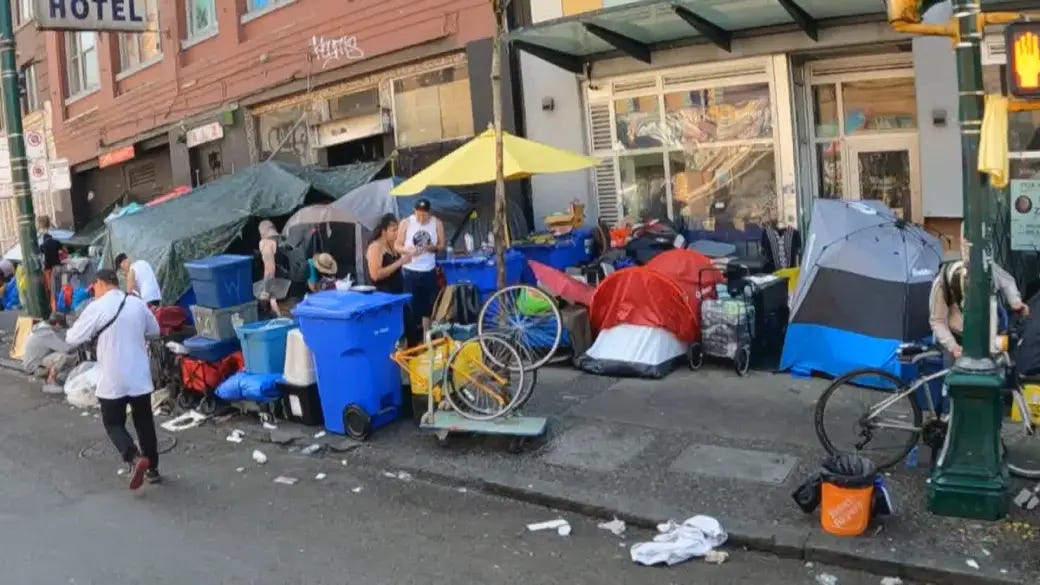
In the United States and Canada, social support systems are built around institutions, programs, and eligibility criteria. Caseworkers change. Administrations change. Election cycles shift policy priorities. Programs get restructured, underfunded, or discontinued.
The person experiencing poverty remains constant. The system around them does not.
Poverty rarely resolves in twelve months. It often takes years of sustained, consistent engagement to produce lasting change. A system that resets its attention and personnel every few years is structurally mismatched to a problem that does not reset.
Taxpayers fund significant social infrastructure and feel frustrated by the results. That frustration is not irrational. It is a governance question: when outcomes are poor, who is specifically responsible? In most Western welfare systems, that question does not have a clean answer. Responsibility is distributed across agencies, levels of government, and electoral cycles until it effectively disappears.
The problem is not always a lack of funding. Sometimes the problem is that no specific person is responsible for the outcome.
The goal here is not to declare one country superior. It is to identify design features that produce better outcomes, regardless of where they come from. China’s system shows that embedding personal accountability into poverty work produces results that institutional programs often cannot. That is a structural lesson, not an ideological one. Both systems have something real to learn from each other.


There are a couple of anti poverty strategies that can be addressed here: 1. Use the Cuban bio, psycho, social approach to medicine where family doctors are assigned a neighbourhood and they are required to go out and visit everyone in that neighbourhood. If you have poverty by postal code, this is an important step, because you don't really know how people are living until you see them in their homes. In order for this to be not invasive, your doctors and public health need to be trained to be radically egalitarian so people do not feel judged and then refuse to open their doors. And medical teams need to be the same people, over and over, to establishment relationships of trust. Preferably, your medical teams would be people who come from poor neighbourhoods, who are medically trained as is the case in Cuba. 2. Women in poor neighbourhoods are already organizers. This is well documented in the US literature. Find those women and empower them to collectively identify problems and solutions with their neighbours. Poor people are poor due to lack of resources, not because they aren't smart enough to identify problems and solutions. You want to build collective capacity, not individual dependence on social workers. The one social worker to one family approach is seriously flawed - the social worker probably with the least understanding of poverty and the least lived experience, is the gatekeeper of the resources. Now everyone has to wait for them to understand poverty, in order for problems to be solved. And that's if they are motivated. Never put social workers in charge.
Americans would whine and cry if they had a government official assigned to them, even if it improved their situation. This is another reason China is kicking our butts.