

MrBeast, whose legal name is Jimmy Donaldson, has expanded his business empire again. Through Beast Industries, he has acquired Step, a fintech platform aimed at teenagers and young adults. Step markets youth-focused money tools, including spending accounts and a Step Visa Card designed to help users build credit through partner-bank infrastructure.
Step is not a traditional bank. It operates through partnerships with regulated institutions. But the structure matters less than the direction of the move.
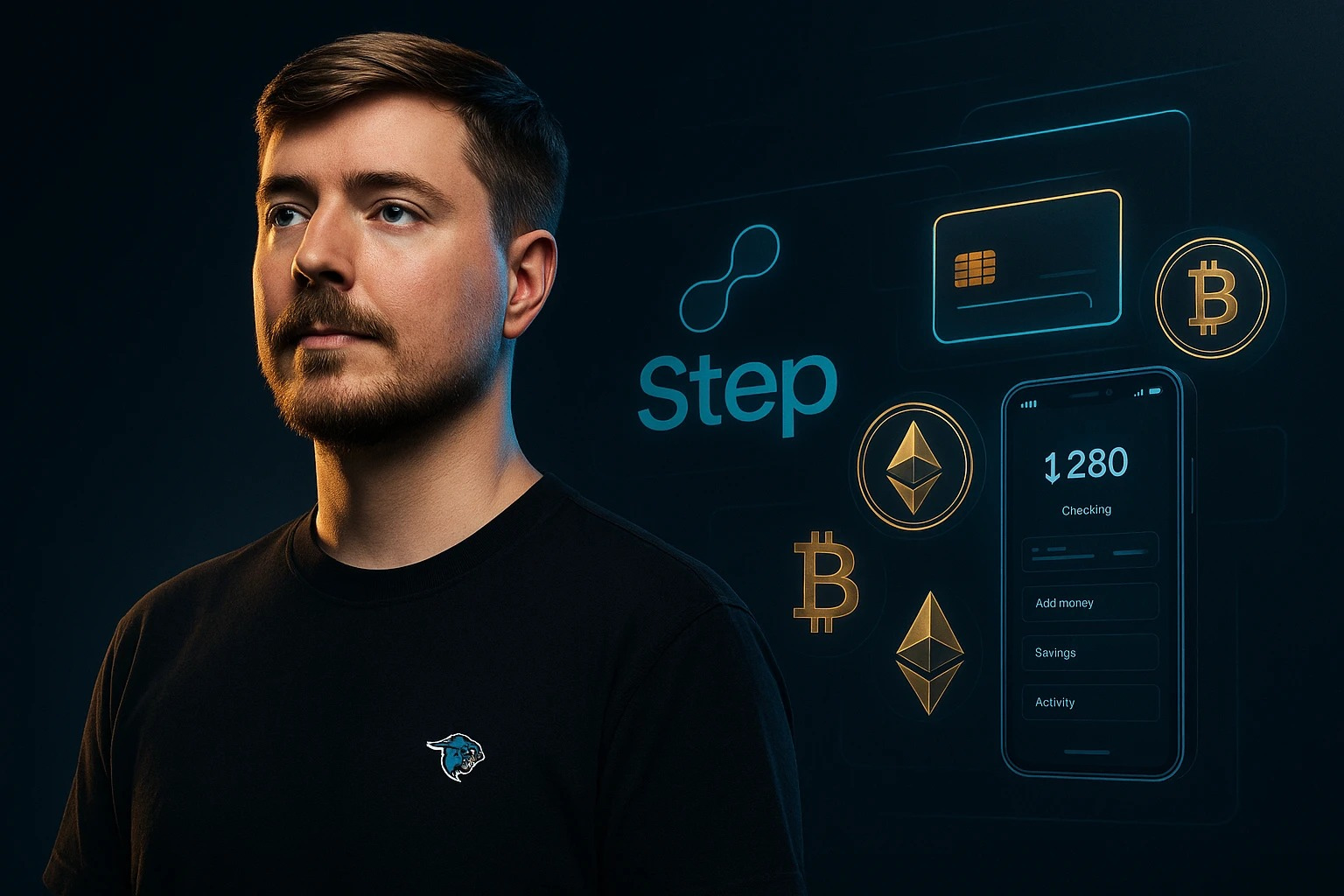
One of the most powerful entertainment brands on the internet is now stepping directly into the financial habits of minors and young adults.
Stop calling this diversification. It’s vertical integration.
Here’s the pattern:
Attention → Trust → Consumption → Financial dependency
Content captures attention. Consumer products test loyalty. Finance locks in long-term value.
Entertainment monetizes emotion. Snacks monetize impulse. Finance monetizes time.
Once you move into finance, you’re no longer just selling products. You’re shaping spending routines, payment habits, credit exposure, and long-term financial identity.
Living in Canada and sometimes in the States, the pattern is hard to unsee. Once a company gets big enough and builds a loyal customer base, it eventually pushes a financial product. Credit card. Rewards program. Financing. “Pay later.” Some kind of money layer. That’s not innovation. That’s capitalism doing what it always does: turning trust into a permanent toll booth. The capitalist move is predictable. Once the brand owns your attention and your habits, it tries to become a vampire, sucking profit out of you for as long as you keep breathing.
Look at the pattern across industries. Costco has the Costco Anywhere Visa Card. Amazon has its branded rewards cards. Walmart, Target, Best Buy, Macy’s, Home Depot, and Lowe’s all run store credit programs. Apple launched Apple Card. Even Starbucks has a co-branded Visa.
Youth finance is about lifetime value, not “help”
Step is marketed as empowerment: financial literacy, better habits, early credit-building. The language sounds responsible.
But the business logic is lifetime value. If someone enters a financial ecosystem at 15, you influence spending patterns, saving behavior, first credit exposure, borrowing decisions, and platform loyalty into adulthood. The earlier the entry, the stronger the lock-in.
This is long-term positioning.
Entertainment logic meets money behavior
MrBeast’s content runs on spectacle, extreme outcomes, and reward anticipation. That structure drives engagement. It does not cultivate careful financial judgment.
Financial decisions usually reward slowing down, questioning promises, and tolerating inconvenience like reading terms or delaying purchases. Influencer branding lowers that friction by making products feel familiar before they are fully understood. Attention becomes trust. Trust becomes acceptance.
Some point to his charity work as proof that the risk is overstated. Charity builds moral credibility. Moral credibility lowers skepticism. When a brand moves into finance, that credibility becomes leverage.
The gambling-style reward psychology in viral content also matters. Turning uncertainty into excitement and risk into hope is a core feature of capitalist entertainment economies. When most of the audience is young, that conditioning has consequences.
This is not about demonizing a person. It’s about recognizing what happens when influence begins to function like financial infrastructure.
Fandom replaces class awareness
Young audiences may not think in class terms yet, but they understand loyalty. When a financial product is attached to a creator identity, criticism can feel like betrayal.
That emotional insulation makes structural questions harder to ask. If the only identity available is “consumer,” then economic power becomes invisible.
Follow the risk
From a working-class perspective, the analysis is straightforward.
Young users carry behavioral risk, early credit exposure, and long-term habit formation. Companies capture scale, data, and recurring revenue streams.
That asymmetry is not unique to MrBeast. It’s platform capitalism operating as designed.
The system rewards this move
MrBeast is not an exception. He is an outcome.
Attention converts into brand power. Brand power converts into consumer pipelines. Consumer pipelines convert into financial integration.


A previous CEO of a US car company once quipped (sic) "we're a bank that makes cars as a sideline". That's an interesting segue from Henry Ford's assertion that his intent was to produce cars that the people who built them could afford to buy.