

A Direct Confrontation at the United Nations
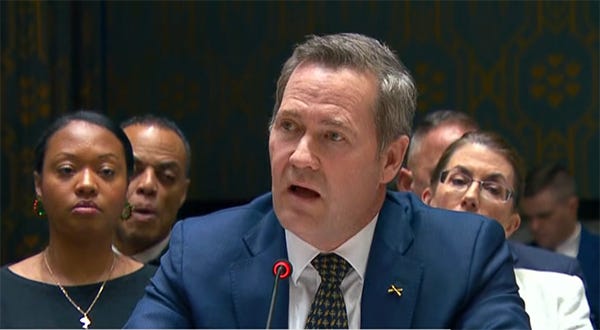
On December 23, an emergency meeting was convened at the United Nations Security Council following U.S. actions against Venezuela that Washington claims are part of an “anti-drug” campaign. This was the second Security Council meeting on the issue in recent months.
The United States reiterated that it does not recognize the legitimacy of the Maduro government, accused it of using oil revenue to fund transnational criminal and terrorist organizations, and warned that it would “use all instruments of national power” to continue pressure. U.S. representatives defended the seizure of Venezuelan oil tankers and recent naval operations as lawful enforcement of sanctions.
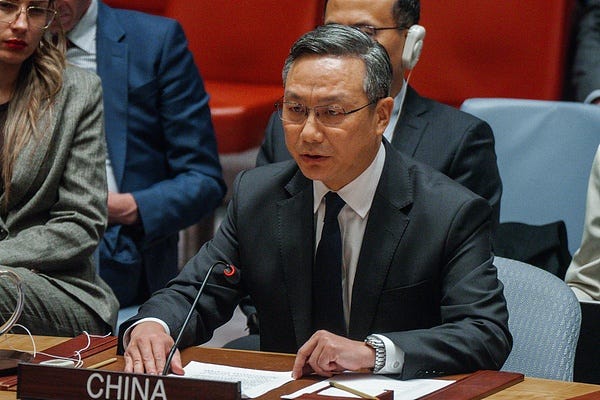
Venezuela rejected the accusations outright, stating that the alleged terrorist organizations do not exist and that the U.S. actions amount to a de facto blockade. China and Russia challenged the U.S. position at the Council, arguing that Washington’s conduct violates international law, undermines state sovereignty, and threatens peace and stability across Latin America and the Caribbean.
On the surface, the dispute was framed around drugs and security. In reality, the disagreement cuts much deeper.
National Positions That Reveal the Real Conflict
The Security Council meeting exposed a clear and unambiguous clash of logic.
The U.S. position rested on three linked claims. First, the refusal to recognize Venezuela’s government as legitimate. Second, the systematic association of the Venezuelan state with terrorism and organized crime. Third, the rebranding of cross-border military and enforcement actions as lawful “international policing” or self-defense.
China responded at the institutional level, emphasizing opposition to unilateral action, rejection of extraterritorial enforcement, and the necessity of Security Council authorization for the use of force or coercive measures.
Russia went further, describing U.S. behavior as “cowboy-style conduct” and warning that Washington was promoting a dangerous precedent, one in which a sovereign state could be reclassified as a criminal enterprise by unilateral decree.
Venezuela’s representative stripped away the narrative framing altogether. This was not about drugs, security, or freedom. It was about oil, minerals, and land.
At that point, the issue was no longer rhetorical. It became structural.
“Anti-Drug” Is Not a Justification. It Is a Tool.
If this were genuinely an anti-drug operation, one basic question would have to be answered. Where is the evidence?
Over recent months, U.S. forces have sunk roughly 30 vessels labeled as “drug ships” in the Caribbean and eastern Pacific, resulting in more than one hundred deaths. Yet no verifiable evidence has been presented to substantiate the claims that these vessels were engaged in narcotics trafficking.
At the same time, Washington has expanded its military presence in the region and openly suggested that seized Venezuelan oil could be absorbed into U.S. reserves.
This pattern is not new.
For decades, terms such as drugs, terrorism, and humanitarian crisis have been repeatedly deployed as preliminary narratives for intervention. Their function is consistent. They require urgency, not proof. Once the story is accepted, the action no longer needs justification.
That is why the Venezuelan statement at the Security Council matters. It does not reverse cause and effect. It restores it. Resources are not targeted because of crime. Crime is invoked because of resources.
From Sanctions to Blockade. A Qualitative Escalation.
Sanctions and blockades are not the same.
Sanctions are economic and financial instruments that, at least in theory, operate within a non-war framework. A blockade is a coercive military act. It directly interferes with navigation, trade, and a country’s economic lifelines.
Seizing oil tankers, sinking vessels, and conducting enforcement operations in international waters move beyond traditional sanctions. When such actions occur without Security Council authorization and become normalized, the authority of international law is hollowed out.
If this practice is accepted, rules cease to restrain power. They begin to serve it.
“Non-Recognition” as a New Trigger for War
The most dangerous development is not any single action, but the logic behind it.
The sequence is now familiar. Declare a government illegitimate. Link the state itself to criminal or terrorist activity. Redefine military pressure as law enforcement.
In this framework, war no longer requires a declaration, and aggression no longer requires admission. A sovereign state can be downgraded into a criminal entity through narrative alone, and any action taken against it can be rebranded as justified enforcement.
When legitimacy is determined unilaterally, sovereignty becomes conditional. It ceases to be a legal principle and becomes a political permission.
Russia’s warning at the Security Council was explicit. This is not an isolated case. It is a template. Once validated, it will be reused.
Conclusion
Venezuela Is Not an Exception. It Is a Test Case.
The confrontation at the Security Council revealed more than a regional dispute. It exposed a structural shift in how power is exercised in the international system.
If “anti-drug” and “anti-terror” narratives can be endlessly expanded to justify cross-border coercion and resource control, and if Security Council authorization becomes optional, then future conflicts will no longer require principles. They will only require stories.
Venezuela is not the endpoint. It is the proof of concept.
More stories you might interested,


