

Every religion in the world teaches the same thing about money.
Let it go. Do not chase it. Do not worship it. The soul matters more than the wallet.
Then someone had to manage the donations.
A Chinese court sentenced the former abbot of Shaolin Temple to 24 years in prison last week. The charge sheet read like a corporate fraud case. Embezzlement. Misappropriation of funds. Bribery. Nearly $40 million USD, built quietly over more than two decades, inside one of the most famous religious institutions on the planet.
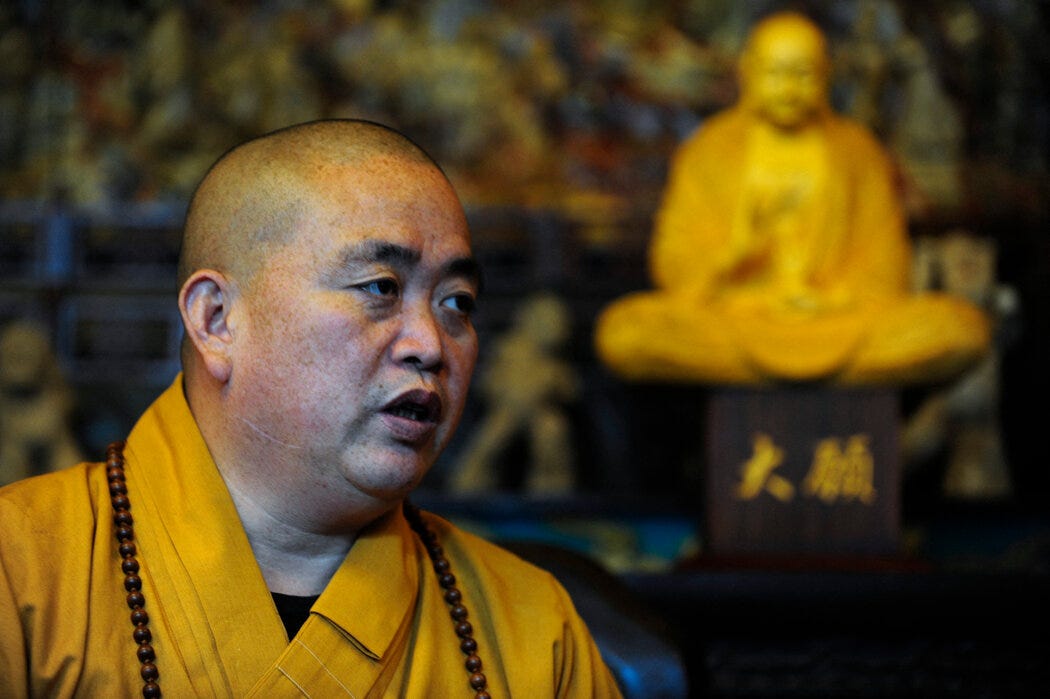
Most coverage will give you the spectacle. The women. The money. The fall from grace.
Here is what that coverage misses.
This is the kind of analysis I publish regularly. If you want to understand how power and money actually work, not just the headlines, subscribe or upgrade and stay in the loop.
The moment a religion learns to scale, it stops being a religion and starts being an industry. And industries do not produce saints. They produce executives.
Shaolin Temple didn’t become a commercial empire overnight. It was engineered into one, step by step. Martial arts performance tours. Brand licensing deals. Cultural tourism development. International franchise operations. Trademark registrations across dozens of countries.
For years, Shi Yongxin was celebrated as the “CEO of Buddhism.” That title was meant as a compliment. That was the first warning sign nobody took seriously.
When a religious institution begins running like a corporation, something invisible shifts. The mission stays the same on paper. The incentives underneath quietly change. Power concentrates at the top. Assets grow larger. Oversight struggles to keep up. And the structure built to serve spiritual guidance slowly starts serving something else entirely.
If you think this is a China problem, look closer to home.
Kenneth Copeland, estimated net worth $760 million, lives in a $7 million, 18,000 square foot home and structured his ministry bylaws so that he holds personal veto power over the entire board, with his wife, son, and son-in-law filling the remaining leadership roles. Donors had no vote. Creflo Dollar asked his 30,000-member congregation to fund a $65 million private jet, tax-free, because spreading the gospel apparently required a Gulfstream G650. Jesse Duplantis, already owning three jets, asked his congregation to fund a fourth. He and Copeland publicly explained that commercial flights were unacceptable because the planes were full of demons. Joel Osteen stopped taking his $200,000 church salary in 2005, then made tens of millions from book deals promoted through church-funded television broadcasts, while living in a $10 million Houston estate.
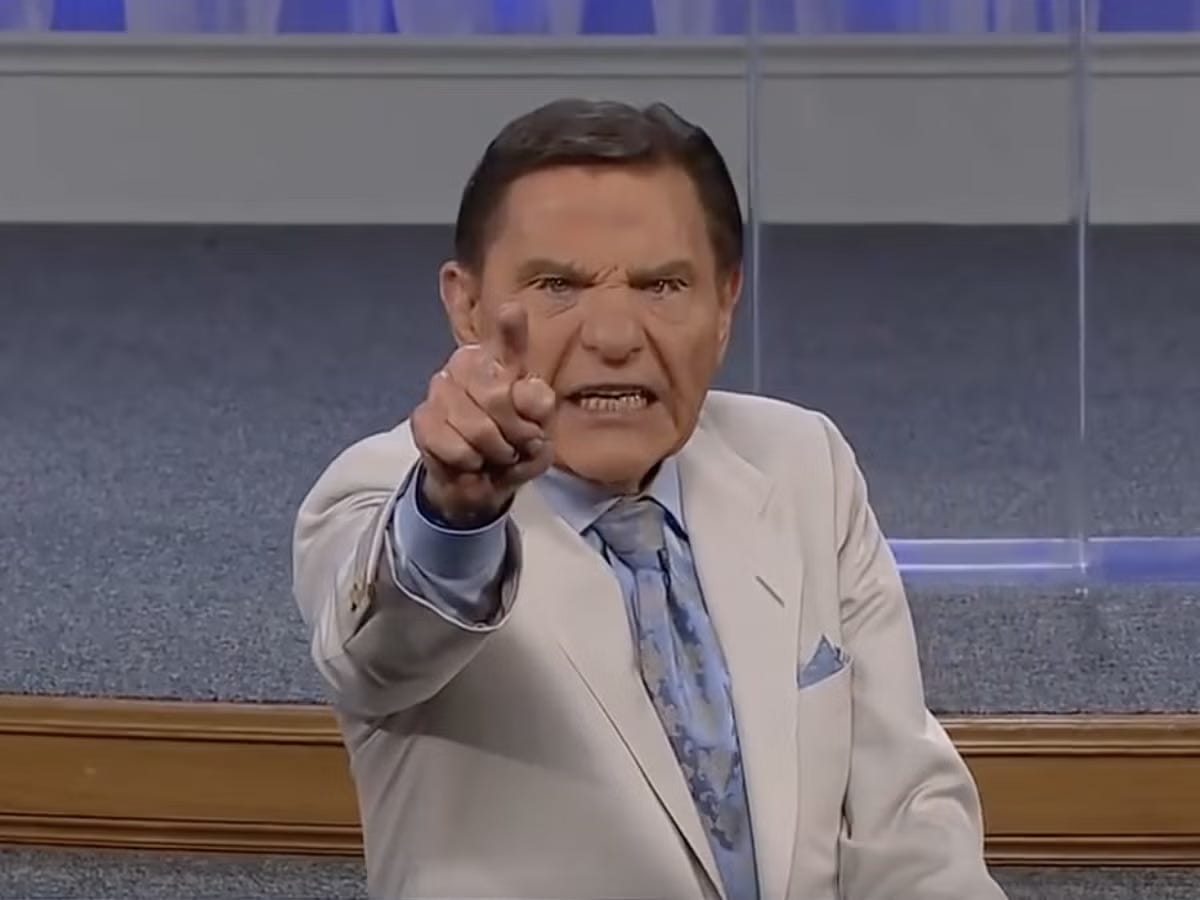
Different country. Different religion. Same structure.
Sacred symbols generate trust. Trust generates resources. Resources generate power. Unchecked power generates corruption. This is not a moral failing. It is a design flaw.
The Chinese Buddhist Association said Shi Yongxin “brought this entirely upon himself.” That is true. But individuals do not build $40 million extraction machines alone. The structure has to allow it.
Ordinary people visited Shaolin Temple and lit incense. They hoped for peace, health, a better year ahead.
Ordinary Americans fill megachurch seats every Sunday. They tithe 10 percent of their income. They buy the books. They fund the jets.
The people managing those cash flows were thinking about something different.
That gap, between what an institution promises and what it actually optimizes for, is one of the defining features of modern life. You see it in healthcare systems that talk about patient welfare but optimize for billing. In financial institutions that talk about serving clients but optimize for fees. In political systems that talk about public interest but respond to donor pressure.
Religious institutions are not exempt. They never were. They just had better branding.
Shi Yongxin’s conviction does not close this story. It opens a question that nobody in power wants answered.
How many other institutions, religious, civic, nonprofit, cultural, are running on the same architecture right now? How many sacred symbols are quietly functioning as commercial assets, with the people at the top treating public trust as a revenue stream?


Neil,
This is a well balanced explanation of the exploitation of humanity.
People need hope and as such can't see what's in front of them.
The USA has perfected the televangilist grift and I am sorry it is elsewhere.