

A Story That Should Make People Stop
Mohammad Nazeer Paktyawal spent ten years fighting alongside U.S. special forces in Afghanistan. When Kabul fell in 2021, he was evacuated to the United States along with thousands of other Afghan partners who had worked with American forces.
He survived the war. He survived the Taliban takeover.
But in March 2026, after being detained by U.S. Immigration and Customs Enforcement, he died within a day of entering ICE custody in Texas.
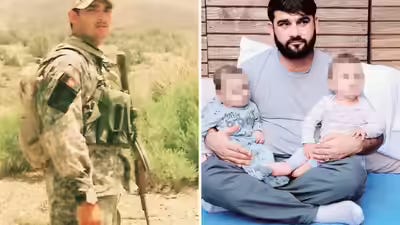
According to reports, Paktyawal was preparing to drive his children to school when immigration officers surrounded him outside his home. Later that day he reportedly contacted family members from detention and said he was not feeling well. That night he was taken to Parkland Hospital in Dallas. By the following afternoon, he was dead.
Paktyawal left behind a wife and six children. One of them is a U.S. citizen.
He had a pending asylum case and had already completed an interview with U.S. immigration authorities. He was working in Dallas and paying taxes.
By most measures, he was doing exactly what the system tells immigrants to do while waiting for their case to be decided.
Yet he still died inside that system.
Loyalty and the Limits of American Promises
Paktyawal’s story immediately raises a difficult question about loyalty.
During the war in Afghanistan, the United States depended heavily on local partners. Afghan soldiers, interpreters, and security personnel worked directly with American forces and often risked their lives for that cooperation. For years, American officials assured these partners that the United States would not abandon them.
History suggests those assurances have often proven fragile.
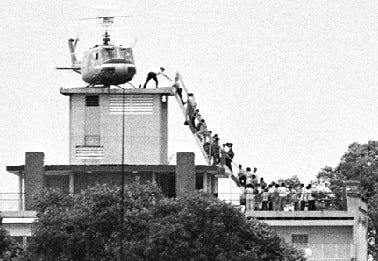
After the fall of Saigon in 1975, many South Vietnamese allies were left behind. Iraqi interpreters waited years for visas after helping U.S. forces during the Iraq war. When Kabul collapsed in 2021, thousands of Afghan partners again faced bureaucratic delays and uncertainty.
Paktyawal’s death adds another chapter to this pattern. He was not killed on a battlefield. He died inside the immigration system of the country he once helped.
For many observers outside the United States, that symbolism is difficult to ignore.
A System Growing Larger Every Year
Paktyawal’s death is also part of a larger trend.
Immigration detention in the United States has expanded dramatically in recent years. Tens of thousands of people are held in ICE detention facilities across the country at any given time. Estimates place the number close to seventy thousand detainees.
At the same time, deaths in immigration custody have been increasing. Analysts warn that if current trends continue, this year could become the deadliest year in ICE detention in more than two decades.
This expansion is tied directly to policy priorities. Large scale arrests and deportations require more detention capacity, more personnel, and more infrastructure.
The system keeps getting larger.
And when large systems expand rapidly, oversight often struggles to keep pace.
Medical care becomes strained. Facilities become overcrowded. Administrative mistakes become more likely. Individual cases receive less attention.
The result is a detention system that increasingly resembles a mass administrative machine.
The Detention Industry
There is another dimension to this system that receives far less public attention.
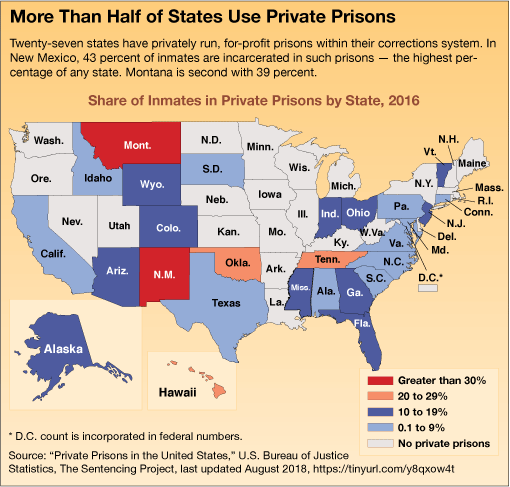
Immigration detention in the United States is partly operated by private contractors. Major companies such as GEO Group and CoreCivic run detention facilities under federal contracts.
These companies receive billions of dollars from the government to house detainees and operate facilities.
That arrangement creates a broader economic ecosystem around detention.
Private prison operators
Security contractors
Medical service providers
Food suppliers
Construction firms
All participate in the detention system.
The business model is straightforward. The more detainees the system holds, the more money flows through the network of contracts.
This does not mean every actor in the system behaves with bad intent. But the incentive structure is clear. When detention becomes tied to revenue streams, expansion can become economically attractive.
The Incentive Problem
Once financial incentives enter the picture, priorities inevitably shift.
If detention numbers rise, facilities remain full. Contracts remain profitable. New construction projects become easier to justify.
Under those conditions, the well-being of detainees is not always the central concern. The system primarily requires that detainees remain alive and manageable inside the facility.
From a purely economic perspective, the goal is operational continuity, not necessarily humane conditions.
If deaths occur, they are often treated as isolated incidents rather than evidence of deeper structural problems.
Paktyawal’s death took place inside exactly this type of system.
What This Story Reveals
Paktyawal’s death strips the whole thing down to its core. During the war, he was useful, so he was treated like an ally. Inside the immigration system, he was no longer useful, so he was treated like a detainee.
That is how this machine works.
It does not honor loyalty. It does not remember sacrifice. It does not care what someone once meant to the state. It cares about categories, processing, detention numbers, and institutional convenience.
And once detention becomes tied not just to politics but to money, there is even less reason for the system to treat people with dignity. Keep them contained, keep the machine moving, and if some of them die, absorb it as administrative fallout.
That is the real scandal here.
Paktyawal’s death is not just a tragedy. It is a window into what this system is becoming.
What I’m Trying to Do Here
If you find this kind of analysis useful, consider subscribing.
A big part of what I try to do here is look at political events through a working-class lens. Not just the headlines, not just the political drama, but how these systems actually affect ordinary people and how power really operates behind the scenes.
Too often the conversation is framed as left versus right. But many of the issues we are seeing today are really about something deeper: who holds power, who makes the decisions, and who ends up paying the price.
Short videos can capture attention for a moment. But long-form writing allows us to slow down and unpack the structures behind the news.
If you enjoy these articles and want to keep following the analysis, feel free to subscribe.
And if you would like to support this work a little more directly, consider upgrading to a paid subscription. It genuinely helps me keep researching, writing, and producing these pieces regularly.
Either way, I appreciate you taking the time to read and think through these issues with me.


These aren’t accidental deaths. They’re not unfortunate mistakes, nor are they simply inevitable in a fraught system.
Someone did this. Someone should pay.
Where is Renee Good’s killer today? Or Alex Pretti’s?
There’s no rug big enough to sweep this under. We must follow up.
It is often better to have America as an enemy than as a friend.