

A joke has been circulating online about a Chinese man and his Italian colleague. The Italian colleague asks whether he believes in Christianity. He says no. The colleague asks why. He says that when he was a child, he prayed to Jesus for a bicycle, but nothing happened.
The Italian colleague replies, very seriously, “You did it wrong. You should have stolen a bicycle first, then asked Jesus for forgiveness.”
That is the joke.
The comments made it even better. “Jesus forgave you, but the bicycle owner didn’t. He called the police.” Another one said, “Changing your mindset sometimes opens a new door. Unfortunately, that door leads straight to prison.” The sharpest version was this: Chinese people treat religion like a savings account. Westerners treat it like a credit card. Spend first, pay later.
Of course, it is exaggerated. But that is exactly why it works. It crashes two very different moral systems into each other. One thinks in terms of consequence. The other thinks in terms of sin, repentance, and forgiveness. One asks what harm was done. The other asks whether the sinner has changed.
That is not a small difference. It shapes culture, and over time, it shapes how a society thinks about responsibility, authority, and even politics.
Chinese moral culture is built around consequence
Chinese religious culture did not come from one single doctrine. It grew out of Buddhism, Daoism, folk belief, and Confucian ethics layered together over centuries. Even many people who are not religious still carry the same moral instinct: what you do matters, and it does not simply disappear because you regret it later.
In Buddhism, that appears as karma. In Daoist thought, it appears as balance and order. In folk belief, it becomes even simpler: if you do wrong, it will come back to you sooner or later. The language changes, but the structure stays the same. Actions accumulate. Harm leaves traces. Debts do not vanish just because the person who caused them feels sorry afterward.
That is why temple culture in China often looks practical. People pray for health, exams, money, work, peace in the family, protection from misfortune. If the wish is fulfilled, they return to give thanks or repay the vow. Outsiders sometimes mock this as transactional, but that misses the point. The deeper assumption is that the universe has order, and human behavior matters within that order.
If you stole the bicycle, then the problem already exists. The harm already happened. The victim already exists. The debt is already there. Saying sorry later does not erase the act.
That instinct runs deeper than religion. It becomes a cultural habit. Even people who have never read Buddhist scripture still grow up with some version of the same logic: good will be rewarded, bad will come back around, and what goes around comes around for a reason. In that worldview, responsibility is sticky. Once an act is done, it stays attached to the person.


Christianity places more weight on repentance and redemption
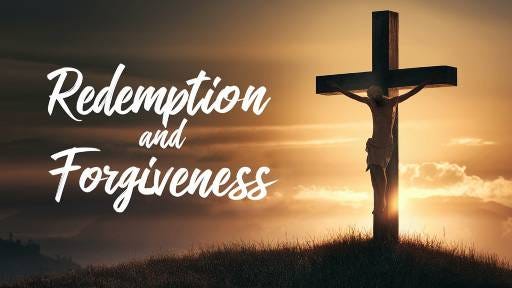
Christianity begins from a different place. Human beings are sinful. They fail. They fall. But they can also repent, be forgiven, and begin again. The central Christian narrative is not only sin. It is redemption.
To be fair, serious Christian theology is not “commit crimes and apologize later.” Repentance is supposed to involve remorse and moral change. But in popular culture, what stands out most is the structure of renewal. A sinner can be saved. A damaged life can be redeemed. A person can start over.
That is the logic the joke is mocking. It takes the structure of sin and forgiveness and turns it into an absurd shortcut: steal first, apologize later.
The joke is unfair if read as theology. But it works as cultural commentary because many people do recognize the emotional structure behind it. In Christian-influenced societies, there is much more emphasis on confession, repentance, forgiveness, and the possibility of moral rebirth.
So the contrast is clear. In one worldview, wrongdoing creates a debt that stays open. In the other, wrongdoing may still be followed by grace, change, and a second chance.
Chinese gods are not imagined as absolute in the same way the Christian God is
There is another difference here, and it matters just as much.
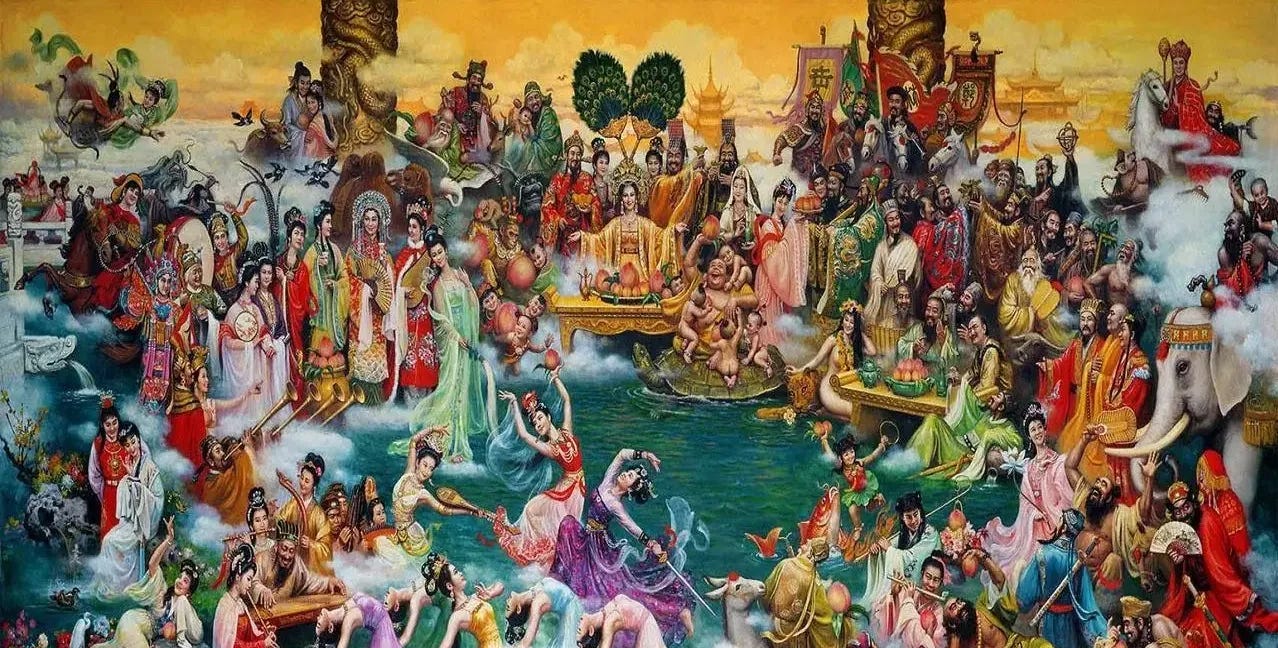
In Chinese culture, gods and Buddhas are not usually imagined as absolutely perfect in the same way the Christian God is. The sacred world in Chinese tradition is layered, plural, practical, and deeply connected to the human world. Different gods have different roles, different domains, different personalities, and different stories. People pray to different deities for different needs. The sacred world is powerful, but it is not organized around one single being who absorbs all moral authority into one absolute center.
That shapes moral thinking.
Chinese religious life often treats the sacred as part of a wider structure of balance, hierarchy, consequence, and obligation. Gods are not always presented as pure abstraction or absolute perfection. The sacred world reflects a reality that is layered and complex.
Christianity is different. God is singular, ultimate, and much closer to absolute good, absolute truth, and absolute authority. That creates a sharper moral binary. Good and evil are more clearly separated. Salvation and damnation are more sharply opposed. The structure is more absolute.
Once that kind of structure enters a civilization, it does not stay inside church walls. It affects how people imagine truth, judgment, legitimacy, and power. A culture shaped by a layered sacred order is often more comfortable with ambiguity, contradiction, and practical balance. A culture shaped by a morally absolute God is more easily drawn toward purity, righteousness, and final judgment.
That is one reason Western politics so often turns into moral theater. Everyone has to be righteous. Everyone has to be evil. Everyone has to be saved or condemned. The language may sound political, but a lot of the underlying instinct is theological.
The deeper difference is about responsibility
This is why the joke matters beyond religion. At the deepest level, it exposes two different ways of understanding responsibility.
In the Chinese moral imagination, responsibility behaves like a ledger. You did it, so it stays with you. It may come back through law, reputation, fate, social judgment, or later consequences, but it does not simply vanish. The world keeps accounts.
In the Christian moral imagination, responsibility can be transformed through repentance. The act matters, but so does confession, remorse, and inner change. A person may still be forgiven. A soul may still be redeemed.
That produces two very different instincts.
One says: you did it, so you carry it.
The other says: you did it, but you may still be saved.
Neither system is perfect. A society that overemphasizes consequence can become fatalistic. A society that overemphasizes forgiveness can turn mercy into a moral escape hatch. But these are still two different civilizational habits, and they shape social life over time.
Why this reaches into politics
This is also why the joke can open a larger conversation about politics and society.
If a culture is shaped by long-term consequence, it tends to think differently about wrongdoing, power, leadership, and accountability. If a culture is shaped by moral absolutes and redemption, it is more likely to frame conflict in terms of purity, guilt, confession, and salvation.
That affects more than religion. It affects legal culture, public rhetoric, and political behavior. One society may focus more on accumulated consequences and social balance. Another may be more drawn to public confession, moral performance, dramatic condemnation, and the fantasy that someone can wash themselves clean and start over.
This is one reason so much Western political culture feels theatrical. The structure is familiar: sin, judgment, confession, redemption, repeat. It is not just media logic. It is a deeper reflex.
The Chinese tradition has its own contradictions, obviously. But it has historically been more grounded in order, consequence, relationship, and practical reality. That does not make it morally superior. It makes it structurally different.
By the way, if heaven is real, I don’t think any of these people will arrive there. And, Trump already knows.

Conclusion
That is why the bicycle joke sticks.
It is not just a joke about religion. It is a joke about responsibility.
One culture hears, “Steal the bicycle first, then ask for forgiveness,” and thinks that is absurd. The harm is already done. The debt is already there.
Another culture hears the exaggerated shape of a familiar moral logic: sin, confession, grace, and the possibility of beginning again.
That is the deeper difference. One side thinks the account stays open. The other thinks the soul may still be forgiven.
I write pieces like this because most people only get the surface version of culture. They get the joke, the stereotype, the easy punchline. The goal here is to dig into the deeper structure underneath.
If that kind of analysis is useful to you, subscribe to the newsletter. And if you want to support this work more directly, consider upgrading to a paid subscription.


Very corrupted Western Christianity of genocide imperialism, pillage colonialism,slavery, exploitation, etc for numerous centuries masquerading as the good religion for non believers and devotees absolutely has no credibility whatsoever vis-a-vis their centuries of evil and vile deeds!
> That is one reason Western politics so often turns into moral theater. Everyone has to be righteous. Everyone has to be evil. Everyone has to be saved or condemned. The language may sound political, but a lot of the underlying instinct is theological.
My grandfather taught us that this binary (although he didn't use the term binary, you understand) came from the origins of the Abrahamic cults. The desert.
An oasis is heaven, the desert is hell.
This is why they are so black and white, us and them, good and evil.