

Before I begin, thank you to everyone who reads, shares, and supports this work. That support matters to me more than I can fully say. It gives me the space to talk directly and honestly. If this piece says something useful, please subscribe, share it, and if you want to support this work more seriously, I would deeply appreciate you could consider upgrading your subscription.
I’m back in Wuhan now, and the change is easy to see. Some high-end restaurants are struggling. Private rooms are less busy. Expensive dinner bookings are down. The old pattern of official entertaining and liquor-heavy banquets has clearly cooled.
Part of that is economic. Consumption is softer, and luxury spending is usually one of the first things to weaken. But that is only part of the story.
The other part is political. China’s 2025 crackdown on official drinking, banquets, and wasteful public-sector hospitality has sharply reduced this kind of activity. Many people call it an “alcohol ban,” but that phrase is too blunt. The real target is not private drinking. The real target is the old culture of using public office to justify expensive meals, liquor, and relationship-building behind closed doors.


What the Crackdown Is Really Targeting
This matters because official banquet culture was never just about food.
When ordinary people drink together, that is social life. When officials, contractors, middlemen, and businessmen gather repeatedly in private rooms over expensive bottles, that is often informal politics. Relationships are built there. Favors are hinted at there. Access is negotiated there. By the time anything appears on paper, the real work has often already been done.
That is why the state keeps returning to this issue. Corruption does not always begin with cash in an envelope. Sometimes it begins with a dinner invitation and a bill no one at the table is personally paying.
So the point of the crackdown is simple: public office is not supposed to operate through banquet culture.
Why Some Restaurants Are Feeling It
To be fair, not all of this downturn comes from the crackdown. The economy has weakened, confidence is lower, and high-end spending has softened. That is real.
But politics is also part of the picture. Officials going to these restaurants for drinking, entertaining, and informal networking has fallen sharply. In some places, it has nearly disappeared.
That does not mean these restaurants were all built on corruption. That would be lazy and dishonest. It means part of their old business came from a political culture that is now under tighter control. Once that channel shrinks, the effect shows up quickly.
The same thing applies to premium liquor brands and banquet-driven hospitality more broadly. When official consumption drops, those sectors feel it.
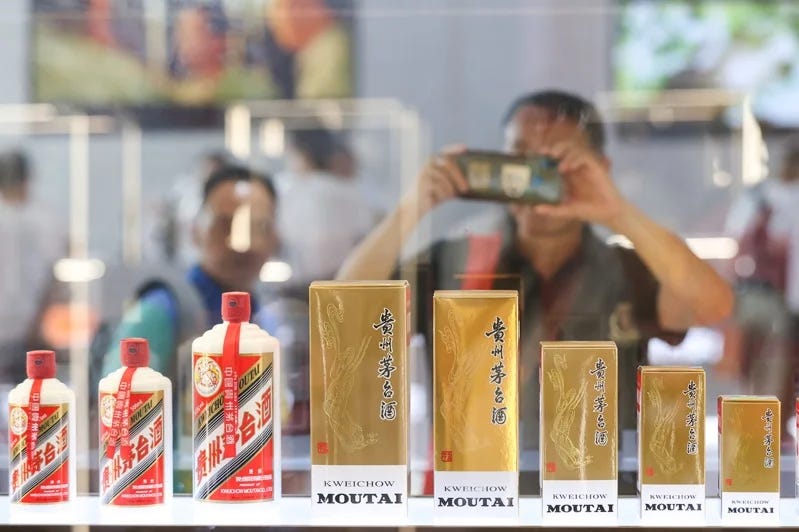
Why This Matters
This is bigger than one industry.
Banquet culture teaches officials that office comes with lifestyle privilege. It teaches businessmen that access matters more than rules. It teaches everyone else that real decisions are made through relationships, not procedure.
That is poison for public trust.
No one serious is arguing that officials should never drink or never have private lives. That is not the issue. The issue is whether public office becomes a doorway into private privilege funded by everyone else.
That is the line China is trying to draw more clearly.
Now Compare That With the United States
Now look at the United States, where elite excess is often treated as normal politics.
Trump turned wealth display, donor access, and status performance into a political style. The White House becomes a stage. Mar-a-Lago becomes a power club. Donors, lobbyists, and wealthy insiders move through luxury spaces while ordinary people are told this is just democracy functioning normally.
It is not. It is hierarchy dressed up as freedom.
If a Chinese local official sat in a luxury banquet hall drinking top-shelf liquor on a publicly covered tab, Western media would call it corruption immediately. But when American elites gather with billionaires behind closed doors, the language suddenly changes. Now it is networking, fundraising, influence, access.
Cut the nonsense. The packaging changes. The structure does not.


Final Thought
A political system reveals itself in small scenes: the private room, the bottle on the table, the guest list, the bill no one claims to pay.
China’s 2025 crackdown is not simply about alcohol. It is about trying to cut down a culture where office becomes entitlement and hospitality becomes currency. That is one reason some high-end restaurants are feeling pressure. Not the only reason, but a real one.
Meanwhile, many Western elites continue turning wealth and access into public spectacle, then calling it democracy.
If you value analysis that looks past slogans and into how power actually works, please subscribe and share this article. That support matters a great deal to me. And if you want to help sustain this work long term, please consider upgrading your subscription. Paid support gives me the time and freedom to keep writing honestly.


Yes, "networking" the way incompetents and the corrupt float to the top of the cesspit
In the late 2000's when the economy behaved poorly, sales reps were told to slow down Travel & Entertainment. The ruling class members had to somehow, get & keep the bonus structure, & stock holders happy. Kudos for China! A wake up call for flaunts.