

On the surface, this looks simple: Taiwan’s opposition leader went to mainland China, talked about peace, and came home.
But this was not a routine visit. It was the first formal trip to mainland China by a sitting KMT chair in a decade, and it happened at a moment of rising military pressure, partisan deadlock in Taipei, and a wider U.S.-China struggle over Taiwan’s future. Reuters and AP both framed it as a politically significant visit, not a ceremonial one.
That is why the real question is not where Cheng Li-wun went. The real question is whether Taiwan still has political room for a path based on dialogue rather than constant escalation.
What actually happened
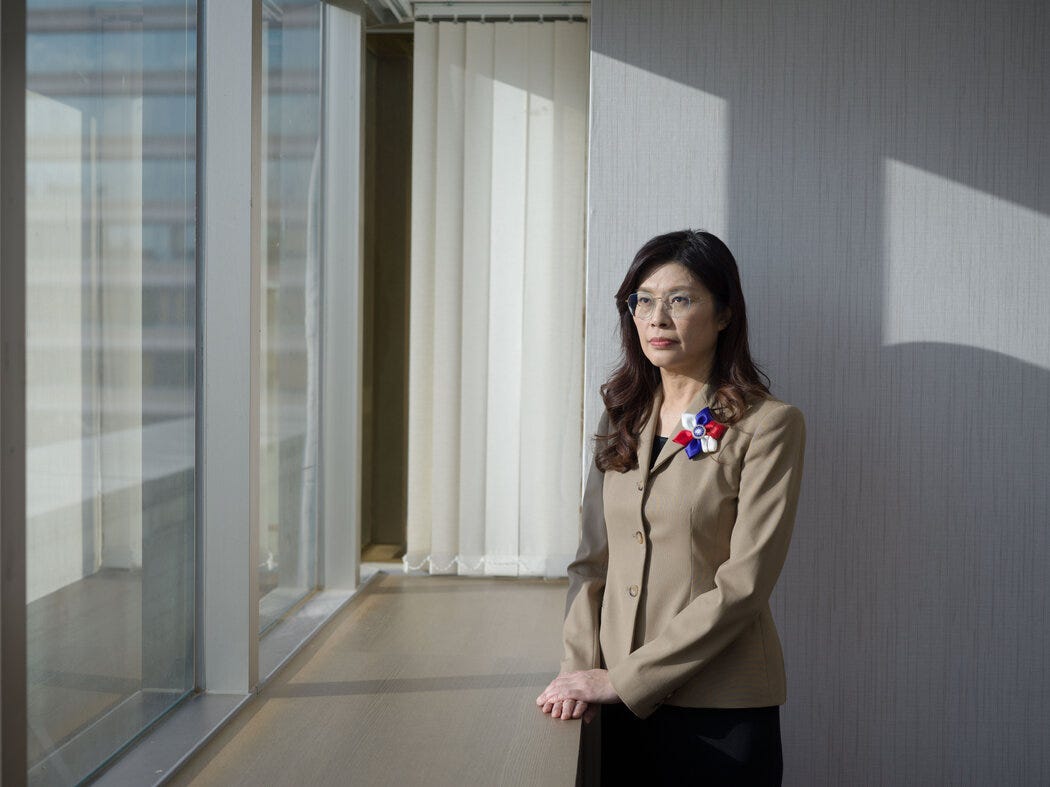
Cheng Li-wun, chair of the Kuomintang, visited Shanghai, Nanjing, and Beijing from April 7 to April 12. The route itself carried a message. Shanghai points to trade and Taiwanese business networks. Nanjing points to Sun Yat-sen, the Republic of China legacy, and the KMT’s historical identity. Beijing is where actual political authority sits.
The reception was also important. Song Tao personally welcomed the delegation. That matters because Song is not just another official. He heads China’s Taiwan Affairs Office, the central agency responsible for managing cross-strait policy. His role signaled that Beijing treated this as an official political event, not a symbolic exchange.
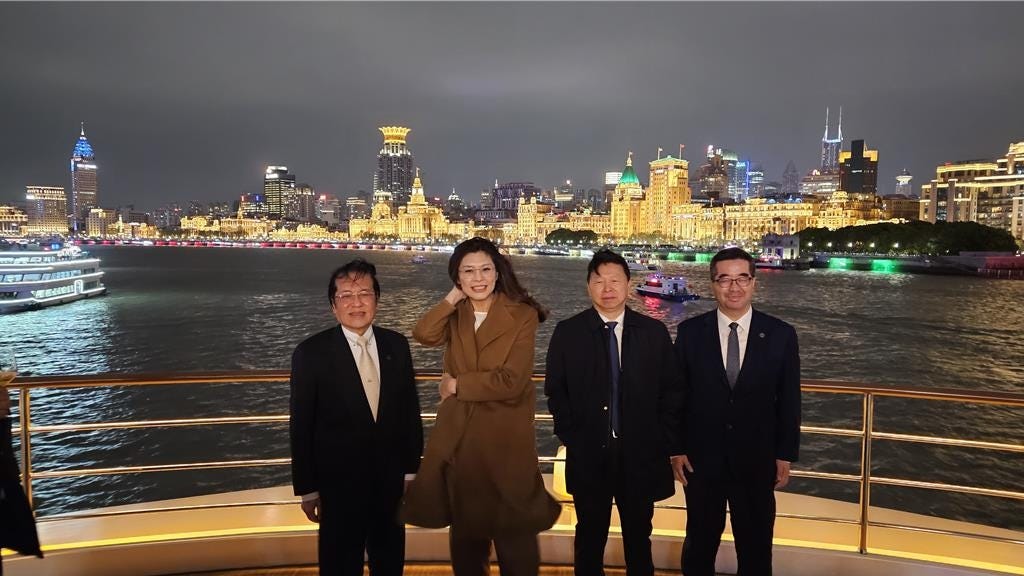
During the visit, Cheng reaffirmed the 1992 Consensus. In plain English, that formula says both sides agree there is “one China,” while leaving room for different interpretations. That ambiguity is exactly why it has functioned as a bridge for dialogue, even though it remains controversial inside Taiwan.
What Cheng was really saying in Nanjing
The most important part of the trip was not just the route. It was how Cheng defined the trip herself.
In Nanjing, she framed the visit as a peace mission with a political purpose. Her message had four parts. First, she argued that political differences across the Strait do not have to end in conflict. Second, she treated the 1992 Consensus and opposition to Taiwan independence as the only workable basis for stable dialogue. Third, she cast the KMT as a proven channel for cross-strait stability, pointing back to Lien Chan’s 2005 visit and the more stable period that followed under KMT rule. Fourth, she argued that Taiwan should not be reduced to a pawn in great-power competition. Reuters’ coverage of her Nanjing stop and her reconciliation language supports that reading.
That is the key point. This was not just a speech during the visit. It was a speech explaining how the visit should be understood.
This is not just independence versus unification
A lot of Western commentary still flattens Taiwan into a binary: independence or unification. That is too simple.
The sharper divide is over how to manage risk. One side argues that security comes from deterrence, tighter U.S. alignment, and larger defense spending. The other argues that security also requires communication, channel management, and de-escalation. Reuters noted that Cheng’s trip unfolded alongside fierce criticism from the ruling DPP over defense spending and the KMT’s approach to security.
So this trip was not best understood as “choosing China.” It was better understood as choosing a different theory of survival.
Beijing was signaling more than courtesy
Beijing’s handling of the trip also sent a message to Taiwan.
The KMT is not internally unified. It contains people with different instincts on China, the United States, elections, and even on what “peace” should mean. By giving Cheng such visible treatment, Beijing appeared to signal that Taiwanese politicians who still argue for dialogue, some degree of strategic agency, and less automatic dependence on Washington remain useful and valuable interlocutors. That is not just hospitality. That is political preference.
In other words, this trip was not only about Beijing talking to the KMT. It was also about Beijing shaping incentives inside the KMT.
The historical weight behind the KMT
This part is essential for Western readers.
The KMT is not just another opposition party. It was once the ruling party of China. After losing the civil war in 1949, the Republic of China government retreated to Taiwan. But the ROC still held China’s seat at the United Nations, including the Security Council seat, until October 1971, when the People’s Republic of China replaced it in both the General Assembly and the Security Council.
That history still shapes the party’s political language. When the KMT talks about cross-strait relations, it is not speaking only as a local Taiwanese party. It is speaking as the institutional remnant of a former Chinese state. That is why Nanjing, Sun Yat-sen, and the symbolism of continuity still matter.


The real problem is trust
The KMT’s argument is easy to understand: dialogue lowers risk, communication prevents spirals, and a stable channel is better than permanent brinkmanship.
The problem is that many voters, especially younger ones, do not hear “dialogue” and automatically think “safety.” Some hear concession. Some hear vagueness. Some hear a return to an older political language that no longer fits Taiwan’s identity. AP and Reuters both noted that Taiwan’s ruling side continues to insist that only Taiwan’s people can decide Taiwan’s future, while Beijing’s military pressure has not stopped.
So the issue is not whether dialogue is theoretically possible. The issue is whether enough people still believe it can happen without hidden costs.
Why this could still matter in a positive way
Even so, there is a cautiously positive way to read this trip.
If Taiwan’s political direction shifts and the KMT regains executive power in 2028, visits like this would stop being symbolic and start becoming policy tools. That would not solve every structural problem between Beijing and Taipei. It would not erase distrust, military pressure, or outside interference. But it could reopen something that has been shrinking for years: political space.
And that space matters. It matters for crisis management, business confidence, travel, education, family ties, and the daily stability ordinary people depend on. When elites turn every disagreement into a test of total loyalty, regular people pay the price first. A more stable channel does not guarantee peace, but it does reduce uncertainty. That has value on both sides of the Strait.
Peace does not start with agreement. It starts with the ability to keep talking.
Final thought
This visit was not just about one politician or one photo-op.
It was a test of whether Taiwan still has room for a middle path, one where dialogue with China is possible without being treated as immediate surrender, and one where security is not reduced to military logic alone.
If you want more analysis like this
No slogans. No cartoon narratives. Just a clearer view of how power, history, and incentives actually work.
Subscribe if you want to follow where this is heading. And if you want deeper breakdowns like this, consider upgrading to support the work.


I think the issue for discussion is the terms of unification with the mainland. Both in terms of the path, as well as the destination. Just my view.
More eligible voters didn't bother to vote than voted for Emperor Lai & the 2 pro-dialogue opposition parties combined got more vote than the wolf in sheep's cloak. Young people are no longer enamoured with the DPP, hence the fake corruption charge that has the popular Ko Wen-Je sentenced to 17 years - the real reason being more young people are turning from DPP to Ko's party. Letting DPP control the narrative is like letting AIPAC control the narrative. There is no real "democracy" in Taiwan.