

A lot of Americans and Europeans travel to China, especially to major cities, and come away with the same impression: China feels safe. People walk outside late at night. Women walk alone without the same level of fear many people have in Western cities. Phones sit openly on restaurant tables. Public spaces feel orderly in a way that surprises outsiders.
The most common explanation is also the laziest one. People say Chinese people are simply more disciplined, more obedient, or more collective. That answer sounds neat, but it explains very little.
China is not safer because people are morally better. China is safer because the system changed the logic of crime.
That distinction matters. Public safety is not just about culture, and it is not just about individual behavior. It is about the conditions a society creates around ordinary life. It is about what people can access legally, what pressures they live under, what risks they face, and what consequences they expect.
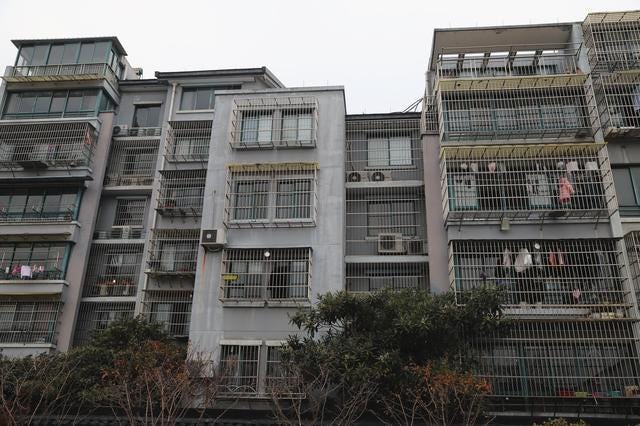
Crime begins with pressure, not just morality
A lot of crime starts with pressure. People want something, need something, or feel trapped by something, but they cannot solve it through legal means. At that point, some people take illegal shortcuts.
This is why moral explanations are usually too shallow. Of course personal responsibility matters, and not everyone under pressure commits crimes. But if the only explanation for crime is that some people are bad, then you are not really explaining anything. You are just describing the result and pretending the cause does not matter.
In reality, crime often grows where pressure, lack, and blocked opportunity come together. When people do not have stable access to material security, when upward mobility feels weak, and when basic needs are difficult to meet, the logic behind petty crime becomes stronger. Not justified, but stronger.

The capitalist problem is structural
This is where ideology enters the picture.
Capitalism constantly reproduces poverty and insecurity. Not everybody has to be poor, but the system needs a layer of people who are replaceable, under pressure, and afraid of falling. That pressure keeps wages low, weakens labor, and helps profit continue moving upward.
In a country like the United States, poverty is not just an unfortunate side effect. It is part of how the system functions. The economy does not simply fail to eliminate insecurity. It keeps recreating it.
And that insecurity comes with social consequences. Crime, disorder, addiction, theft, and broader social breakdown do not appear from nowhere. They grow in conditions where people are under permanent pressure. Housing is expensive. Healthcare is tied to work. Debt is everywhere. Consumer culture keeps telling people to want more, compare more, and chase more, while the actual path to stability remains fragile for millions.
That pressure never fully disappears. So the conditions that feed crime never fully disappear either.
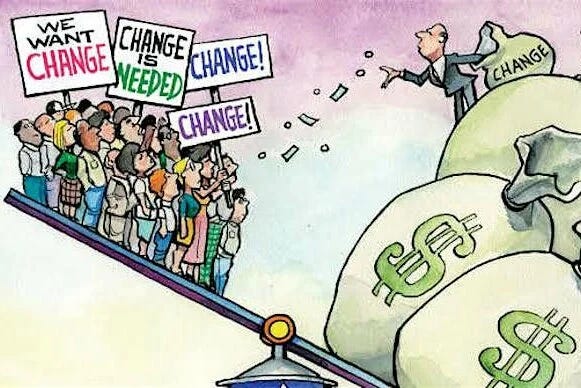
The United States manages the fallout
What does the American state do in response?
It usually does not remove the root causes. It polices the consequences.
That is one of the deepest structural weaknesses in the American model. Instead of solving the material conditions that generate instability, it manages the fallout after the fact. Policing expands. Incarceration expands. Political rhetoric about law and order becomes louder. But the underlying insecurity stays in place.
So the system ends up trapped in a cycle. It reproduces pressure from below, then acts surprised when that pressure creates social breakdown, then responds by policing the symptoms rather than removing the cause.
This is one reason the United States often feels unsafe in ways that go beyond crime statistics. The insecurity is social, psychological, and structural. People feel that the system is not stable underneath them, and that feeling spreads into daily life.
China changed the material baseline
China took a different path.
Over the last thirty years, China improved the material conditions of life for a huge number of people. Daily life became cheaper. Basic goods became easier to access. Food stayed relatively affordable. Infrastructure expanded. Survival became more realistic for ordinary people. The majority of Chinese people benefited, in one form or another, from this broader rise in material conditions.
That matters because when ordinary life becomes more survivable, petty crime starts to make less sense. If a person can legally obtain what they need with realistic effort, the incentive to steal weakens. The reward becomes smaller, and the risk becomes harder to justify.
This is the part many Western discussions miss. China did not become safer because people suddenly developed better morals. It became safer because for many people the need behind certain forms of crime was reduced.
Then the system raised the risk
Material improvement is only part of the story. The other part is control.
Cameras, digital payments, IDs, transport records, phones, and digital platforms all increased the practical risk of crime. Street-level crime became harder to hide, harder to repeat, and harder to get away with.
That combination is important.
Crime became less necessary for many people, and at the same time it became much riskier.
This is how a society changes the logic of crime. It does not just tell people to behave better. It changes the practical calculation underneath behavior.
Safety is not magic
None of this means China is perfect, and none of it means safety comes without trade-offs. Surveillance has costs. Control has costs. Conformity has costs. And crime does not disappear completely. It changes form. Street crime may decline while fraud, scams, and digital predation rise.
But that does not change the larger point.
China feels safer today because the system reduced some of the everyday pressures that produce petty crime, while also increasing the chances of detection and punishment. It changed both the need and the risk.
The United States, by contrast, continues to operate within a system that reproduces insecurity, then largely responds by policing the consequences.
That is why these two societies feel so different.
The deeper difference
This is not about one population being morally superior to another. It is not about some simple East versus West cultural cliché. It is about what kind of system people live under.
One system reduced much of the everyday logic behind certain forms of street crime.
The other system keeps reproducing the pressure that feeds it.
That is the deeper structural difference, and it is one that many Western discussions still refuse to confront honestly.
Closing
Thank you for reading and for the support.
If this kind of analysis is useful, please subscribe and stay with me here. This is where I try to go beyond surface-level headlines and get into the structure underneath them.
And if you want to support this work more directly, upgrading your subscription really helps keep this going.
More soon.


I see a China that continues to develop and manage systems that benefit 1.41 billion people.
The USA is controlled by an oligarchy and broligarchy that play a game of bullish-cruel-control. It's a finessed game of reverse psychology. So much of the 338.2 million USA population seem to trapped in a hypnotized state, are broken, and believe they are the problem.
So where's the safety? Somewhere in the rules of Bullish Cruel Control game.
Your commentary is outstanding and prolific.
This was very insightful; thank you.
I’ve always believed that the rate of crime in a society, like the rates of unemployment and wealth, are carefully calibrated by the controlling classes to whatever point they feel they can get away with.
This was very clear to me during the Crack epidemic where I lived in NY in the 80’s. An equitable society doesn’t benefit from poverty, drug use, or crime. An oligarchy thrives on them.