

A 29-year-old warehouse worker in California set fire to hundreds of millions of dollars’ worth of goods. He did not give a speech. He said one thing: this job could not keep him alive.
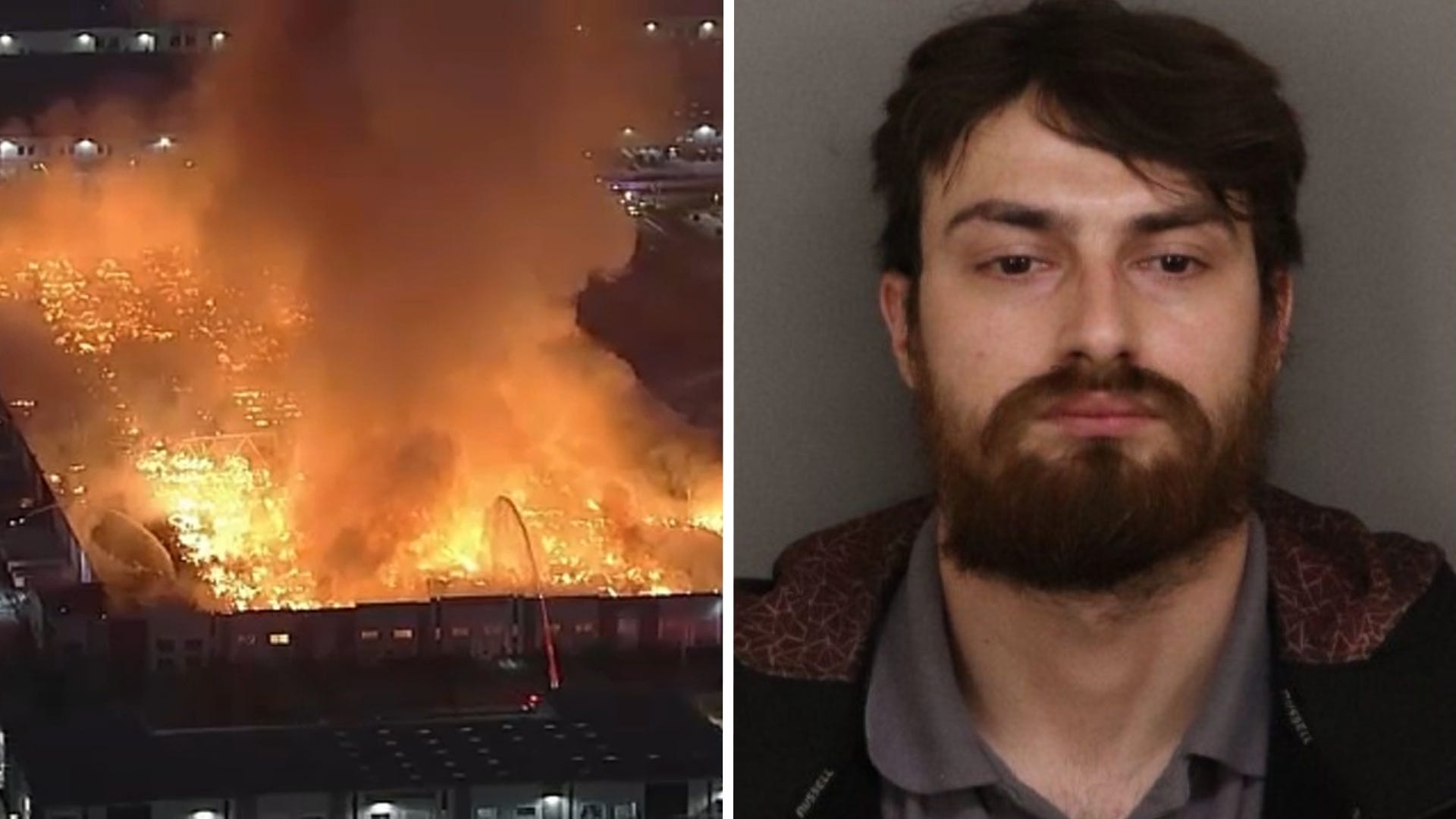
That sentence is the scandal.
This was not someone outside the system. This was a working man with a real job, showing up on time, doing physical labor, helping keep everything moving. And even then, it was still not enough. America has spent decades selling the same promise: work hard, follow the rules, keep your head down, and you will at least earn a life you can hold together. That promise is breaking in plain sight.
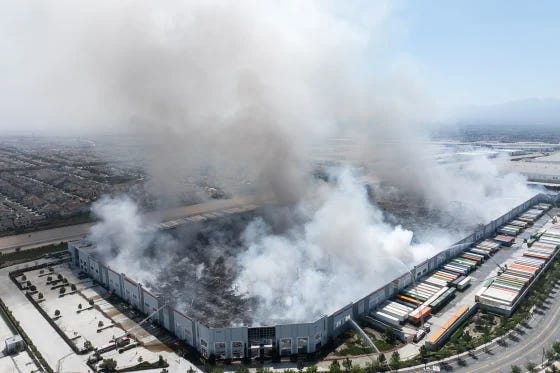
Work has become a slow form of suffocation
Rent rises. Food rises. Gas rises. Medical bills do not negotiate. Wages trail behind all of it.
Millions of workers are no longer building a future. They are managing decline. They are surviving one bill at a time, one shift at a time, one paycheck at a time. On paper, they are still working. In reality, they have already been cornered.
This is not about laziness. It is not about bad choices. It is not about workers failing. It is about a system that has turned labor into exhaustion and called that normal.
People are told to keep faith with the rules, keep showing up, keep sacrificing, and keep feeling grateful they even have a job. Meanwhile the return on that sacrifice keeps shrinking. After enough time, workers do not need a lecture to understand what is happening. They understand it in their rent, in their debt, in the panic of a missed paycheck, in the fear of getting sick at the wrong time. They understand that someone is taking what their labor should have secured.
The real fear is recognition
What the ruling class fears is not one fire. It is recognition.
The moment survival becomes the demand, the system calls it extremism. The moment workers stop suffering alone and start acting together, the tone changes. Now they are dangerous. Now they are irresponsible. Now they threaten order.
That is not confusion. That is class instinct.
The people at the top understand exactly what scares them. A worker suffering alone is manageable. A worker blaming himself is useful. A worker too exhausted to think beyond the next bill is ideal. But the moment workers begin to recognize themselves in one another, the situation changes. Isolation weakens. Anger sharpens. And the stories that used to keep the system stable start to lose their power.
Why unions terrify the people at the top
Corporate America does not hate unions because they are irrational. It hates them because they work.
Unions remind workers that they do not have to accept everything in silence. They turn isolated frustration into collective leverage. They force negotiations where there used to be none. Once workers act together, the language of “market limits” suddenly becomes flexible.
That is the problem.
Unions are not chaos. They are containment. They are the last structured way to keep conflict from escalating into something far less manageable. When the people at the top attack unions, they are not protecting stability. They are removing one of the last barriers between quiet suffering and open confrontation.
The ruling class needs to understand this, even if it does not want to admit it. Unions are the middle ground between asking nicely and something much more explosive. They are what still exists when workers are trying to stay on the peaceful side of the line.
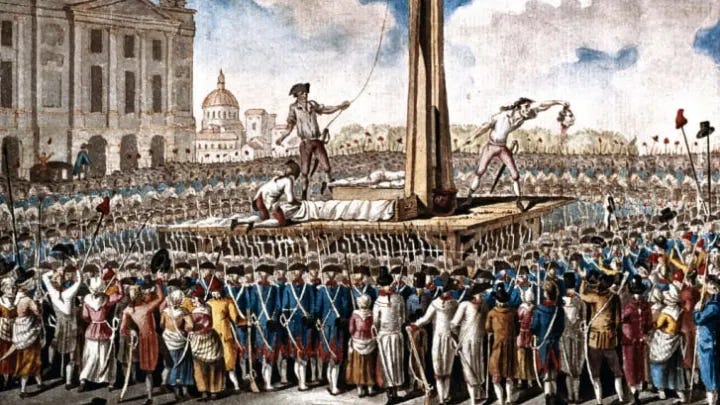
Why the police now look different
As material pressure gets worse, the role of the police becomes harder to disguise.
Law enforcement no longer looks like it exists to solve problems. It looks like it exists to contain them. Wages are not fixed. Housing is not fixed. Healthcare is not fixed. So the state prepares for the backlash instead.
Social suffering gets reclassified as a public-order issue. Workers’ anger is not treated as something to be addressed. It is treated as something to be managed. Watched. Controlled. Suppressed.
When a system refuses to fix what is breaking people, it invests in controlling what those conditions produce.
That is why local police forces increasingly look less like a public service and more like a force standing guard over a failing order. The suffering is left in place. The insecurity is left in place. The pressure is left in place. What changes is the level of force prepared to manage the people living under it.
Punishment is not neutral
Punishment in a system like this is never just punishment. It is messaging.
The warehouse worker will almost certainly face a devastating sentence. Not only because of what he did, but because of what the system needs to say through him.
Do not cross this line.
Luigi Mangione’s case revealed the same instinct from another angle. The point was never just the legal process. It was the appetite around it. Too many people aligned with power wanted the harshest possible outcome. Not simply to judge him, but to make him an example.
That is how warning cases are built.
Not just to punish one person, but to discipline everyone watching. To show, in very clear terms, what happens when anger moves upward, toward institutions, toward wealth, toward the protected layers of American life that are not supposed to be touched.

The China contrast makes the failure harder to hide
This is also why the comparison with China matters.
People in China complain about long hours. They complain about stress. They complain about being tired. Fine. That part is real. But there is still a basic difference. If you have a job in China, basic survival is usually still there. You can still eat. You can still find somewhere to live. Maybe it is not luxury. Maybe it is not comfortable. Maybe it is not the life of the rich. But survival itself is usually not the crisis.
That matters.
Because in the United States right now, even that basic floor is being eaten away. A person can still be employed and still feel one medical bill, one rent increase, one missed paycheck away from disaster. That is not normal. That is not some unavoidable law of modern life. That is a political and economic failure.
You rarely see this kind of story in China because the system there, for all its own problems, still treats basic social survival as something that has to hold. In the United States, the system increasingly treats survival like a private problem. If you fall, you fall alone. If you cannot afford to eat, that is your fault. If you cannot keep a roof over your head, that is your weakness. That is the cruelty built into the American version of the bargain.
Final point
This is not a defense of arson. It is a refusal to lie about what produces it.
In the United States today, a full-time job no longer guarantees stability, dignity, or even survival. As long as that remains true, the anger will remain.
It may take different forms. It may appear under different names. But it will not disappear.
This is not just the story of one warehouse worker.
It is the story of a country that keeps demanding everything from workers while giving them less and less in return.
And that is exactly why this kind of analysis matters. The daily headlines are chaotic on purpose. The deeper pattern is what matters. That is what this publication is for.
If this piece gave language to something you have already been feeling, subscribe. And if you want to support this work and keep this kind of writing going, consider upgrading to a paid subscription. That is how this stays independent, sharp, and free to say what too many others keep watering down.


