

China has banned wealth display on social media. Thousands of accounts gone. Douyin, Weibo, and Bilibili all complied. Accounts like “Young Master Bo,” “Wang Hongquan,” and “Sister Abalone,” each with tens of millions of followers, now return automated error messages. Their content: fleets of Rolls-Royces, million-dollar jewelry collections, private estates. The official charge: promoting “money worship” and creating toxic social comparison. And this is not a one-time crackdown. China keeps escalating it.
Western media reads this as censorship. As control. But there is a question nobody is asking: what exactly were these accounts displaying?
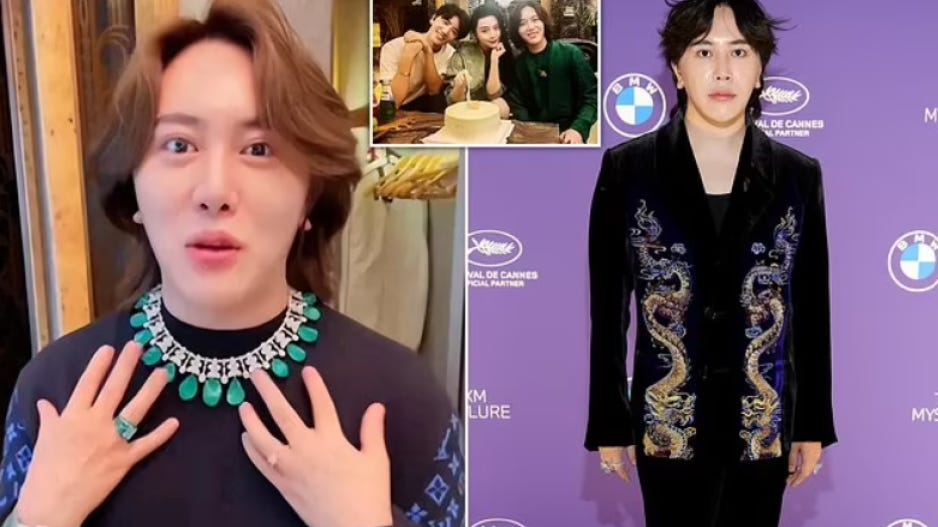
Start with the inherited wealth problem.
Many of the accounts that got wiped were not built by people who earned what they were showing. The wealth was inherited. Accumulated by parents. Secured through family connections and access to a system that rewarded proximity to power. These people were standing in front of cameras not because of anything they built, but because they were born into the right family.
This kind of wealth display has no aspirational logic. It tells young people that the measure of a successful life is consumption, performance, and making others feel the distance between themselves and you. But it cannot tell you how to get there, because the path does not exist. Birth is the entire answer.
That is not inspiration. That is a values problem being broadcast at scale.
What about self-made entrepreneurs?
Earning money is your achievement. Enjoying the results of your work is reasonable. But taking that wealth onto a public platform to display it daily is a different decision entirely. Your success was built inside an economic system that required the participation of countless workers across supply chains, labor markets, and infrastructure you did not build alone. You did not earn that money by yourself.
A mature relationship with wealth means thinking about how to give something back. How to turn resources into something that matters to people beyond your own circle. Not standing in front of a camera and turning your net worth into a tool for other people’s envy.
Flaunting wealth is a choice. It reveals what you think is worth showing, and what you think is worth making others want. That is a values question. Not a taste question.
Does China have wealth inequality? Yes. That is not a secret and not a failure. It is a known cost. China introduced market mechanisms decades ago to drive economic development. That choice produced real growth. It also produced inequality. That is how markets work. Capital concentrates. Gaps widen. No country operating a market economy escapes this logic.
The question has never been whether inequality exists. The question is how a government manages it. That is where political judgment actually gets tested.
When an economy is slowing down, when young people are struggling to find work, when urban housing prices have pushed homeownership out of reach for ordinary workers, and at the same moment a cohort of people is broadcasting yachts and diamonds and private estates into everyone’s phone, what does that produce?
Not just envy. Something harder to contain. A generation starts to feel that effort is pointless, that the rules were never designed for them, that the system’s reward structure is broken. That feeling is real. And it goes somewhere, whether or not anyone in power chooses to acknowledge it.
China’s government made a judgment call: at this particular moment, letting ordinary people watch the wealthy perform their wealth every day is pouring fuel on a fire. Deleting the accounts was the execution of that judgment. The power behind that action can be used for many other things, and that fact should not be glossed over. But the diagnosis behind the decision is accurate.
Some will say this is suppression of free speech. That criticism is real and should not be dismissed. But something is worth thinking through clearly: free speech has never operated without limits in any real society. The United States prohibits hate speech, bans false advertising, and restricts content that sexualizes children. Nobody calls these violations of free expression, because society has decided the costs of those categories are too high. The line always exists. The debate is only about where it gets drawn. China drew its line at wealth display content. The method is blunt. The enforcement had no due process. Those are genuine problems. But the underlying principle, that content can be managed under certain conditions in certain contexts, is one that Western societies practice constantly. They just prefer not to frame it that way.
America made the opposite choice.
The wealth gap in the United States is not smaller than China’s. By several measures it is worse. But American platform algorithms do not suppress wealth display content. They amplify it, because your envy, your desire, every second you spend staring at a screen, generates advertising revenue. Your class anxiety is a business model.
A few days ago, Ivanka Trump gave a podcast interview. She described how she and Jared Kushner discovered their next major project. They were on a friend’s yacht in the Adriatic. They stopped for a swim. They spotted an island. They swam to shore, hiked to the top barefoot, and were, in her words, completely captivated. That island is Sazan, off the coast of Albania, 1,400 hectares, one of the last undeveloped islands in the Mediterranean. Kushner’s private equity firm, Affinity Partners, is now developing a luxury resort there with 6,000 hotel rooms and villas. Total investment: $1.5 billion. The Albanian government approved it in December.
Ivanka said in the interview that this project is “not even a business” for her.
Stop there for a moment. The act of going on a podcast to casually describe this is itself a form of wealth display, just dressed in a more respectable package. Not jewelry. Not a car fleet. Instead, a calm public narration of a decision-making process that most people cannot even imagine entering: swimming off a friend’s yacht, seeing an island, deciding to build a $1.5 billion resort. The entire framing exposes which reality she is living in. For her, this is a story that can happen on a Tuesday afternoon. For most people, this is not life. This is a different planet.
And the project itself is wealth display at a deeper level. Sazan Island was previously a place anyone could reach. It is now being converted into a space accessible only to people who can afford top-tier resort pricing. Local residents are already worried about losing public access to the bays and beaches. An island that belonged to everyone is becoming a class barrier. This is not private consumption. This is the privatization of a public resource.
The same week: raspberries at 8 dollars a pint. Gas at five dollars a gallon. A generation of workers who have quietly accepted that homeownership is probably not going to happen for them. Her father’s administration cutting the programs that make sure children have something to eat at school.
Does she know what is happening out there?
Maybe she genuinely does not. When your entire social world operates at the same level of wealth, when your frame of reference is built from yachts and private islands, the daily reality of ordinary people simply does not exist within your field of vision. That is not a character failure. That is what class isolation does.
But there is another possibility. She knows. And she has decided it does not matter, because she has judged that ordinary people cannot reach her, cannot affect her, cannot change what she does next.
Which of those two possibilities is more troubling?
Video:
Albanians protest plan for Kushner-linked luxury resort
This article is free. Everyone can read it. If this kind of analysis is useful to you, subscribe, and consider upgrading to a paid subscription to help keep it going. Thank you for reading.


I think flaunting wealth is offensive. The Ivanka / private island / Albanian revolt being a perfect example. The basis of China's ascent, market exploitation notwithstanding, is motivated by class struggle. It's government is acting accordingly, possibly taking cues from the ongoing sociopolitical disaster in the United States.
Great idea China. Flaunting wealth creates a false reality for many young people trying to find their way in the world.