

The United States says advanced AI chips are so important to national security that China must not be allowed to get them. American companies want to sell them. And when Treasury Secretary Scott Bessent was asked why Washington had spent months discussing restrictions on Megaspeed, a Singapore-based Nvidia customer, without putting the company on its export-control list, his answer was remarkably short: “Commerce has the pen.” Remember that sentence.
There is an alleged Chinese spy in this story. There are questions about billions of dollars in computer hardware. There is a technology executive whose relationship with that alleged spy helped bring down his career.
But the authority to write and enforce America’s restrictions was sitting inside the American government. Who was holding it? And whose interests were they protecting?
The spy story doesn’t answer everything

Alice Huang, a former executive at Megaspeed, reportedly had a romantic relationship with Nvidia co-founder Jensen Huang, who resigned as CEO last week. American intelligence officials reportedly suspect her of connections to Chinese intelligence. Those are serious allegations. They deserve investigation. They also do not make every other question disappear.
Singaporean authorities investigated Huang over possible inaccurate declarations involving server purchases. They found insufficient evidence to establish those suspected offenses. They did conclude that she knowingly gave police inaccurate information to downplay her role at Megaspeed. She received a stern warning and was barred from returning to Singapore. The broader investigation continues.
That investigation does not settle the American espionage allegation. It concerned different conduct. But the distinction matters. Suspicion, an investigation, and an established offense are three different things. The same standard applies to Megaspeed. American authorities are investigating whether it diverted restricted Nvidia chips to China. The company denies wrongdoing. An investigation is not a verdict. You can take those allegations seriously and still ask what American officials were doing while the business continued. In fact, you should.
The chips don’t always have to move

First, look at the scale of this business. According to Bloomberg’s analysis of customs records, Megaspeed imported at least $4.6 billion worth of Nvidia hardware containing approximately 136,000 GPUs between 2023 and November 2025. That’s a lot of computing power for a company most people had never heard of.
But Bloomberg found something else. Nvidia’s inventory reports to American authorities accounted for roughly 50,000 fewer chips than the trade records indicated. Nvidia later said it had inspected additional warehouses and located the hardware. But it did not publicly disclose exactly how many chips were found or provide a complete reconciliation. That doesn’t establish that the chips were smuggled into China. But when billions of dollars in sensitive technology are involved, a discrepancy of that size deserves an explanation.
And there is a basic problem with trying to control AI through the physical location of its hardware. A chip can sit in a Malaysian data center while a customer somewhere else pays to use its computing power. The server stays where it is. The customer gets the service. Shipping restricted hardware into China and selling remote access to overseas computing are different transactions, with different legal questions. But both matter if Washington’s objective is to limit Chinese access to advanced American computing.
That is why the rules governing overseas data centers matter so much. They determine more than where a box gets delivered. They help determine who can use the technology, who can sell access to it, and who gets paid. And apparently, Washington cannot agree on where to draw those lines.
Commerce has the pen
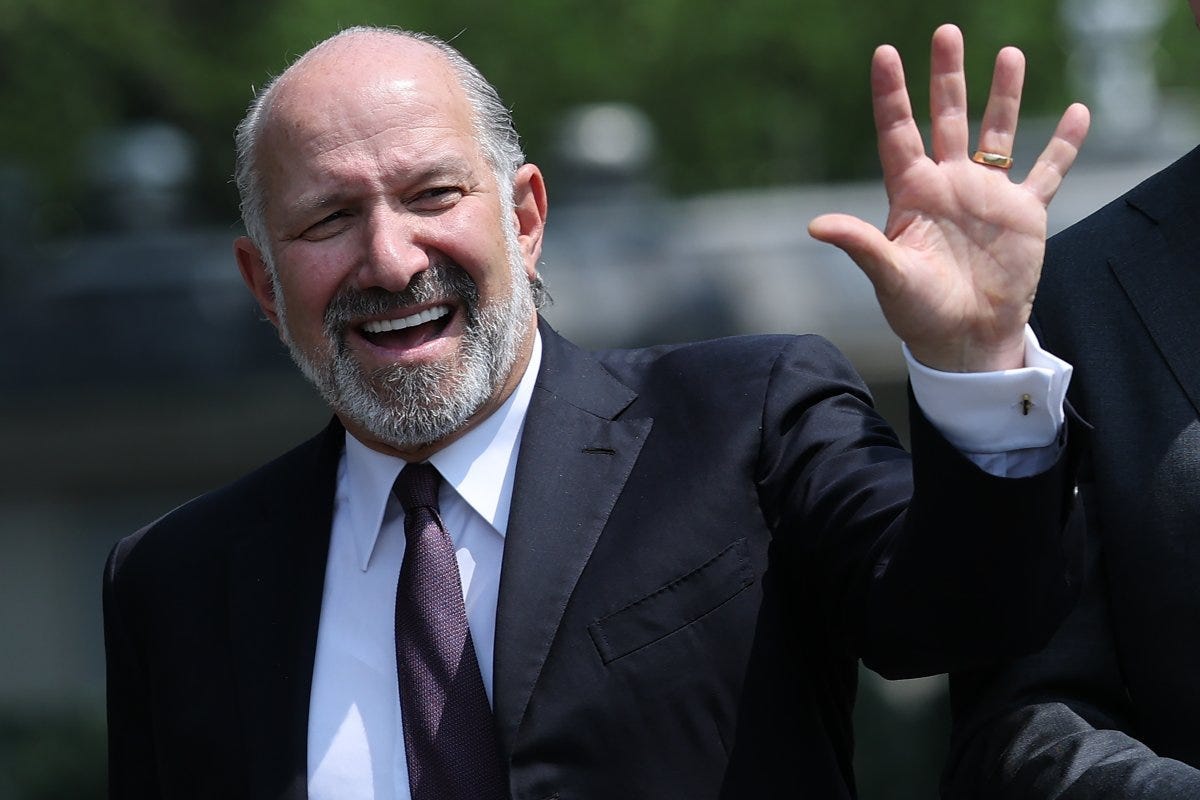
According to Axios, senior administration officials pressed Commerce Secretary Howard Lutnick to place Megaspeed on the Entity List, which would tighten restrictions on its access to American technology. The outlet also reported that Bessent confronted Lutnick about the delay. Commerce denied that the confrontation happened.
Then Bessent made the underlying disagreement public. He said Treasury and other agencies had supported listing Megaspeed for months. Commerce controlled the process. So whatever happened in that meeting, the policy dispute is out in the open. One cabinet secretary says several agencies wanted restrictions. Another cabinet secretary’s department had the authority to impose them. And it had not done so.
There can be reasons to oppose tighter controls. American technology companies argue that selling abroad keeps customers inside their hardware and software ecosystems. Cut those customers off, and you give them more reason to build alternatives. That argument deserves to be examined. So does the argument that those sales strengthen a strategic competitor.
But these are policy choices. Somebody has to make them, explain them, and accept responsibility for the consequences. “National security” does not do that work for you. Especially when it seems to mean one thing to the officials demanding restrictions and another to the officials holding the pen.
And then there’s Lutnick’s family business

Before becoming commerce secretary, Howard Lutnick ran Cantor Fitzgerald, a major American financial services firm. He transferred his ownership interests to family members, and his sons now lead the business. According to a November 15 New York Times investigation, Cantor has financial relationships with companies building AI data centers in Southeast Asia, including Bitdeer, a Singapore-based company developing advanced Nvidia-powered infrastructure in Malaysia.
Cantor helped arrange a Bitdeer stock offering of up to $250 million in 2024. It later became one of the designated sales agents for a separate equity offering of up to $1 billion. That’s financing activity, not a billion dollars paid to Cantor. But the connection matters. Lutnick has reportedly pushed for less restrictive rules governing advanced American chips in overseas data centers. Those rules could affect businesses served by his family’s firm.
Bitdeer and Megaspeed are separate companies. There is no established evidence that Cantor financed Megaspeed or that Lutnick changed policy to benefit his family. Commerce says he complies with his ethics obligations and does not discuss departmental business with his sons.
But now consider the situation. A cabinet secretary is helping decide how strictly to regulate an industry in which his family’s financial firm conducts business. And that same department is facing questions about why it failed to restrict one of Nvidia’s most controversial customers.
You don’t need a criminal conviction to examine a potential conflict of interest. You need to follow the money, understand the relationships, and ask whether the people making public decisions are sufficiently accountable for them.
Nvidia’s interests are easy to understand
Nvidia makes money by selling computing hardware. China is an enormous potential market. Overseas data centers are customers too, including facilities that can serve Chinese businesses. Of course Nvidia wants access to those markets. The company does not need to share Washington’s foreign-policy objectives to have a perfectly understandable commercial strategy. It wants customers, revenue, and returns for shareholders.
The tension begins when Washington wants to restrict the capabilities of a country those customers do business with. Then somebody has to decide how much profit American companies should give up in pursuit of the government’s stated objectives. Watch how quickly a supposedly clear national-security principle becomes a complicated discussion about licenses, exceptions, enforcement, and the competitive position of American business.
That is where the money is. That is also where the decisions get made. You do not need to assume every commercial argument is dishonest to recognize who benefits when it wins. And you do not need to prove a criminal conspiracy before asking how much influence a company has over the officials regulating its customers.
Beijing has its own contradiction
Chinese technology companies still want Nvidia’s chips. Why wouldn’t they? Replacing Nvidia means more than manufacturing a processor. It means building the software, production capacity, and developer ecosystem that make the processor useful. For a company trying to compete today, waiting for domestic alternatives can carry real costs.
But Beijing has a longer-term problem. Dependence. Technology you can only obtain with Washington’s permission is technology Washington can threaten to take away. Reuters reported on November 5 that about 600,000 Nvidia AI chips were sitting in Hong Kong awaiting shipment to mainland China while Beijing withheld approval for large-scale imports, according to people familiar with the matter. Chinese businesses wanted access. Their government was holding back.
So American businesses want to sell. Chinese businesses want to buy. Both governments have reasons to interfere. Washington wants to constrain China’s technological development. Beijing wants to reduce its dependence on American technology. That helps explain why China keeps pursuing domestic alternatives even while its companies seek Nvidia hardware.
Whether those alternatives become competitive at scale remains an open question. The incentive is clear enough. Every time Washington uses access to American technology as pressure, Beijing gets another reason to replace it. And if China eventually succeeds, Nvidia could lose customers that American restrictions helped motivate to leave. Quite an outcome for a policy meant to preserve American technological power.
Capital has its own foreign policy
The title says America wants to stop China’s AI. But look inside “America” for a moment. Treasury wants one course of action. Commerce has resisted it. Nvidia wants customers. Businesses building overseas computing infrastructure want those customers too. There is no single interest here. There is a fight over which interests become government policy. That is the larger story.
An American company can profit by selling technology that American officials describe as a strategic risk. Financial institutions can profit from the infrastructure that makes those sales useful. Government officials decide which transactions remain possible. The conflict gets settled in rules most people will never read, through decisions most people will never see. Then the public gets a simple story about America confronting China.
The espionage allegations deserve answers. So do the questions about export violations. But even a successful prosecution would leave the political question sitting there. Washington wants to constrain China’s technological development while preserving the profits of American companies supplying the technology. When those objectives collide, who gets accommodated?
Bessent told us Commerce has the pen. The question is who gets to guide the hand.
If this gave you a clearer picture of what the headlines are not saying, subscribe and stay with me. Most of my articles are free. I just want to give you more context, more analysis, the kind you are not getting from mainstream media. If you like what you are reading, consider subscribing. And if you want to support this work a little further, consider upgrading to a paid subscription. Either way, thank you very much. Take care.


