

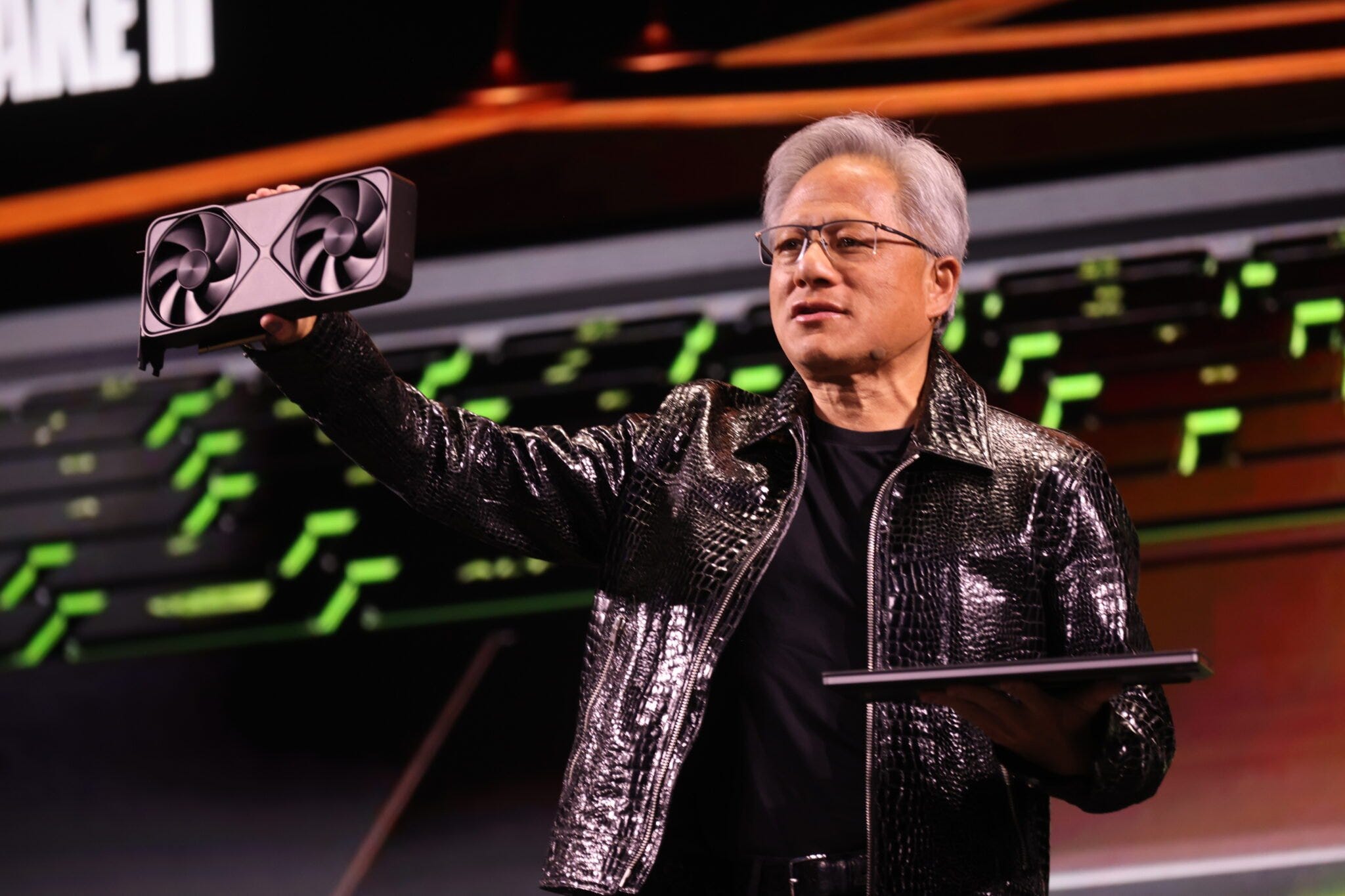
Jensen Huang is gone from Nvidia. After 33 years, the man who built one of the most important technology companies in the world has resigned.
A lot of people are talking about the scandal surrounding his departure. I’m more interested in what happens to Nvidia next.
Because I think Nvidia could become a very different company.
It could go from a company known for innovation, research, and long-term thinking into another corporate giant focused on protecting its profits and keeping shareholders happy.
And the reason is simple.
Jensen Huang didn’t just run Nvidia. Jensen Huang was Nvidia.
The Entire Company Was Built Around Him
Huang managed Nvidia very differently from most large corporations.
He had about 60 executives reporting directly to him. He didn’t like traditional one-on-one meetings. Instead, he brought people together to discuss problems, exchange ideas, and make decisions.
He wanted information to move quickly. Engineers could share problems without going through five different managers.
That gave Nvidia an advantage. Decisions could be made quickly, and ideas could move across departments.
But it also meant the entire management structure depended heavily on one person.
Huang knew the technology. He knew the people. He understood the customers. And he knew where he wanted the company to go.
Now imagine bringing in a new CEO.
Can that person manage 60 executives the same way? Can they make the same decisions? Will the engineers trust them?
Probably not. At least not immediately.
So the new CEO may need to change how the company operates. More managers, more meetings, more layers of approval.
And that could change the culture that made Nvidia successful.
The Employees Know What’s at Stake
A survey on Blind found that 88% of the 232 Nvidia employees who responded wanted Huang to remain CEO.
WIRED also reported that an internal employee discussion attracted more than 1,600 comments, with most supporting his return.
Why do so many employees want him back?
I think the answer is pretty obvious.
These are the people working inside Nvidia. The engineers, the managers, the people developing the technology and getting things done.
They understand how the company actually works.
The board can look at earnings reports, stock prices, and shareholder concerns.
But the employees understand something that doesn’t show up on a financial statement.
They understand the culture.
They know what happens when you remove the person who built the entire system.
And they’re the ones who will have to work under whatever replaces it.
You Can’t Replace 33 Years of Trust
Elon Musk recently made another interesting point.
He said many of Nvidia’s important supply-chain deals were based on personal handshakes with Huang, rather than written contracts.
Musk said that when Huang promised him computing capacity or faster deliveries, he always delivered. The paperwork could come later.
That’s something I find particularly interesting.
It reminds me of an older generation of Chinese and Taiwanese business culture.
You make friends. You build relationships. You earn people’s trust. And when you make a promise, you keep it.
Over time, those relationships create business opportunities that money alone cannot buy.
That’s how Huang built much of his business network.
He knew suppliers. He knew customers. He could personally call people and make things happen.
Musk believes some critical deals could be lost without him.
And I think that’s a serious concern.
The next CEO may inherit Nvidia’s contracts, factories, products, and customers.
But they won’t automatically inherit Jensen Huang’s personal relationships.
The Difference Between Creating and Collecting
Look at how Nvidia became successful.
In 2006, Huang backed CUDA, a computing platform that allowed graphics chips to do much more than run video games.
At the time, nobody knew how big AI would become.
Nvidia spent years investing in that technology, supporting researchers, and building a community of developers.
That long-term investment eventually helped put Nvidia at the center of the AI revolution.
Huang was willing to spend money today for something that might become profitable years later.
But will his replacement think the same way?
Nvidia already has an incredibly profitable business. Its chips are in enormous demand. Its software gives customers a strong reason to stay.
A new CEO could focus on protecting those advantages instead of taking risks on the next breakthrough.
And that brings me to Tim Cook.
Why Tim Cook Matters
Donald Trump recently suggested that former Apple CEO Tim Cook should take over Nvidia.
It’s an interesting suggestion.
Cook took over Apple after Steve Jobs and managed the transition remarkably smoothly.
He expanded Apple’s global operations, strengthened its business, and turned it into an extraordinary money-making company.
Apple continued developing new technology. But under Cook, the company also became increasingly focused on expanding and making money from the ecosystem Jobs helped build.
And that’s what worries me about Nvidia.
Huang built a company around technological ambition. The next CEO might be better at managing what Huang already created than building something completely new.
That could be a successful business strategy.
But it would be a different Nvidia.
When Making Money Becomes the Priority
There is a bigger issue here.
Nvidia’s success came from decades of research and the work of thousands of engineers. Huang gave that work direction and was willing to take enormous risks.
But Nvidia is also a publicly traded corporation.
Its shareholders want returns. Its board watches the stock market. And every major investment has to compete with other ways of using the company’s money.
In fiscal 2026 alone, Nvidia spent $40.4 billion buying back its own shares.
That’s money used to return value to shareholders rather than directly develop new technology.
Huang managed to keep long-term innovation and shareholder returns going together.
But without him, that balance could change.
I don’t expect Nvidia to collapse. Its technology and market position are far too strong for that assumption.
My concern is something else.
Nvidia could remain extremely profitable. It could keep selling billions of dollars in chips. Wall Street could be perfectly happy.
Meanwhile, the company could gradually become more conservative, more bureaucratic, and less willing to take the risks that made it successful.
Jensen Huang spent 33 years building Nvidia’s future. His successor might spend the next 20 years making money from the future Jensen already built.
And that, to me, is the biggest risk facing Nvidia.


