

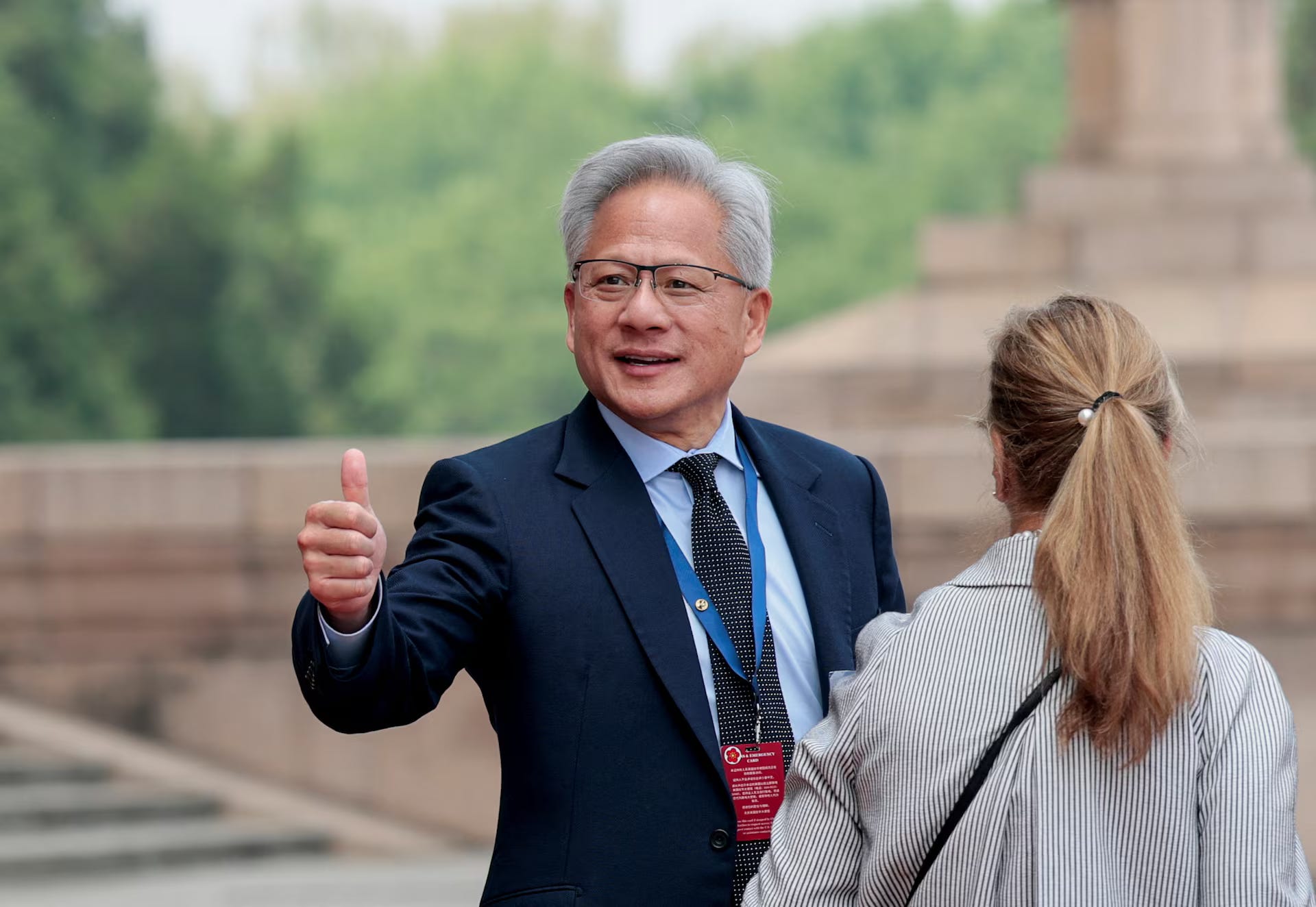
Last week, Nvidia CEO Jensen Huang agreed to join the advisory board of Tsinghua University’s School of Economics and Management. American security hawks immediately flagged it as a national security risk, citing Tsinghua’s ties to the Chinese government.
Before taking a side, look at who else is on that board.
Apple’s Tim Cook is the current chairman. Elon Musk is a member. So are Microsoft’s Satya Nadella, JPMorgan’s Jamie Dimon, and BlackRock’s Larry Fink. America’s most powerful executives have been sitting on this board for twenty-five years. Jensen Huang is not the story. The board is.
Where It Came From
The board was founded in 2000 by China’s then-Premier Zhu Rongji, an engineer-turned-reformer who restructured China’s state enterprises, overhauled its financial system, and drove its entry into the WTO. His goal was deliberate: create a structured channel between the world’s top business leaders and China’s policymakers. The board’s official mission describes it plainly as a platform connecting leading foreign executives with China’s government economic leadership. National leaders personally meet with members every year. Xi Jinping attended in person in 2013 and 2017.
This is not a university alumni club. It is a high-level pipeline between global capital and Chinese state power, and it has been operating openly for a quarter century.

The Contradiction Nobody Names
Here is where it gets uncomfortable.
The U.S. government has restricted Nvidia’s most advanced AI chips from reaching China since 2022, citing national security. That same government appointed Jensen Huang to the President’s Council of Advisors on Science and Technology to help shape American AI policy. He is now joining Tsinghua’s board.
This is not one man’s conflict of interest. It is the system’s.
Washington needs the China threat narrative to justify export controls, semiconductor subsidies, and political mobilization. American capital needs Chinese markets, Chinese supply chains, and direct access to Chinese policymakers to protect returns. Both are running at the same time, under the same flag, with the same cast of people.
Consumers absorb higher electronics prices. Workers absorb supply chain disruption. Taxpayers fund the subsidies. The CEOs keep flying to Beijing.
If this kind of analysis is useful to you, consider becoming a paid subscriber. Your support is what keeps this work going, and I genuinely appreciate it.
Who Actually Pays
Decoupling is not free. Every restructured supply chain, every new semiconductor plant, every round of tariffs has a price tag. That cost does not land on the boardroom. It lands on the people buying groceries, paying rent, and watching their purchasing power shrink while the economic headlines stay positive.
The Tsinghua board story is a clean window into how this works. The political system performs confrontation. The capital system maintains access. And the gap between those two realities is where ordinary people get squeezed.
America is not decoupling from China. It is managing the appearance of decoupling while preserving the underlying connections that capital depends on. That is worth understanding, because the people designing that gap are not losing anything. You are.


