

Turning Point USA is no longer just a loud conservative brand on social media. It is a real youth political machine with physical reach. According to its own student-facing materials, the organization claims over 800 college chapters across the United States, along with a rapidly expanding high school presence. That matters because chapters are not followers. Chapters mean meetings, tabling, recruiting, leadership roles, and repeated physical presence inside institutions.

Financially, TPUSA operates at the level of a serious national organization. Public nonprofit filings show tens of millions of dollars in annual revenue, enough to fund full-time staff, national conferences, campus tours, training programs, and legal support. This is not influencer politics. This is infrastructure.
That alone explains why Turning Point USA has more long-term influence than many online political brands with far larger follower counts. It is not trying to win the internet. It is trying to shape people early.
Students are upstream in politics
College students sit in a position most adults no longer occupy. They have time. They have dense social networks. And their worldview is not finished.
Most working adults do not lack political awareness. They lack capacity. Rent, debt, healthcare costs, and long work hours drain attention and energy. Political participation becomes passive by necessity. Watching. Listening. Commenting. Voting when possible. Agreement does not turn into organization because survival already consumes everything.
This is not a personal failure. It is structural.
Students are different. They are surrounded by peers every day. They are already organized into clubs, classes, dorms, and social circles. They argue ideas because they still have space to argue. And they are actively looking for frameworks that explain how the world works and where they fit inside it.
If you want to plant an ideology, you do it when people are still forming one.
What Turning Point USA actually built
Turning Point USA did not aim its energy at persuading the average voter. It built itself around recruiting, training, and retaining students.
Campus chapters are the core. Around those chapters, TPUSA built speaker events, leadership tracks, conferences, internships, and a clear identity that students can plug into. Politics becomes part of campus life, not just something you consume on a screen.
This is the part many critics miss. TPUSA is not primarily focused on short-term election cycles. It is focused on long-term pipeline building. A student who adopts a political framework at nineteen carries it into law school, media jobs, business networks, think tanks, and local politics. That influence compounds over time.
Charlie Kirk is not the strategy
Charlie Kirk is often treated as the story. He is not. He is a delivery mechanism.
What matters is message discipline. TPUSA gives students a simple, repeatable story about power, culture, and economics. It does not overwhelm them with nuance. It gives them a map first. That clarity is intentional.
Students do not usually respond to complexity at the beginning. They respond to coherence. TPUSA understands that and builds its messaging accordingly.
The left’s blind spot: speaking to the wrong age group
Now compare this with most socialist or working-class content online.
Look at the analytics dashboards. The audience is often 40 years old and up. These viewers engage because the content reflects what life has already taught them. Wage stagnation. Rising costs. Institutional betrayal. The system feels rigged because it is.
That resonance feels like success, but it hides a problem.
These audiences are already deep in what can only be described as the swamp of adult life. Work tomorrow. Bills tonight. Family responsibilities on the weekend. Even when they agree completely, they do not have the time, energy, or institutional access to become organizers.
So online left politics often turns into a closed loop. High agreement. High emotion. Low conversion into real-world structure.
Views are not chapters. Comments are not meetings. A viral clip is not a leadership pipeline.
Why students are the better crowd for movement building
Students are not automatically radical or progressive. But they are open. Their beliefs are still flexible. Their commitments are fewer. Their risk tolerance is higher. And their ability to move as a group is built into campus life.
That is why serious political movements have always paid attention to students. Not because students can do everything, but because they can start things.
History keeps proving this point
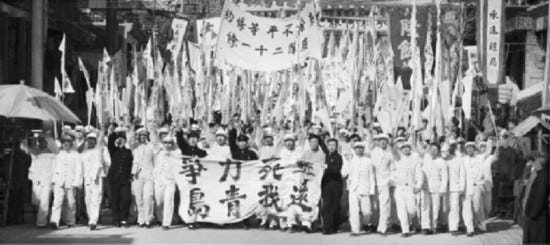
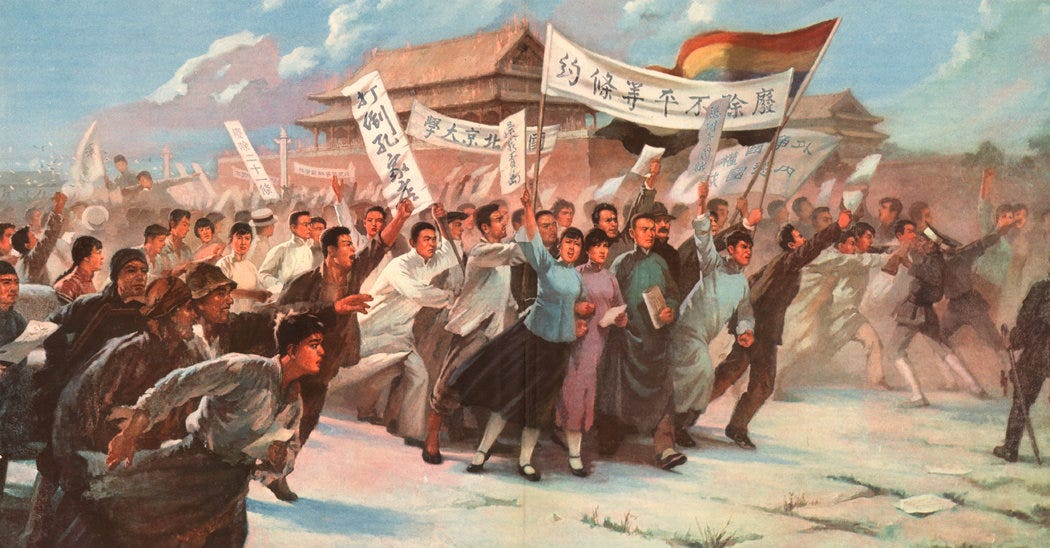
China’s May Fourth Movement began with student protests in Beijing reacting to national humiliation and government weakness. More important than the street demonstrations was what followed. Universities became centers of debate, translation, and organization. Students were not the entire movement, but they helped shape the ideological agenda that followed.
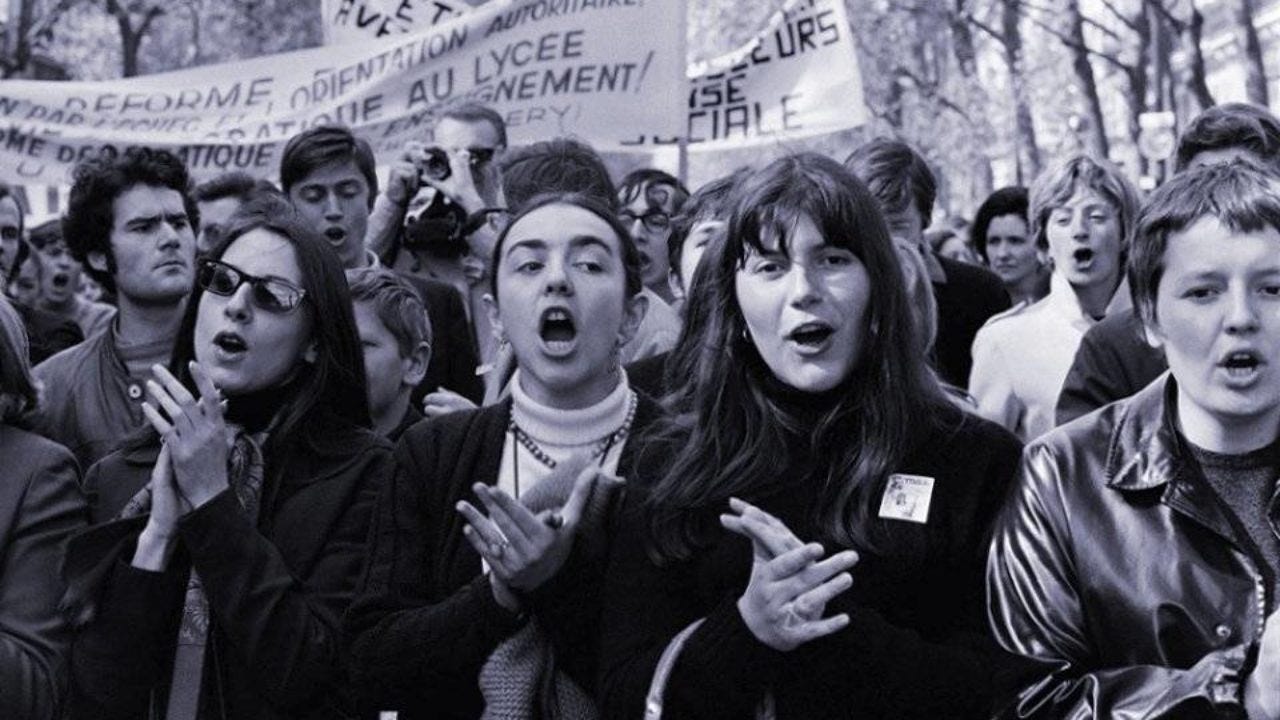
France’s May 1968 followed the same pattern. Student protests lit the fuse. The crisis escalated when labor joined through a massive general strike. The lesson was not that students replace workers. The lesson was that students can ignite something larger.
South Korea’s June Democratic Struggle shows this under a harder political system. Students were a core part of the street mobilization that pushed the country toward democratic reforms. Again, not alone, but essential.
Different countries. Different ideologies. Same structure.
What this means for anyone serious about class politics
If someone claims to want real socialist or working-class power but ignores campuses, they are choosing to fight downstream.
Online media can spread ideas. It can recruit. It can educate. But without physical groups, student organizations, reading circles, and leadership training, it remains content, not power.
Turning Point USA understood this early. It built where people still have time, density, and openness. It built inside institutions. It built habits, not just opinions.
Many left creators are doing the opposite. They are building audiences, not movements.
The bottom line
Turning Point USA is smart in one specific way. It knows where the next generation is formed.
If the goal is political change, the real question is not who agrees in the comments. The question is who is being organized while they are still young enough to grow into the role.


Why are the bad guys so organized? One answer may be that the "good guys" assume most people are like them: unassuming, basically good and trying to get better, looking for win/win, and to minimize harm to others. Therefore, we are not on guard. We are not strategically preparing for attack. And generally and genuinely aren't looking for world domination. (Sure, we have egos too, and want recognition or success and of course material security, but NOT in a zero-sum-game at the expense of others, or solely for the sake of power and control)
Meanwhile the "bad guys" assume everyone is like them: cut throat, brutal, competitive win/lose approach--this makes them on guard and strategic.
It's like most of humanity is like Hobbits and Dwarfs, while a small subset it like Sauron or Sauroman who organize armies systematically.
Maybe overly simplistic, but it helps frame things.
Put the same strategy and millions of dollars, free food, paid staff and successful recruiting efforts into a liberal message and there’d be 368 Liberal Chapters!
The tpUSA is a movement/strategy funded by wealthy, wise determined, and conservative, confused citizens. This is a Deja-vu! The wealthy smartly took over the young minds in the high school and college economics curriculum of the late 70s. Educate the young minds to mimic a system. Brilliant.
Rounding up dates: 1975 – 2005 = 30 years. Tthe wealthy started slacking off, but Charlie resurrected their cause and did a damn good job of it. Another brilliant move.
From Wikipedia: “ TPUSA is an American nonprofit organization (it’s easy to establish a non-profit organization in the USA) that advocates for conservative politics on high school, college, and university campuses. It was founded in June 2012 by Charlie Kirk” The wealthy conservative people happily helped Charlie Kirk.
Your brilliant commentary, as usual shines:
“These audiences are already deep in what can only be described as the swamp of adult life. Work tomorrow. Bills tonight. Family responsibilities on the weekend. Even when they agree completely, they do not have the time, energy, or institutional access to become organizers.” We’re exhausted and some of us feel broken.
(TP – toilet paper. )