

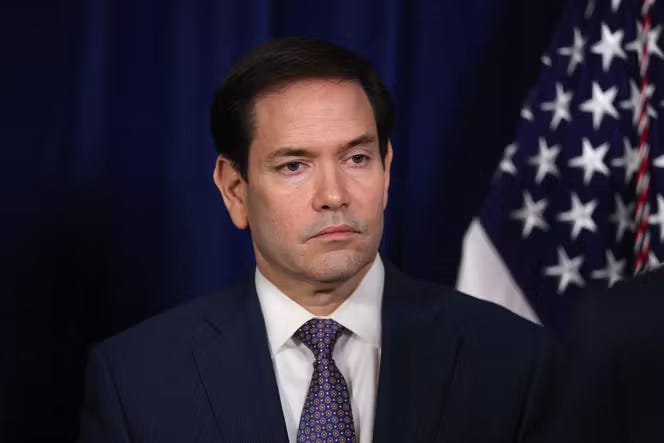
Marco Rubio built his career claiming his family fled Castro’s communism. Records show his parents left in 1956 under Batista’s U.S.-supported dictatorship. This is not a minor error. It is the power machine rewriting immigrant stories to justify endless sanctions on Cuba while ordinary people on both sides pay the price.
Quick Background
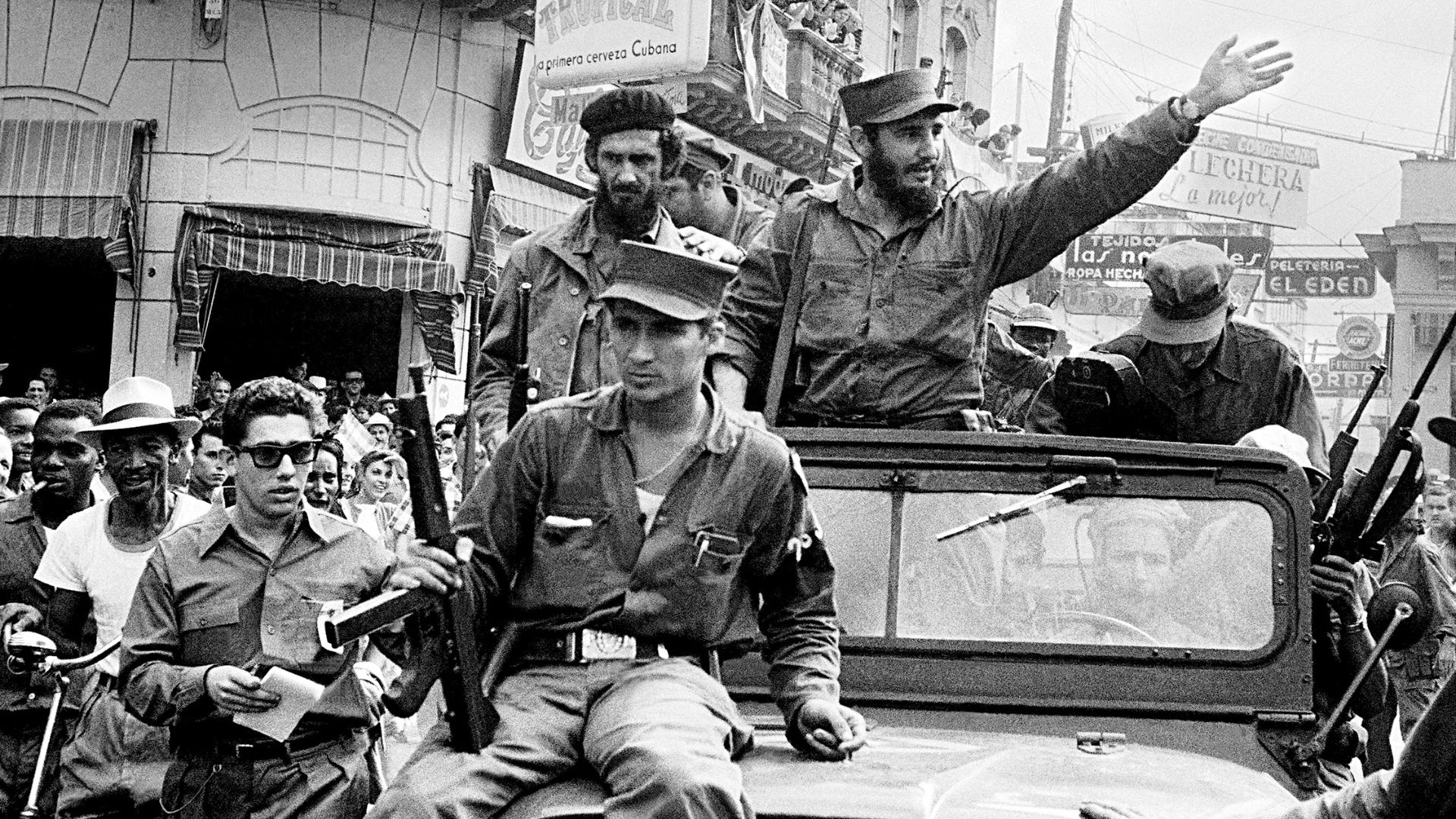
Mario and Oriales Rubio arrived in Miami on May 27, 1956. Batista was in power. He was a dictator the U.S. funded and armed to protect American business interests in casinos, sugar, and utilities. Ordinary Cubans like Rubio’s parents faced low wages, corruption, and repression. Workers got squeezed dry with no real opportunities. Castro took over on January 1, 1959. The Rubios left for economic reasons in a corrupt capitalist system, not to escape socialism. When Castro’s government nationalized U.S. assets and began reforms, they stayed in the U.S. By Rubio’s 2010 Senate campaign, the family story had changed to “fleeing Castro.” The timeline shift fits the Cold War script the machine needs to maintain the embargo.
Core Impacts
Working class in Cuba and the U.S.: Rubio’s parents worked low-wage jobs as a bartender and maid after leaving Batista’s Cuba. Today Cubans face blockade shortages. Americans pay higher prices and taxes that support the foreign policy machine. Both groups get hit twice.
Immigrant communities: Cuban exiles receive special refugee benefits from Cold War policies. Other migrants face detention and deportation. The split keeps workers divided instead of united against exploitation.
Everyone else: Sanctions raise global costs, increase military spending, and give politicians cover to avoid addressing inequality. Your rent, groceries, and debt keep rising while the machine protects elite interests.
My Take
This is not about one politician’s mistake. It is the institutional machine at work.
Under Batista, U.S. companies controlled 90% of mines, 80% of utilities, and half the railroads. Corruption was widespread. Workers faced low wages and repression. Castro’s revolution ended that structure. Land was redistributed. Literacy and healthcare improved. The changes directly challenged the inequality that hurt families like Rubio’s. It was built for the people, even if the start was hard. New systems demand sacrifice and dedication from everyone to serve the country. It wasn’t sunshine from day one, but it aimed at a society that put ordinary folks first.
The U.S. response was to label it a threat and impose sanctions starting in 1960. The embargo punishes Cuba for choosing a different system. Rubio’s family story was adjusted to fit this narrative. In Miami, they were absorbed into the anti-Castro network and refugee programs that framed capitalism as freedom, no matter how brutal. The Cold War mindset took over. Rubio got pulled into that anti-communist Cuban community echo chamber. He bought into it. Or sold it hard for votes. Either way, the machine used it.
Contrast this with China’s focus on stability through collective order rather than turning public security into a tool against the poor. The U.S. approach is different. Embargo the alternative. Control the story. Keep the class divided. This is institutionalized authoritarian governance: economic pressure and historical revision to maintain power upward. Rubio used the revised version because it delivers votes and funding. The machine provided the script.
What’s Next
The embargo began in 1960 to punish nationalization. Every administration has kept or tightened it, citing human rights while creating the shortages they criticize. Cuba struggles. Migration increases. Ordinary families suffer.
Here is what the U.S. embargo actually blocks for Cuba in practice:
Cuba cannot freely buy most U.S. goods, food, medicine, or technology. Even humanitarian exceptions are heavily restricted with licenses and paperwork.
Foreign companies risk massive U.S. fines or market exclusion if they do business with Cuba. Many banks refuse Cuban transactions to avoid penalties.
Cuba is cut off from the international financial system. It cannot use U.S. dollars for most trade, access normal loans, or use major payment networks.
Ships that dock in Cuba face a six-month ban from U.S. ports. Airlines and cruise lines face heavy restrictions.
Result: chronic shortages of medicine, spare parts, and food imports. Higher costs for everything due to longer shipping routes. Stunted economic growth. Increased poverty and emigration pressure on working families. Recent years show blackouts lasting 12-14 hours daily, fuel crises crippling transport and schools, and GDP losses estimated at billions annually (Cuba reported $7.5 billion damage from March 2024-February 2025 alone).
At home, expect more adjusted immigrant stories to justify policy and more anti-socialist rhetoric to bury class issues.
Stop accepting left-right distractions. Focus on who controls the rules and who pays the costs. Call out every use of personal history to block socialist ideas.
More stories you might missed,


As bad as Rubio/Trump are on Cuba, they aren’t the only ones. Every U.S. president since 1959 has had it out for Cuba. And loved the Cubans who spoke out against Castro, regardless of how criminal they were in other aspects of their lives. Twenty years ago, I did a major paper for school on how the U.S. treats the Cuban criminals that it likes. I recently reread it, and it’s scary how true it still is. The Miami Mafia is still alive and well.
Good grief, everyone in this administration seems to have a complete lie for their entire background.