

Thank you for following these briefings and continuing to read and share them. I’ve been putting these together because the coverage of this war is extremely fragmented. The goal here is simple: organize the most important developments so you and I can see how the conflict is evolving.
If this kind of structured update helps you make sense of the situation, consider subscribing. And if you want to support this work and keep these briefings going, upgrading to a paid subscription is always appreciated.
The Latest Developments
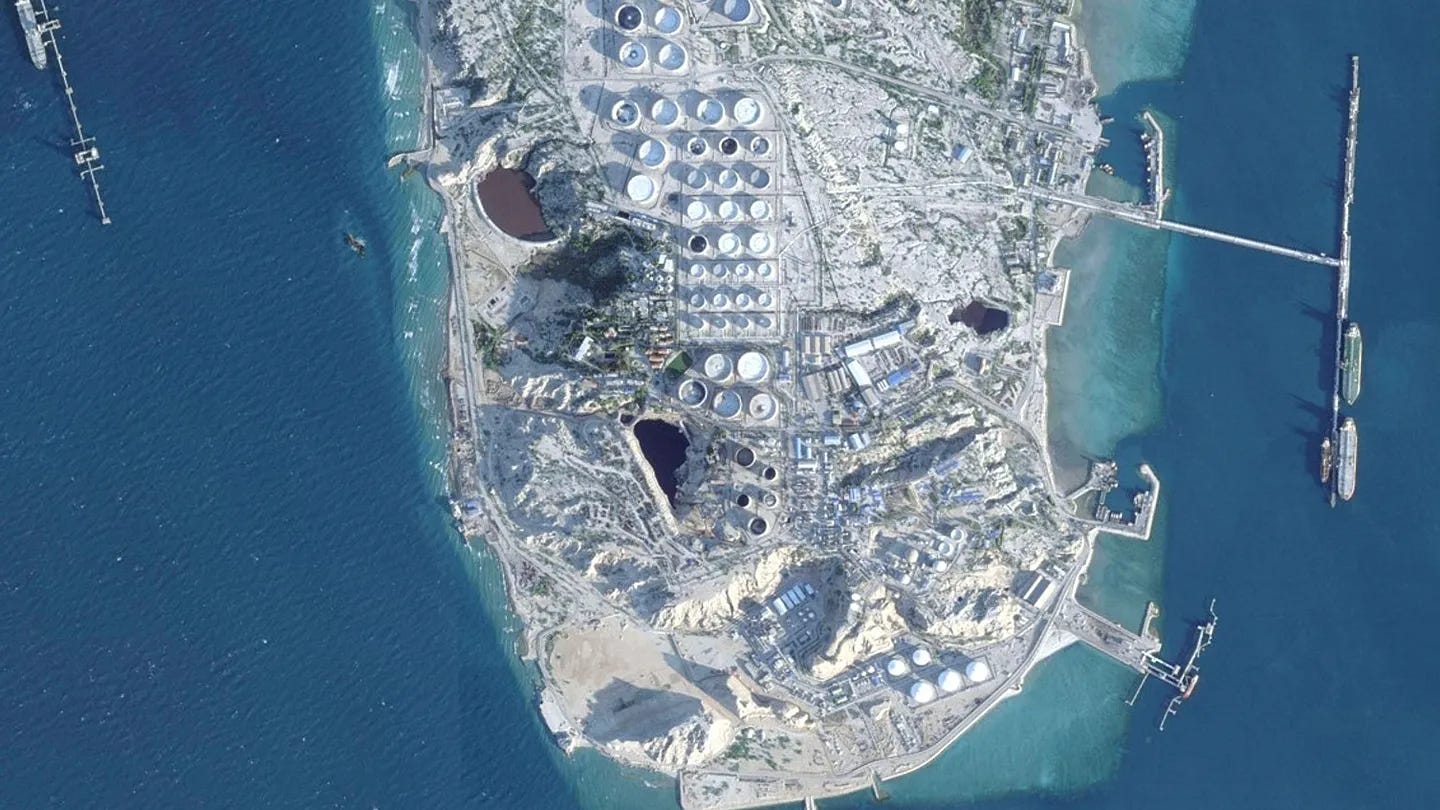
Iran issues new threats after U.S. strike on Kharg Island
The war escalated further after the United States launched airstrikes on military targets on Kharg Island, Iran’s main oil export hub in the Persian Gulf. Kharg Island handles roughly 90 percent of Iran’s crude exports, making it one of the most strategically sensitive energy facilities in the world.
Iranian officials quickly responded with warnings. Former Iranian foreign minister Manouchehr Mottaki said that if the United States attempted to seize Kharg Island, Iranian forces could target U.S. bases across the Middle East and potentially capture American troops stationed there.
At the same time, former Revolutionary Guard commander Mohsen Rezaei outlined Iran’s conditions for ending the war. According to him, Iran would only consider stopping hostilities if the United States compensates Iran for all damages and withdraws its forces from the Persian Gulf.
These statements signal that Iran is no longer framing the conflict simply as retaliation. Increasingly, Iranian officials are presenting it as a regional struggle over American military presence itself.
Some in Washington are so used to bullying weaker countries that they seem to have assumed Iran would fold the same way. So far, that calculation looks wrong. Iran’s response has been far more forceful and disruptive than many expected, and other countries facing U.S. pressure will be watching closely.
Kharg Island strike avoided oil infrastructure – for now
Despite the attack, Iranian authorities say oil export operations on Kharg Island remain intact and functioning. Damage appears to be limited mainly to military facilities and parts of the island’s airport.
Interestingly, the United States also confirmed that the operation deliberately avoided destroying the island’s oil infrastructure.
Destroying Iran’s main export terminal would likely send global oil prices sharply higher and risk pulling additional countries into the crisis. For now, both sides appear to be escalating cautiously while avoiding the most destabilizing economic targets.
But the fact that this infrastructure is now openly discussed as a potential target means the energy dimension of this war is firmly on the table.
Hezbollah signals readiness for a long war with Israel
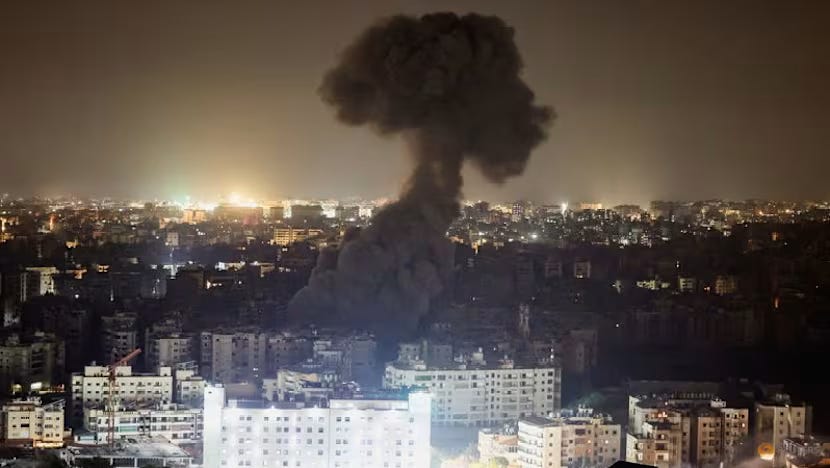
Another major development is unfolding along the Lebanon front.
Hezbollah leader Naim Qassem addressed recent Israeli threats against him, including reports that Israeli Prime Minister Benjamin Netanyahu has considered targeting him for assassination. Qassem dismissed the threats, saying they would not intimidate him and that he was not afraid.
More importantly, he framed the situation in stark terms. According to Qassem, Hezbollah now faces only two options: surrender or resistance, and surrender is not acceptable.
His statement suggests Hezbollah leadership is preparing both its supporters and the broader Lebanese public for a prolonged confrontation with Israel.
At the same time, Israeli officials have reportedly been considering a large-scale ground operation in southern Lebanon, potentially the biggest since the 2006 war. If such an operation begins, the Lebanon front could quickly become one of the central battlefields of the broader regional conflict.
U.S. deploying additional Marines and amphibious forces
The United States is also expanding its military footprint in the region.
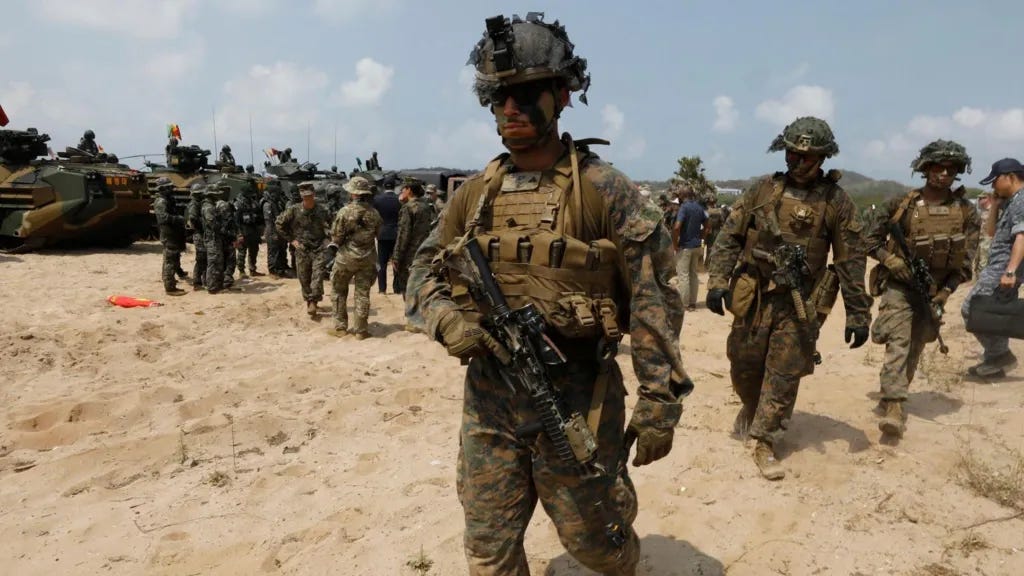
Reports indicate that approximately 2,500 Marines and sailors, along with the amphibious assault ship USS Tripoli and elements of the 31st Marine Expeditionary Unit, are being deployed to the Middle East. This unit was previously stationed in Japan under Indo-Pacific Command.
A Marine Expeditionary Unit is a rapid-response force capable of conducting:
Amphibious operations
Embassy security missions
Civilian evacuations
Crisis response deployments
While the Pentagon has not confirmed a specific mission for the deployment, the arrival of additional forces signals that Washington is preparing for further escalation or contingency scenarios.
U.S. military casualties continue to rise
Meanwhile, the human cost of the conflict is increasing.
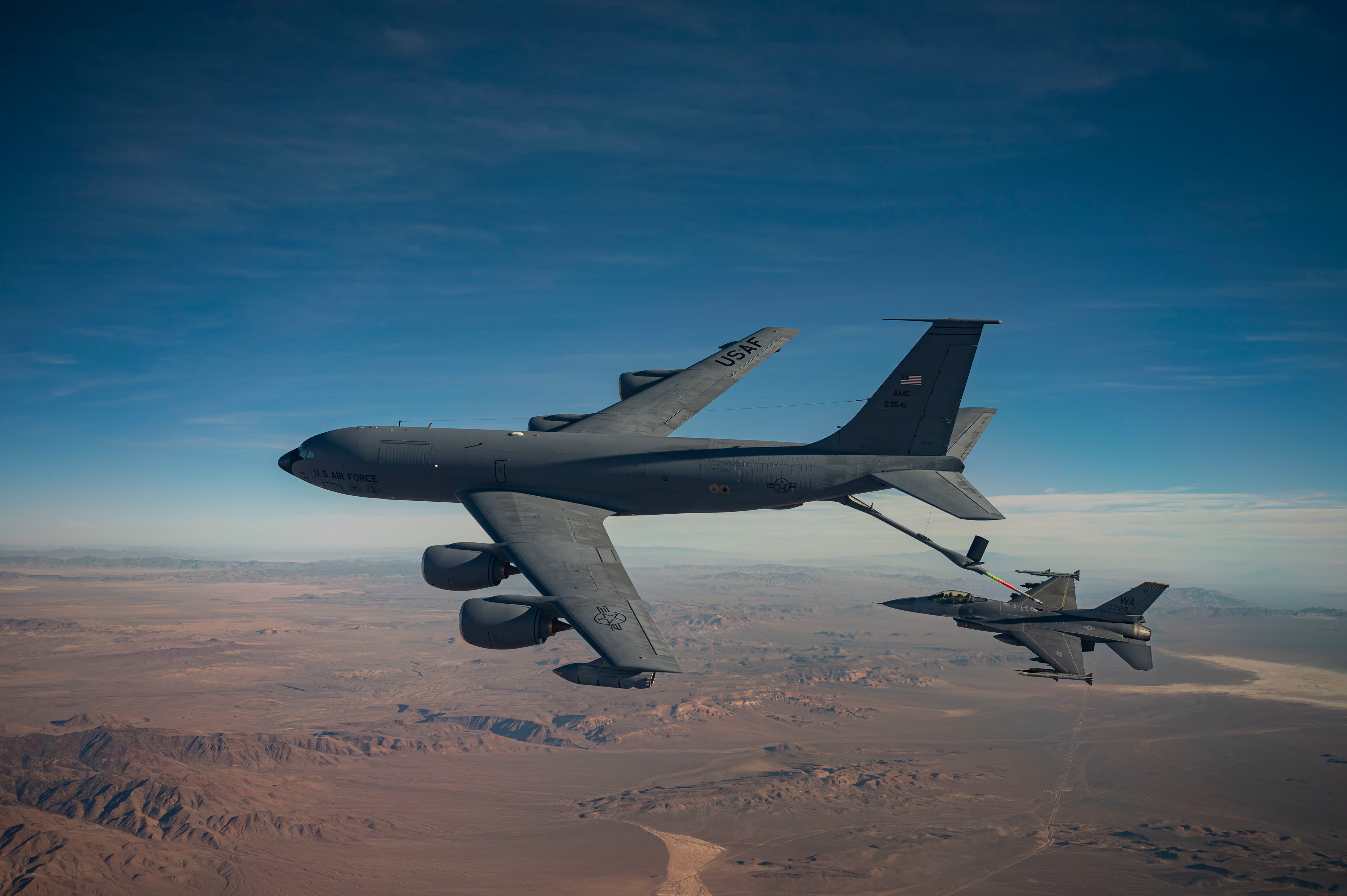
The U.S. military confirmed that a KC-135 aerial refueling aircraft crashed in western Iraq, killing all six crew members aboard. According to U.S. Central Command, the crash was not caused by enemy fire, though the exact cause remains under investigation.
With this incident, the number of confirmed U.S. military deaths connected to the ongoing conflict has reached at least 13, with around 200 American personnel reported injured, including several serious injuries.
Even before considering the broader regional impact, the conflict is already producing real military losses.
U.S. temporarily eases restrictions on Russian oil
One of the most revealing developments has nothing to do with missiles or airstrikes.
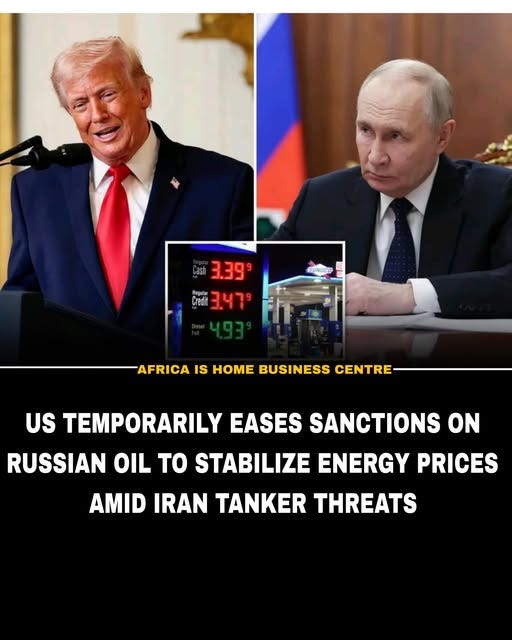
The United States has issued a 30-day waiver allowing the purchase of Russian oil currently stranded at sea, supposedly to stabilize global energy markets as prices rise amid the Iran conflict.
But this creates a deeper contradiction. The more Washington loosens restrictions on Russian oil, the more revenue Moscow can recover. The more revenue Moscow recovers, the more capacity it may have to support partners like Iran. The more support Iran receives, the longer pressure on the Strait of Hormuz can be sustained. And the longer that disruption lasts, the more pressure builds to bring even more Russian oil back onto the market.
That is the trap.
What is being sold as temporary market stabilization may also help reinforce the very crisis that made it necessary. The Kremlin quickly welcomed the move, saying Russia and the United States now share common interests in stabilizing energy markets.
The decision has already drawn criticism in Europe. German Chancellor Friedrich Merz called it a mistake, while European Commission President Ursula von der Leyen warned that returning to Russian fossil fuels would be a strategic error.
This episode shows something bigger: when oil prices surge, principles suddenly become flexible. What the West calls crisis management increasingly looks like a self-feeding loop.
The Bigger Picture
This war is no longer confined to Israel and Iran. It is spreading across Lebanon, the Gulf, energy routes, and the wider global economy. Oil infrastructure, shipping lanes, sanctions policy, and alliance politics are now all tied to the battlefield. What began as a military conflict is turning into a broader regional and economic crisis.
Thank you again for reading and following these briefings. I’ll keep tracking the developments and organizing the key signals so we can understand what’s really changing beneath the headlines.
If you find these updates useful, consider subscribing. And if you want to support this work and help keep these briefings going, upgrading to a paid subscription makes a real difference.


I just subscribed to a paid subscription 🙌🏻 I share whenever I can. Thank you for your updates and for being the voice of reason right now, Neil 💜