

Let’s start with the update that matters.
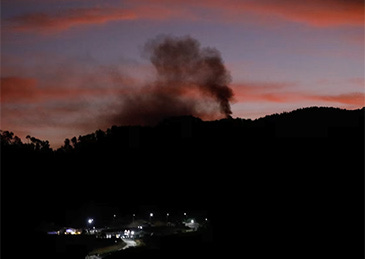
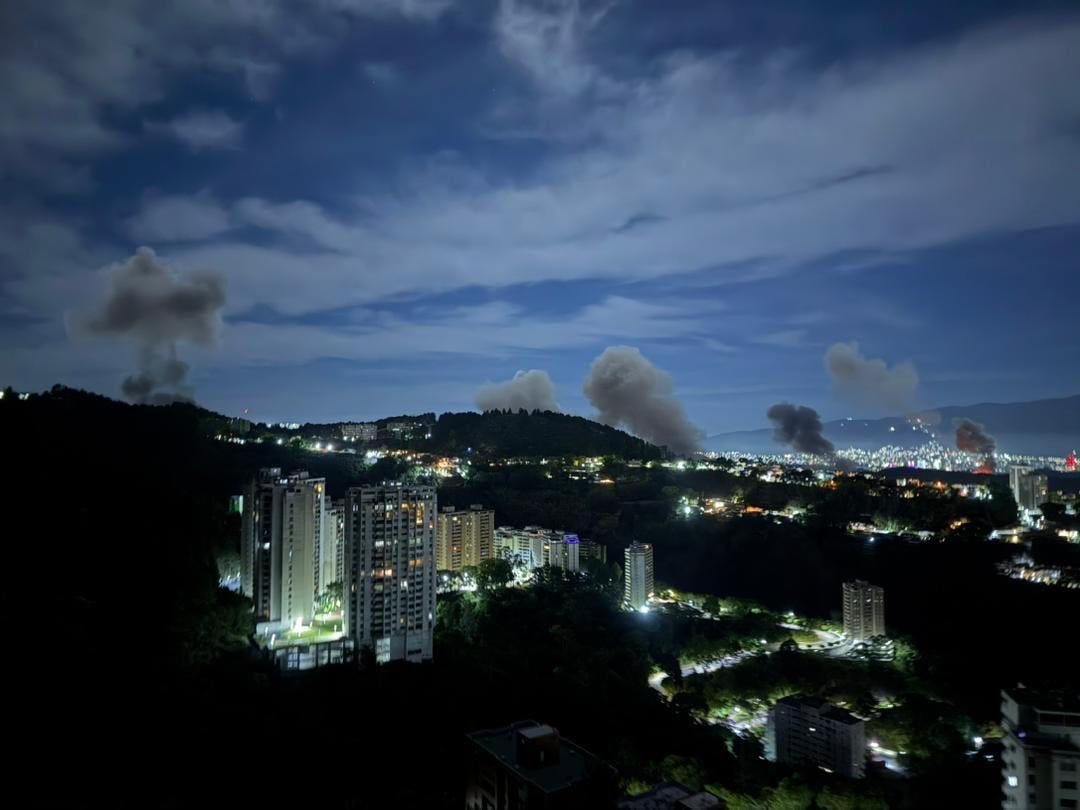
The United States now claims it captured Venezuela’s president Nicolás Maduro and transferred him to the U.S. for prosecution. According to early reports, the operation killed at least 40 people, including civilians and Venezuelan military personnel.
Grumpy Chinese Guy is a reader-supported publication. To receive new posts and support my work, consider becoming a free or paid subscriber.
Before the discussion gets diluted by talking points, one thing has to be stated plainly: this was not a legal arrest. It was not a law-enforcement action. It was a cross-border military operation. Under international law, that distinction is not semantic. It is decisive.
1) The Legal Line That Was Crossed
The international system built after 1945 rests on a simple constraint: states do not use force against other states except in narrow circumstances, primarily self-defense or collective authorization through the United Nations Security Council.
This action appears to meet neither standard.
There has been no public Security Council authorization. There has been no demonstrated imminent self-defense claim. Military force was used first, and justification followed afterward. Labeling the operation as “law enforcement” does not resolve this problem. It makes it worse, because it blurs the boundary between policing and war.
When force becomes discretionary and legality becomes a post-hoc narrative, the system stops functioning as a rule-based order. It becomes a power-based one.
2) The Domestic Red Line: Congress Was Bypassed
There is also a line that was crossed inside the United States.
If a president can bypass Congress and conduct a major overseas military operation targeting another country’s leadership, that is not routine foreign policy. It is executive power ignoring democratic process.
Supporters of the operation may like the outcome. That does not change the precedent. Once Congress is sidelined for one case, it becomes easier to sideline it again. Legal shortcuts, once normalized, rarely stay limited.
This matters because the erosion of constraints does not stop at the border. It accumulates.
3) Why the Operation Moved So Fast
A question many people are asking is why the operation appeared to move so quickly and so smoothly.
There is no public proof of specific betrayals inside the Venezuelan government. It would be irresponsible to present unverified claims as fact.
But it is also realistic to say this: operations of this type rarely succeed at speed without internal exposure. That exposure can take many forms, such as
fractured loyalty, leaks, compromised routines, or passive cooperation. This is not conspiracy language. It is a well-documented pattern in modern conflicts.
The correct conclusion is not “there were traitors,” but something more important: states that cannot secure their internal institutions become vulnerable regardless of their external defenses.
That lesson applies far beyond Venezuela.
4) War Compression and “Temporary Control”
This operation also reflects a broader shift in how power is exercised.
After Iraq and Afghanistan, large-scale ground wars became politically toxic, financially unsustainable, and strategically unreliable. Occupation did not deliver stability. It delivered debt, backlash, and prolonged disorder.
Under those constraints, force adapts.
Short operations. Limited exposure. High political impact. No occupation. No long-term responsibility.
This is war compression. And in this case, U.S. signals suggest a preference for temporary control, not long-term governance.
That is precisely the problem.
5) Why the Global South Sees a Warning, Not Peace
Temporary control does not produce stability. It produces a legitimacy crisis.
Whoever comes next will be labeled a U.S. puppet. Every decision will be questioned. Every crackdown will deepen division. Opposition will not dissolve; it will harden.
History shows this pattern clearly. Externally supported leadership rarely brings peace. It locks in polarization that outlives the intervention itself.
That is why this action is being read across the Global South not as a peace initiative, but as a warning: the message is not “we will fix your country.” The message is “we can do this.”
Conclusion: The Order Built After 1945 Is Fracturing
The post–World War II order was never a moral guarantee. It was a framework built on restraint, procedure, and the idea that power would at least pretend to follow rules.
This operation did not invent the erosion of that order. It accelerated it and made the underlying logic harder to deny.
The international order was never a promise of protection. It was a packaging layer that powerful states could remove when convenient. This action did not create that reality. It exposed it.
The consequence is not abstract.
When international law can be bypassed, when executive power expands without constraint, and when internal institutional weakness becomes decisive, the world moves toward a more unstable order.
Not overnight. But steadily.
That is the real update.


Me and my buddy we are talking to Canadian federal government to start an ammunition factory. I fear Canada is next ,sooner or later. And Canadian government seems want to have its own military supplies, pivot away from US.
All these acts of unrestraint lunacy are the actions of a desperate, dying Western empire.
"Better an open enemy than a false friend" - Unknown
"An empire is most dangerous when it is dying" - Unknown