
No Kings Isn’t a Threat to Power. It’s a Pressure Valve.
How Liberal Protests Drain Anger Without Changing the System

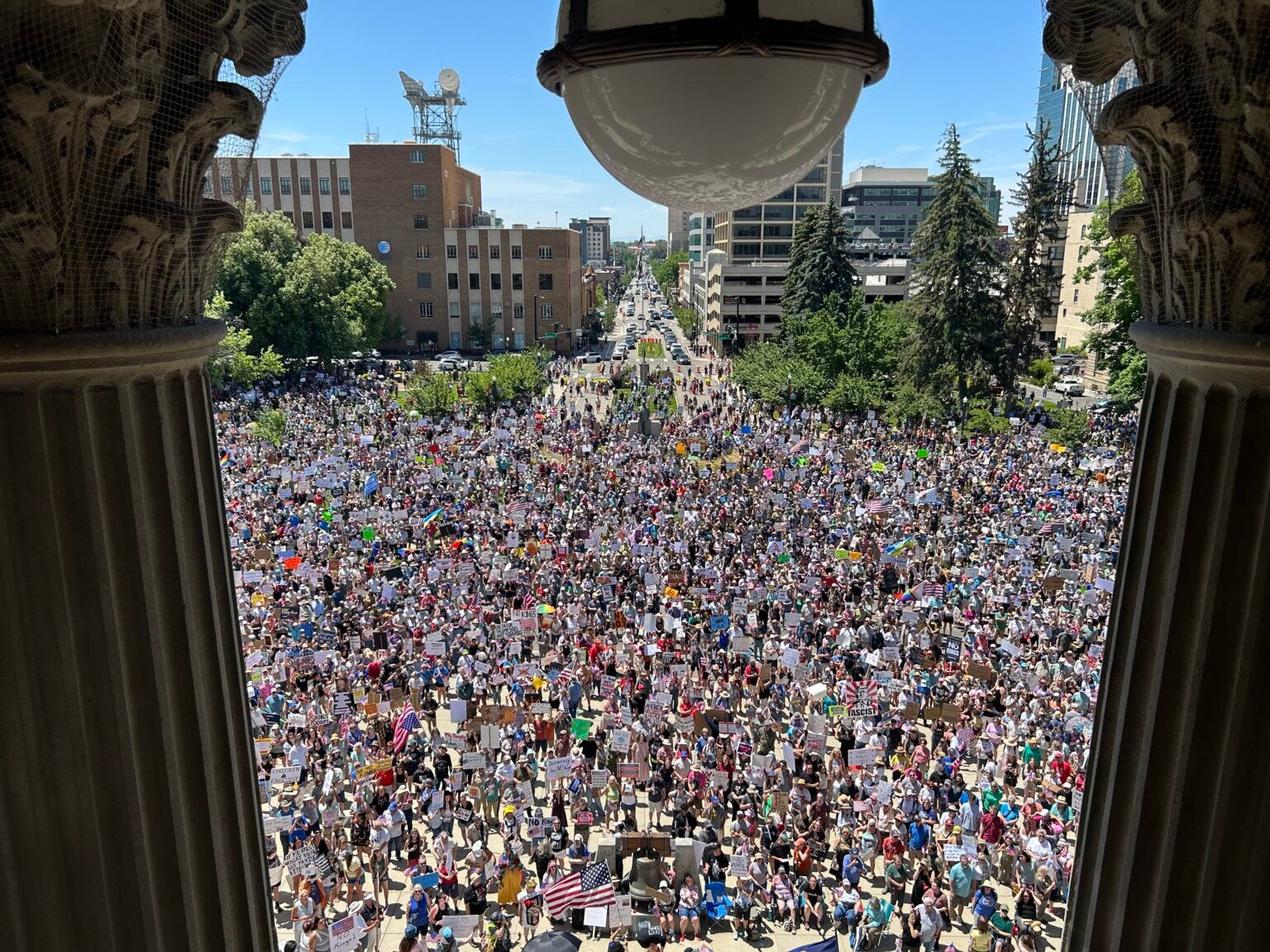
On March 28, the “No Kings” protests are coming back for a third round. Organizers are promising the biggest turnout yet, fueled by outrage over immigration enforcement and the deaths in Minneapolis.
Millions may show up. Streets will fill. Signs will be sharp. Social media will explode.
And then nothing fundamental will change.
That’s not cynicism. That’s pattern recognition.
Who Is Organizing This, Really?
The public face of the No Kings mobilization is Indivisible. Its co-executive director, Ezra Levin, is the one giving interviews, projecting numbers, and framing the narrative.
Indivisible did not come out of workplaces, tenant struggles, or mass labor organizing. It came out of Washington.
Its founders were former congressional staffers. Levin himself worked for a Democratic member of Congress. Indivisible was born after 2016 as a tactical response to Trump’s election, modeled explicitly on how the Tea Party pressured lawmakers from inside the system.
This matters, because origin shapes function.
Indivisible is not designed to dismantle power. It is designed to manage political pressure within acceptable institutional boundaries. It knows how Congress works. It knows how elections work. And most importantly, it knows where not to go.
This is not a secret. It is their brand.
Look at the Partners. The Pattern Is Obvious.
Go to the No Kings “About” page and scroll through the June 14 Partners. Hundreds of logos. At first glance, it looks massive and diverse.
But step back and look structurally.
What you see is a familiar ecosystem.
Large liberal NGOs like ACLU, Common Cause, Public Citizen, MoveOn, Free Press, People’s Action. These groups specialize in rights-based language, legal framing, media pressure, and institutional legitimacy. Their core assumption is that the system is fundamentally sound, just misused by bad actors.
Then you see election-adjacent organizations focused on voter turnout, registration, and campaign infrastructure. These are not revolutionary bodies. Their job is to move anger into ballots, districts, and candidate support.
There are issue-specific advocacy groups centered on climate, reproductive rights, identity, and faith coalitions. Each issue is treated as a silo, disconnected from ownership, production, and class power.
And yes, there are some unions in the mix. But they are mainstream, Democratic Party aligned unions, present more as moral backing than as engines of independent working-class power. There is no coordinated strike strategy here. No cross-sector leverage. No threat to capital.
This is not a class coalition. It is a liberal coalition.


The Slogan Is Catchy. The Diagnosis Is Wrong.
“No Kings” sounds radical. It feels revolutionary. But it rests on a false premise.
America does not need a king to dominate people’s lives.
ICE did not appear because Trump wanted to cosplay authoritarianism. Immigration enforcement as a coercive system predates him by decades. Deportations surged under Democratic administrations too.
Affordability did not collapse because Trump is uniquely cruel. Housing, healthcare, debt, and wages were already breaking people long before his presidency. Democrats managed the same system with different language and better branding.
Police power, surveillance, border enforcement, and economic precarity are not bugs caused by one administration. They are features of the system itself.
By framing the crisis as “Trump wants to be a king,” No Kings narrows the target to a personality instead of a structure. That is politically safe. And that is exactly the problem.
This Is Not Resistance. It’s Emotional Management.
The timing matters.
Minnesota is a pressure point. The deaths tied to federal enforcement have pushed public anger close to a breaking threshold. When anger builds without direction, systems intervene to redirect it.
No Kings functions as a release valve.
It offers a legal, moral, non-threatening outlet. March, chant, post, feel righteous. Experience collective emotion. Then go home.
There is no accumulation of leverage. No sustained disruption of economic flows. No material cost imposed on power. No alternative institutions built.
Calling it “nonviolent but forceful” sounds good, but force without leverage is theater.
A block party can be emotionally satisfying. It does not change who controls housing, healthcare, borders, or labor.
Why This Keeps Happening
This is how the two-party system survives crisis after crisis.
Republicans escalate openly. Democrats and their allied NGOs absorb the backlash. Anger gets laundered into protests that are loud but predictable, passionate but contained.
Nothing structurally changes. People feel heard. Power remains untouched.
That does not make No Kings malicious. It makes it functional.
Functional for a system that needs constant pressure relief without transformation.
The Question No One Wants to Ask
After March 28, what do ordinary people actually gain?
Do rents go down? Do medical bills disappear? Does ICE lose power? Do workers gain control over their lives?
Or does the system simply reset, waiting for the next spike of outrage to manage?
If a movement cannot name class power, cannot confront capital, and cannot operate independently of electoral machinery, it is not a threat. It is a stabilizer.
America does not have a king.
It has a machine.
And until people stop mistaking symbolic protest for structural confrontation, the machine will keep running exactly as designed.


You're correct. No Kings is street theater for the bourgeoisie left, the people who never worry about paying the rent, putting food on the table, or worrying how to pay that huge emergency room bill for a child burning up with fever.
The No Kings movement also fails because the Democrats have done nothing to overturn their dysfunctionality that lost the election -- too much influence from far left groups and leaders like Sanders, Warren, AOC instead of reasonable people like, for example, Josh Shapiro and Gretchen Whitmer.