

If you’re just catching up on the Iran war, the situation has changed more in the last 48 hours than most headlines suggest.
Two U.S. aircraft down. Strikes are expanding beyond traditional targets. Allies are starting to pull back.
On their own, each looks like a separate update.
Taken together, they point in one direction. This is no longer a controlled campaign. It is a system starting to lose control across multiple levels at the same time.
I’ll walk you through what actually changed, and why it matters right now. If you find this useful, consider subscribing. I’m tracking this as it unfolds.
The battlefield is no longer contained
On April 3, the United States lost two aircraft within the same day.
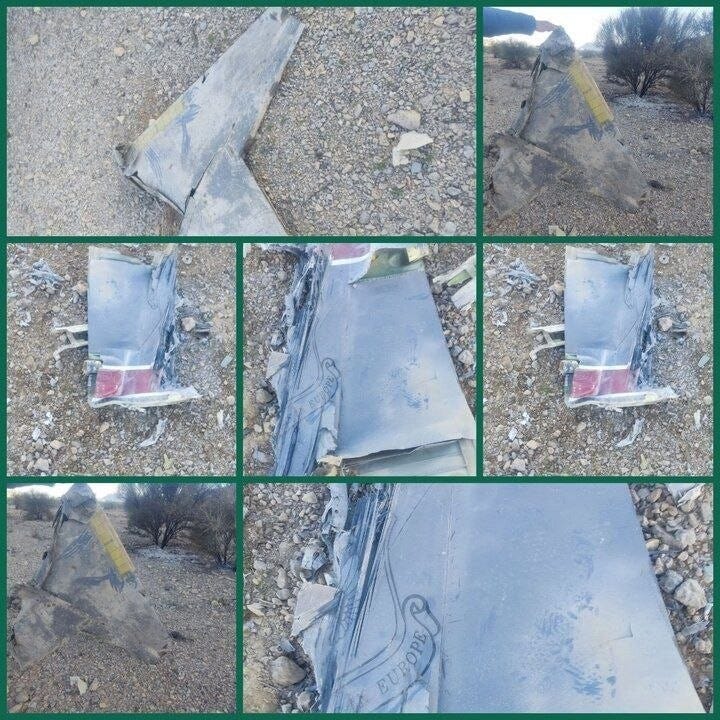
An F-15E was shot down over Iran. Initial reports suggested one crew member was missing inside Iranian territory. However, both crew members have now been rescued, according to sources familiar with the operation.
That outcome, however, does not reduce the significance of what happened.
The recovery itself underscores how exposed the situation had become. During the extraction, a second rescue helicopter was hit by shoulder-launched missile fire. Reports indicate that armed groups on the ground were actively searching for the pilots, and Iranian messaging included a financial bounty for their capture.
This was not a routine recovery.
It was a contested extraction under active threat.
At the same time, a second aircraft, an A-10, was also hit and went down in the Persian Gulf region. The pilot survived, but U.S. officials acknowledged the aircraft was damaged by Iranian fire before reaching safer airspace.
Taken together, this is not just about aircraft losses.
It is about the fact that personnel were forced into hostile territory, and recovery operations themselves became part of the conflict.
The targeting logic is shifting, and so is the risk
At the same time, the nature of the strikes is changing in ways that are harder to reverse.
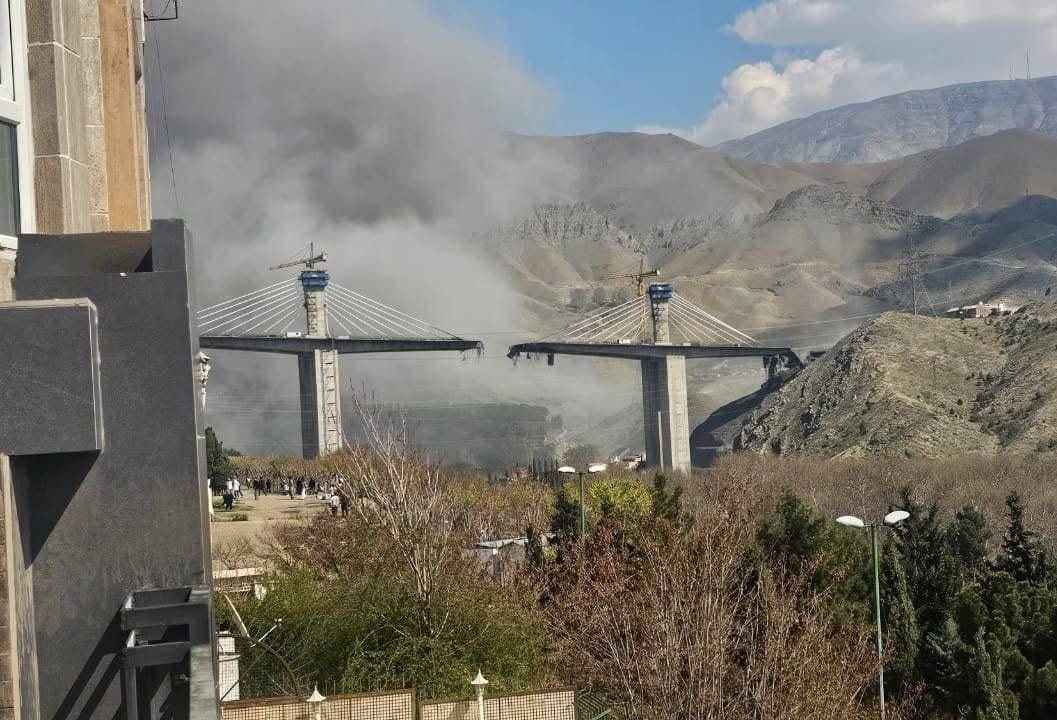
The United States has already struck a major bridge near Tehran. Reports suggest the possibility of a second strike occurring after emergency responders had arrived, a pattern often described as a “double tap.” If confirmed, that would not just be escalation. It would signal a shift in targeting logic itself.
In parallel, U.S. leadership has openly threatened to expand strikes to include power plants and other critical infrastructure. These are not traditional military targets. They are part of the civilian system that keeps a country functioning.
This is where operational decisions begin to overlap with legal and political consequences.
More than 100 U.S. international law experts have already warned that these actions may violate international law, particularly given the lack of UN authorization and the expansion toward infrastructure that may be considered civilian.


But the more important issue is not just legality. It is direction.
Strikes are moving beyond military targets. Infrastructure is becoming a pressure point. Civilian impact is no longer incidental. It is entering the calculation.
And this is where internal warnings become harder to ignore.
Miles Taylor has argued that this kind of escalation should not be understood as isolated or rhetorical. Drawing from his time inside government, he describes repeated instances where the use of violence against civilians was considered as a tool of deterrence, not just a last resort.
You do not have to accept that interpretation fully.
But placed next to current events, the pattern becomes difficult to dismiss.
At that point, the question shifts from whether a specific strike is legal to whether the logic behind the campaign itself is changing.
The narrative is splitting in real time
While the structure of the conflict is shifting, the public narrative has not adjusted.
President Trump has described these developments as normal wartime events and insisted they will not affect negotiations. That message is designed to project continuity and control.
But it is now colliding with visible reality.
Losing multiple aircraft, struggling to extract personnel, and taking fire during rescue operations does not align easily with claims of operational stability.
At the same time, Iran is actively defining the situation in the opposite direction.
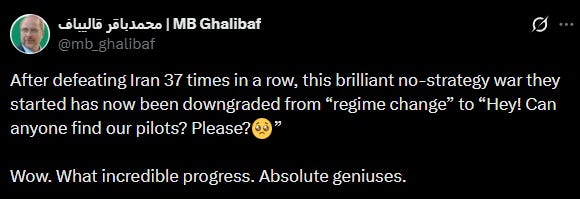
Mohammad Bagher Ghalibaf publicly mocked the war, reframing it as a shift from “regime change” to “finding a missing pilot.” Iranian messaging has emphasized that U.S. forces are now operating in a contested environment and has even encouraged civilians to report or capture downed pilots.
This is not just propaganda. It is narrative positioning.
Two interpretations are now running in parallel. One presents control. The other presents exposure. And they are no longer reconcilable.
Diplomacy is falling behind the conflict
At the diplomatic level, there is no sign that the situation is stabilizing.
The United States reportedly proposed a short-term ceasefire through intermediaries, which Iran rejected. Indirect talks have stalled, and Iran’s conditions remain unchanged: compensation, withdrawal of U.S. forces, and guarantees against further attacks.
At the same time, military pressure continues to expand.
These are not two sides moving toward compromise. They are moving further apart while the conflict intensifies.
Diplomacy, in this context, does not contain the situation. It is reacting to it, and increasingly falling behind it.
The alliance structure is starting to strain
The effects are now spreading beyond the immediate battlefield, but not in a uniform way.
European countries are no longer aligned.
Spain has closed its airspace and denied the use of its bases for war-related operations. Italy has restricted access and slowed cooperation. France has limited certain forms of military coordination.
But not all allies are stepping back.
Germany has taken a different position.
Ramstein Air Base, one of the most important U.S. military hubs in Europe, continues to operate as a central node for U.S. operations, linking command and activity between Europe and the Middle East.
President Trump has publicly praised Germany for allowing continued use of its territory, explicitly contrasting it with other European countries that have limited or refused cooperation.
This is uneven alignment.
Some allies are pulling back, while others continue to support the operation.
That kind of structure tends to hold in the short term, but weaken over time.
China is positioning itself differently
China’s response adds another layer, and it is more concrete than a standard call for calm.
Beijing has called for an immediate ceasefire and warned that military escalation is driving instability in the Strait of Hormuz and increasing risks to global energy security. But China is not only speaking at the level of diplomacy.
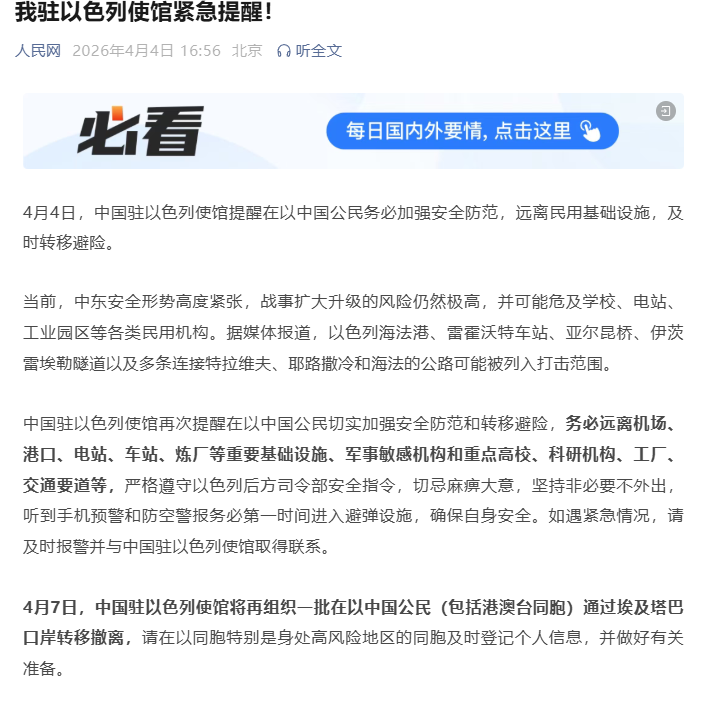
On April 4, the Chinese embassy in Israel urged Chinese citizens to strengthen security precautions, avoid key civilian infrastructure, and prepare to relocate. The warning specifically listed airports, ports, power plants, stations, refineries, industrial zones, major roads, universities, research institutions, and factories as places to avoid. It also announced that another group of Chinese nationals would be organized for evacuation through Egypt’s Taba crossing on April 7.
That matters because it shows how Beijing is reading the situation.
This is no longer being treated as a limited military confrontation. It is being treated as a conflict that could expand further and place civilian systems, transport corridors, and urban infrastructure at direct risk.
That makes China’s position more than a generic call for de-escalation. It is a diplomatic stance backed by operational caution.
And that adds another sign that the conflict is no longer being understood through a single global lens.
What this suggests
This is not a single failure. It is a system losing alignment across multiple layers at once.
Operational control is weakening. Targeting logic is shifting. Narratives are splitting. Legal pressure is increasing. Diplomacy is stalling. Alliances are straining. Global interpretations are diverging.
When all of these begin to move in different directions at the same time, the system stops behaving in a predictable way.
That is when control starts to slip.
The question now is not whether the war will continue, but whether it can still be contained within the boundaries it started with.
Because those boundaries are already moving.
If this helped you see the structure behind the headlines, subscribe. If you want to support deeper work like this, consider upgrading. Thank you.
~Grumpy Chinese Guy, Neil Zhu.


Why are Trump and Hegseth not being arrested for international war crimes?
Iran's economic war against U.S./Israel may in the end play the critical role. Through controlling the Strait of Hormuz, Iran pushes oil, natural gas, fertilizer, and petrochemicals toward crippling runaway inflation, makes the U.S. stock market increasingly volatile, renders U.S. Treasuries to pay the national debt difficult to sell, and pushes countries to replace the dollar with gold and the Chinese yuan. Trillions of dollars of Big Tech and Wall Street investments are at risk. At some point, Trump may have to negotiate military withdrawal from West Asia in exchange for opening the Strait of Hormuz.