

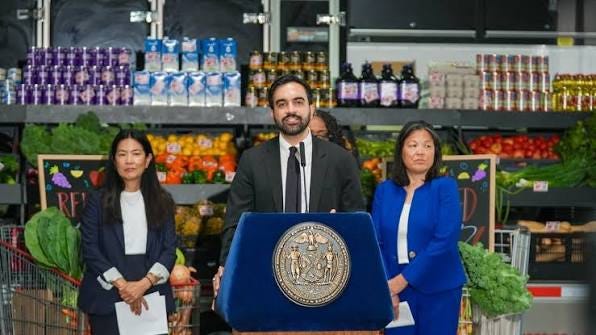
New York just promised to make a basket of everyday groceries 30% cheaper for anyone who walks in the door. Within a day, the same voices that cheer billion-dollar tax breaks for corporations were screaming that this is how communism starts.
The fight was never about groceries. It is about who government resources are allowed to help.
Here are the facts. Mayor Zohran Mamdani announced the plan on July 27. Five city-owned stores, one in each borough, by the end of his term. A core basket of produce, meat, seafood, eggs, dairy and around 20 categories of pantry staples sold at a 30% discount, with prices locked monthly instead of swinging week to week. The city puts up 70 million dollars in capital, owns the land, covers rent and property taxes, and lets private operators bid to run the stores. City projections put the savings near 90 dollars a month, about 1,000 dollars a year for a household. Grocery prices in New York have jumped roughly 66% in a decade. This is not a bread line. It is a discount aisle with a landlord who does not need a profit.
A quick note before I dig in. I appreciate anyone who takes the time to read this. If you find it worth your while, please consider subscribing. And if you want to support the work a little further, becoming a paid subscriber would mean a lot to me. Thank you.
China already answered this question
In many Chinese cities, community food markets do not run on pure hands-off approach. Local governments plan where they sit, help manage or subsidize the space, hold down rents, regulate food safety, and lean on supply and reserve systems to keep prices from spiking. The goal is not to erase private business. It is to make sure ordinary households, especially lower-income and elderly ones, can reach affordable fresh food nearby.
And here is the part the fear-mongers never mention. That same country is where Costco, Walmart and Sam’s Club are making a fortune. Public provision and private retail sit side by side, because shoppers do not choose on price alone. They choose on brand, convenience, selection and habit. A person who has trusted one store for 20 years does not abandon it because a cheaper option opened across town.
So the claim that a public grocery option automatically destroys the private market is not economics. It is a scare story.


Notice which help gets a nice name
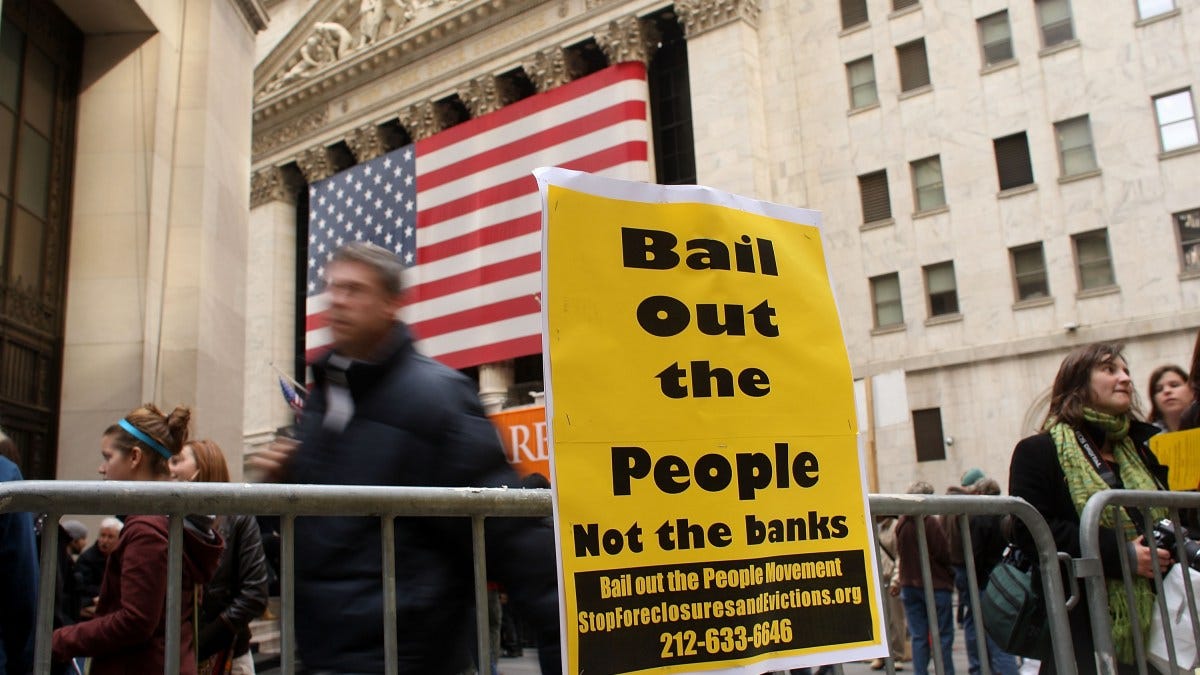
When critics warn that a public store will wreck private ones, ask a simple question. The United States government subsidizes agriculture. It insures crops. It hands chipmakers tens of billions. It bailed out banks and automakers. It gives corporations tax breaks and calls it industrial policy and investment in the future. None of that gets called socialism.
Help a company build a data center with public money, that is economic development. Help a grandmother buy eggs, that is the road to communism.
This is not an economic argument. It is a class argument wearing an economic costume. Government touches the market every single day. The only thing up for debate is who it touches the market for. Aim the help upward at shareholders and it gets a respectable name. Aim it down at people struggling with a grocery bill and out comes the socialism label.
Who this store is actually for
This is what gets buried under the panic. A 30% discount is not a luxury for the people it reaches. For a senior on a fixed income, cheaper groceries can decide whether there is money left for the pharmacy or the electric bill. For a family stretching SNAP benefits, the same dollars cover more real food. That is not dependence. That is dignity. For a neighborhood with no full supermarket and no easy transit, a nearby store is not about ideology. It is about whether fresh food is reachable at all.
Yes, a public option will pressure some private grocers. That is real, and it deserves to be taken seriously. But weigh it honestly. Squeeze a handful of competing stores, or leave hundreds of thousands of residents paying prices they cannot carry. That is a trade-off. Pretending only one side of it exists is the whole trick.
Watch the pattern, not the panic
None of this makes the plan a guaranteed win. Five stores is small against a city this size. Supply chains, cost control and long-term funding are real risks, and government-run stores have failed in other towns. So the honest question is not whether this exact plan is flawless. It is whether, in food and housing and healthcare, once the market has priced ordinary people out, the public is even allowed to build an alternative.
That is the fight underneath the grocery fight. Subsidies flow up and get called strategy. Relief flows down and gets called a threat. Watch how fast the word socialism appears the moment a policy might lower your cost of living instead of a corporation’s. That timing tells you exactly who the system was built to serve.


Clear minded commentary.
I have a toy police car I bought in a Walmart in Beijing it’s cool because it’s a Chinese cop car and looks different than the US ones. I was surprised by the Walmart there because I had only seen smaller family run shops until I asked locals where I could shop for some gifts before returning home … I bought some really nice chop sticks at Walmart too. I guess it’s possible to have capitalism and socialism working together… The Communist scare here in the US is simply a a scare tactic by the right to use a word that their ignorant followers don’t even understand because they are uneducated fools. Capitalism is fine I owned my own small business for my entire career but now I’m retired and would love to get some help from the government I paid millions in taxes to over my lifetime…. Is that too much to ask?