

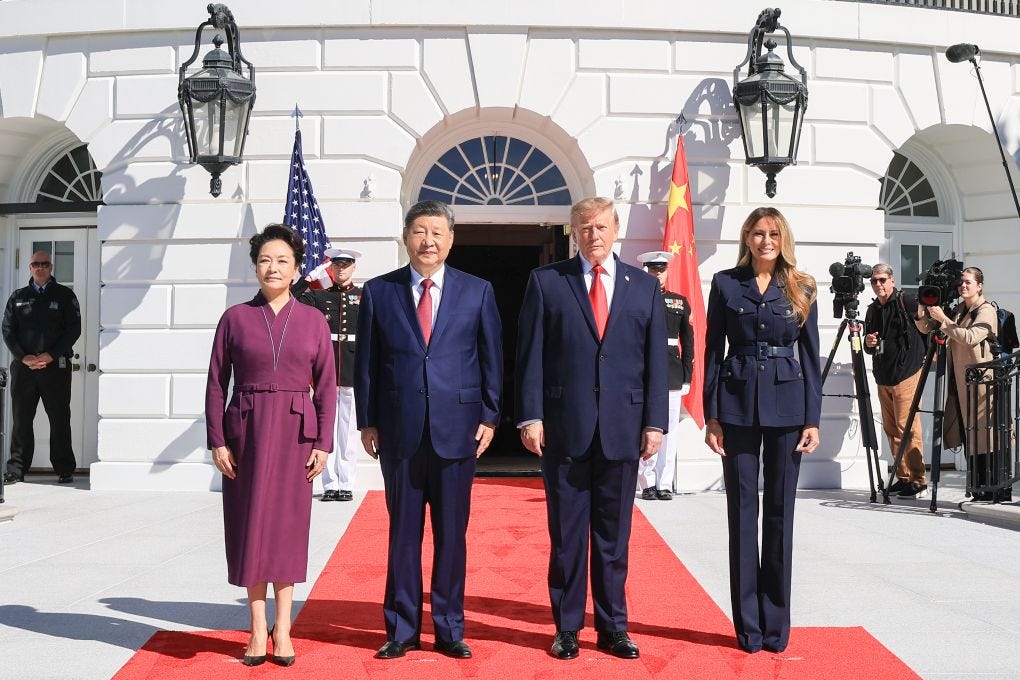
Trump and Xi met in Washington on September 24th. Some of the right-wing senators questioned the lavish welcome. Obviously, they don’t understand the personalities of Trump and Xi. We can dive into that in the future. However, Secretary of State Marco Rubio’s answer was that refusing to talk to China at the highest level would be irresponsible. He was right.
China and the United States are right now the most powerful countries in the world. Although the two countries have some serious disagreements, they also have very strong economic ties. A lack of communication would be dangerous for the rest of the world. It is important to keep communicating. During the visit, they also agreed to work toward a constructive relationship of strategic stability based on respect, fairness and reciprocity. Those words matter if the talks that follow actually work.
Now, what did this meeting achieve?
What they agreed to do
So, the existing trade truce was extended from November 10, 2026, to January 10, 2027. Treasury Secretary Scott Bessent announced the extension before the leaders met. China and the United States had already been talking about it. Usually, by the time leaders meet in public, their teams have done a lot of the talking. Now the negotiators have two extra months to work, and businesses have a new deadline. It is not a long-term settlement, but it is something they can work with right now.
There are some important details in the White House’s September 25th fact sheet. The trade and investment boards were announced back in May, and now they are operating. Under the trade board, both countries reached consensus on recommendations for more favorable tariff treatment covering about $30 billion in goods moving each way. The products include American farm goods, seafood and medical devices, along with Chinese-made toys, small appliances and children’s car seats. If the tariff changes actually happen in time, that could be good news for Americans shopping for Christmas.
They agreed on recommendations. There are no published final tariff rates, complete product lists or dates when lower duties would take effect. Still, this is a positive sign for both countries.
The White House says China will import at least 10 million metric tons of American coal in both 2027 and 2028. This is a new commitment in the U.S. account. We still have to see the shipments. Both sides also continue to work on shortages of rare earths and other critical minerals. The United States needs those minerals for a lot of high-tech equipment and military systems. They have not announced a solution to that problem yet.
There is another kind of cooperation that affects people directly. The White House says China put new export controls on two chemicals used to make fentanyl. It also says Chinese authorities arrested 21 people in August, acting on information from U.S. law enforcement, in cases involving drug precursor chemicals. Those arrests happened before this meeting. But they show what the two countries can do when they actually work together.
For me, one of the biggest topics at this meeting was the risk of AI. According to the White House, the two countries established a dialogue and a channel to communicate about AI incidents, with another exchange due by November. So they are going to keep talking. China also called for continued AI dialogue. Both sides discussed international conflicts and Taiwan, but there was no settlement on those disputes. I do not think this is what China wanted on Taiwan. I believe the Chinese government wants a firmer U.S. commitment on arms sales to Taiwan. It did not get one publicly at this meeting.
Xi also called for regular talks between the two militaries and better crisis communication. I think that matters. If a military encounter goes wrong, the people shouting online will not be the ones trying to stop it from escalating. Both governments need a way to talk before that happens.
Finally, Xi said China would invite 100,000 young Americans to visit and study over five years, and two pandas will soon arrive in Atlanta under a cooperation agreement announced in April. The youth invitation is a new target. I think it could be a good opportunity for young people in America. If you are interested, look into the programs and see whether you qualify for financial support. Some exchanges cover costs while participants are in China, although travel, insurance or tuition may still be their responsibility. If the support is there for you, take advantage of it. It could give you a chance to study in China without taking on the kind of debt many students face at home.
What this means for each country
For the United States, the meeting offers a way to pursue more sales of farm goods and coal. That matters to farmers and coal-producing states, including parts of Trump’s political base. It also gives the United States a way to address mineral shortages and negotiate targeted tariff relief while the broader competition with China continues. For China, it offers more predictable talks with its largest strategic rival and a chance to protect trade that supports Chinese businesses and jobs. Chinese manufacturers need a stable export market in the United States. Both governments now have a place to keep negotiating before the next dispute becomes a crisis. The White House says the leaders intend to attend each other’s G20 and APEC summits. That gives them another reason to keep talking, though it does not guarantee another one-on-one meeting.
In a meeting like this, there is usually no surrender and no grand bargain. You will not see a drastic change on either side. Both countries kept their positions on the hardest questions. They agreed to keep talking about AI risks, partly so an incident does not turn into a bigger confrontation. I worry that an AI incident could be misread or used to inflame tensions in the future. That is one more reason to keep this channel open. Whether anything bigger changes depends on the decisions that follow. We should have a more concrete picture by the end of the year.
Also, the promises of 200 Boeing aircraft and at least $17 billion a year in American agricultural purchases already appeared in the White House’s May fact sheet. They are not another new deal just because people repeat the figures this week. We will see how China follows through, and whether those purchases and deliveries actually happen.
What this means for their people
Farmers need buyers. Many of them are part of the MAGA base. Manufacturing workers need reliable orders and materials too. If the proposed tariff changes take effect, importers may pay less for car seats and toys. But tariffs have already pushed prices up. Will consumers see the savings? That depends on the retailers. Some may keep the money and leave their prices where they are. Coal producers may gain sales if the import commitments are fulfilled. Good for them.
For the last couple of years, unstable tariff policies have made it harder for Chinese exporters and their workers to plan and keep customers. This two-month reprieve gives them some room to work, but it ends on January 10. Chinese New Year is coming in February, and I am sure they want to make sales before then. More predictable trade rules would help both American and Chinese families. Jobs, prices and household budgets all depend on what happens next.
The youth initiative has a different time horizon. It is very important for both countries to communicate with each other. For years, many Chinese students have gone to the United States and learned about American life firsthand. It is time for more young Americans to visit China and form their own opinions from direct experience. They may come back with favorable impressions or criticisms. That does not matter. What matters is that they have actually been there. This kind of contact can reduce ignorance on both sides.
What Rubio said in the beginning is very important. Both leaders had to meet. Talking face to face is one way to avoid more conflict, especially while trade frictions, technology competition and security disputes remain unresolved. This was more than just a photo opportunity. I hope some of the political pundits can see it. Keeping these talks going can benefit both countries.