

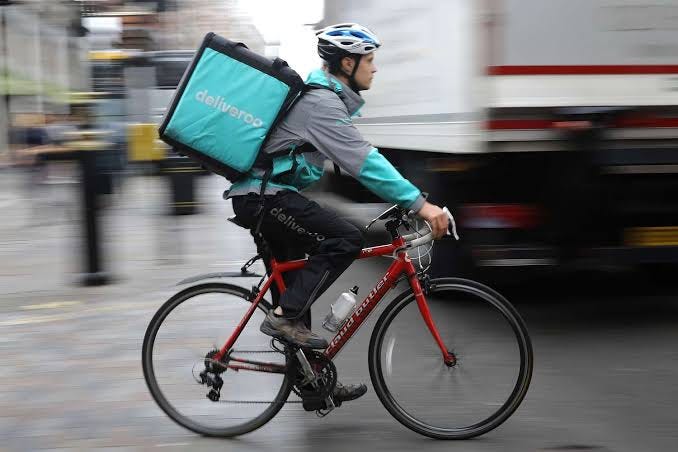
The Trump administration just finalized a new rule that could make it easier for companies to classify workers as independent contractors instead of employees. And why does that matter? Because independent contractors generally don’t get the same federal minimum wage and overtime protections as employees. The new rule puts greater weight on how much control workers have over their work and whether they have the opportunity to make a profit or suffer a loss.
Now, this rule doesn’t automatically turn employees into contractors. But it raises a much bigger question about how work has changed under modern capitalism. What does it actually mean to be independent when somebody else controls the market you depend on to make a living?
You Own the Car. They Control the Business.
Take Uber drivers, for example. I drove for Uber for a couple of years, so I have some experience with how this business works.
The driver owns the car. He pays for gas, insurance, maintenance, repairs, and everything else that comes with keeping that car on the road. And he can decide when to work and when to stop. Sounds like he’s his own boss, right? Well, not exactly.
Uber controls the platform. It controls access to customers, distributes rides, and determines much of the pricing structure. So the driver may own the car, but Uber controls the market he depends on to make money. And that’s something I think people need to understand about how capitalism has evolved.
In a traditional factory, the capitalist owned the building, the machines, and the equipment. Workers showed up and sold their labor for wages. But now the company doesn’t even need to own the equipment. The driver buys the car, pays the operating costs, and carries the financial risks, while the platform controls the business.
And because the worker owns the equipment, the company can point to that ownership as evidence that he’s running his own independent business. But owning a tool doesn’t necessarily mean you control the economic system that makes that tool useful.
The Company Knows More About You Than You Know About It
Here’s where I think digital capitalism becomes even more interesting. Uber has enormous amounts of data. It knows customer demand, where drivers are located, how many drivers are available, how workers respond to different offers, and how pricing affects the number of people willing to work.
But the individual driver doesn’t have that information. He sees an offer on his phone. He can accept it or reject it. That’s his freedom. But Uber has the information and the ability to influence the conditions under which those choices are made.
And there’s research showing why this matters. A 2025 Oxford University study examined more than 1.5 million trips involving 258 Uber drivers in Britain. Researchers found that after Uber introduced dynamic pricing, drivers’ inflation-adjusted hourly earnings declined while Uber’s share of fares increased.
So when people tell me that algorithms are simply making the market more efficient, my question is: Efficient for whom? Because the company and the worker aren’t necessarily benefiting equally.
Enough to Survive. Never Enough to Escape.
And here’s how I understand the business logic behind all this, especially from my own experience driving for Uber.
Uber needs drivers. Without enough drivers on the road, customers wait longer, rides become harder to find, and the platform becomes less useful. But Uber also has an incentive to control how much it pays drivers. Think about it. The company needs people to keep coming back to work. It needs drivers willing to spend eight, ten, or even twelve hours on the road.
So it can’t make the earning opportunities so terrible that everybody quits and finds another job. But from the company’s perspective, it doesn’t need drivers to make so much money that they can comfortably stop working either. What the platform needs is a reliable supply of people who keep coming back.
And with enormous amounts of data, the company has the ability to adjust prices, influence the distribution of rides, and shape how much money drivers can earn. That’s why I believe the system has an incentive to keep drivers earning enough to stay, but not enough to escape their dependence on the platform.
Enough to survive. Never enough to escape.
I’m describing what I see as the economic logic of the business, not quoting an internal Uber policy. And the important question is whether these algorithms are being used simply to connect customers with drivers, or whether they’re also becoming tools for controlling the labor force. Because if a company can influence your earnings, your access to customers, and how much time you need to work to pay your bills, how independent are you, really?
The Illusion of Independence
And this doesn’t stop with Uber. Think about delivery workers, freelancers, online sellers, and even content creators. You can own your computer, your camera, your car, or whatever equipment you use. But what happens when your entire income depends on a platform that controls who sees your work, how customers find you, and how much you can earn?
You might own the tools, but somebody else owns the gate to the market. And that’s a very different kind of power.
In the old factory, management could control workers through the workplace, the machinery, and direct supervision. Now the company can influence workers through data, algorithms, and access to income. The worker may have more flexibility over when to work, while having very little control over the economic conditions of that work.
And when workers are legally treated as independent businesses, they can also lose protections that employees have spent generations fighting for. The result is that companies can shift more costs and risks onto individual workers while keeping enormous control over the system those workers depend on.
Who Actually Holds the Power?
That’s why I think the government should be protecting working people based on who actually holds the economic power, not simply what a company calls its workers. And workers need meaningful ways to bargain collectively, especially when they’re dealing with corporations that control the market and possess information no individual worker could possibly match.
Because owning a car doesn’t mean you own the business. Owning a computer doesn’t mean you control the platform. And choosing your own hours doesn’t mean you control your income.
We’re seeing the same question emerge with AI, where a small number of companies can control the technology, infrastructure, and data that millions of people increasingly depend on to work. Capitalism has evolved. The technology has changed. And the relationship between those who own and control the system and those who depend on it is becoming more complicated.
But the fundamental question hasn’t changed. Who controls the means of making a living, and who gets to decide how the rewards are divided?
The factory has no walls anymore. But somebody still owns the gate.
It’s like using the logic with union workers because they own the safety boots and the tools that they are independent contractors. The walls is the software and control of the platform. I can’t wait for the day for AI to enable cooperatives to be formed with the same software capabilities of the existing platforms to bring more of this revenue to the people working the platform.