

60 Democratic candidates, including ten sitting members of Congress, have signed a pledge declaring “we are capitalist, not socialist,” according to Reuters.
Great. Does that lower anybody’s rent? Does it pay a medical bill? Those are the problems people need solved. These candidates are reassuring everybody that capitalism has nothing to fear from them.
This is what bothers me. Republicans accuse them of being communists, and they immediately start defending themselves on Republican terms. How do you fall for something this obvious?
They know you are capitalists
Come on. The Democratic establishment has been governing capitalism for generations. Republicans understand that. Democrats protect private ownership and work with corporate America. That record contains no plan to abolish capitalism.
The parties differ on unions, taxes, and public services. But both establishments support private capital retaining its central place in the economy. They sell that arrangement differently.
Then Republicans shout communist, and some Democrats behave as though they have been caught doing something shameful.
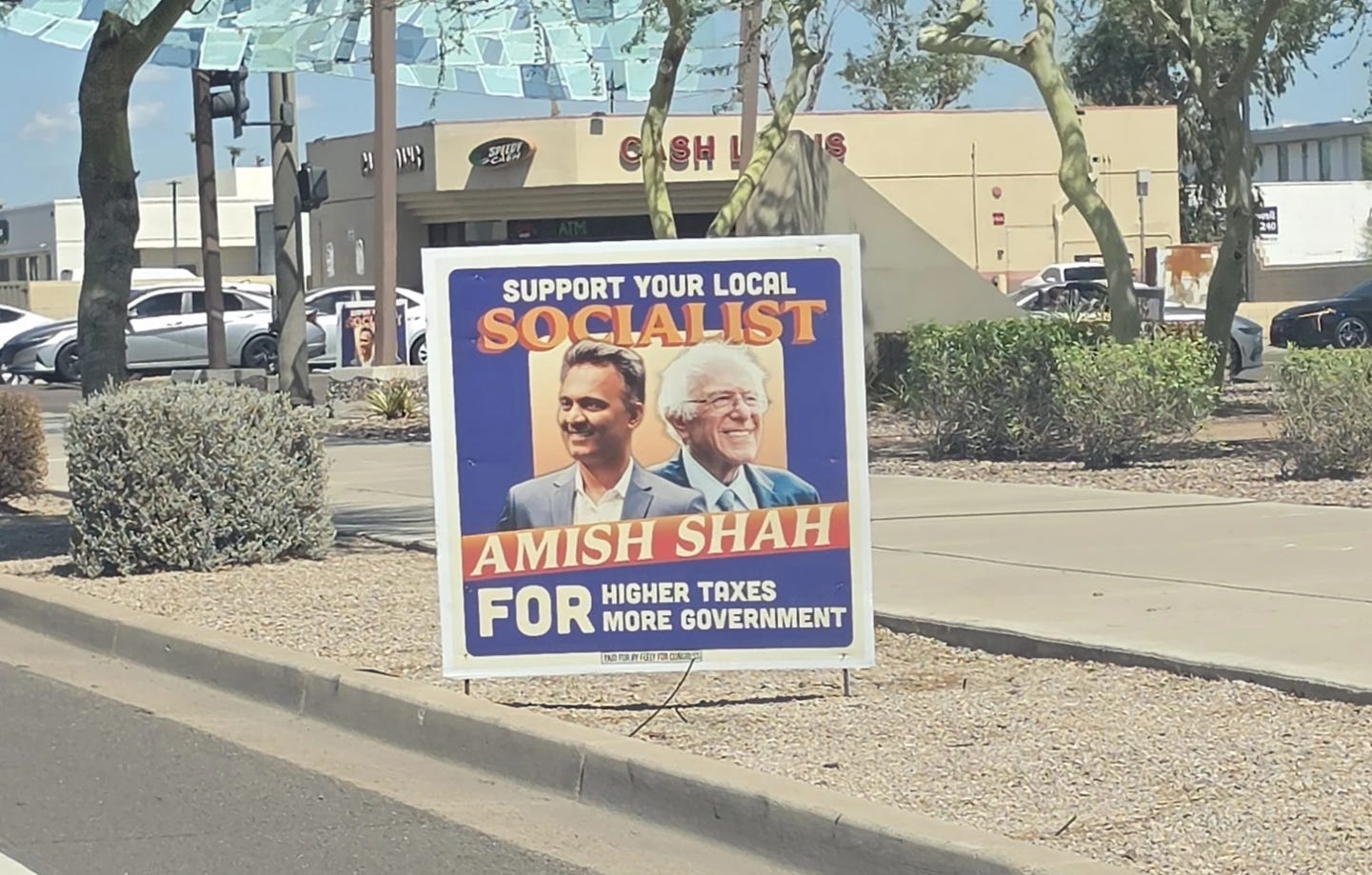
Take Amish Shah, the doctor running for Congress in Arizona. Republicans put him in a hammer-and-sickle caricature because he once praised Bernie Sanders and government-funded universal healthcare. His response included telling Reuters he believes in capitalism.
A doctor wants people to get healthcare. Somehow, he ends up explaining that he is safe for capitalism. Meanwhile, the people opposing universal coverage escape having to explain why anybody should go without it.
You have let your opponent decide what the argument is about. That is politically stupid.
And this trick is old. In 1946, Senator Robert Taft attacked a national health-insurance proposal as socialistic. The American Medical Association was using that label against healthcare legislation, too. Eighty years later, the accusation still gets candidates scrambling.
The Cold War ended. Apparently, the loyalty test didn’t.
Capitalism needs to answer some questions
Abdul El-Sayed told The New Yorker in August: “I’m a capitalist who reads about capitalism.” He explained that he opposes monopoly and supports small businesses. Fine. I want to know how far that commitment goes when workers’ interests conflict with owners’ profits.
Because capitalism is about ownership and power. You can have a great idea and work hard. But if somebody else owns the company, they decide what happens to the wealth you help produce. They control investment. They can sell the business or cut your job. You still need another paycheck.
When I talk about exploitation, that is the relationship I mean: workers produce a surplus that owners control. A better salary can improve your life without giving you control over that relationship.
Think about what it takes to keep working. Food, housing, healthcare, raising children. You need enough to show up tomorrow, and society needs another generation of workers. But how much security do you get beyond that? How much of your life belongs to you?
Working people have fought for unions, pensions, public services, and shorter hours. Those gains matter. So does the fact that they had to fight the people benefiting from their labor to get them.
Now somebody asks whether healthcare or housing should be organized differently, and the discussion gets shut down with communism. Convenient. The owners’ income stays protected while your proposal becomes the thing that needs defending.
That is why I see the Red Scare as a defense of class power. Change who owns, who decides, or who profits, and you threaten somebody’s very comfortable position. They have a reason to keep you afraid of the alternatives.
The trap of dogmatism
Let me put a name to this, because I think a lot of American politicians and readers are stuck in it: dogmatism. You take a definition from a book, slap it onto a person or an entire country, and think you have finished the argument. You haven’t even looked at how that society actually works.
Someone supports a socialist policy, and suddenly you treat every position they hold as socialist. Someone supports private enterprise, and you assume they must oppose public healthcare. People, policies, and political systems are more complicated than that. You have to examine ownership, power, and actual decisions. A label cannot do that work for you.
Personally, I want to know whether people can afford care, get an education without years of debt, and gain power over their lives. Calling something capitalist does not answer any of that.
Neither does calling it socialist. Medicare, Social Security, and public schools already operate inside American capitalism. Public provision does not automatically make an entire country socialist. Supporting it does not mean you want every business abolished.
Look at China. The governing party is communist. The economy includes markets, private businesses, and state enterprises. China describes itself as having a socialist market economy, in a prolonged primary stage of socialism. A long-term goal does not mean every stage of that goal has already arrived.
Different conditions require different methods. Be pragmatic about the methods and firm about the purpose: improving people’s lives. Otherwise, you are defending a word while ignoring the people supposedly benefiting from it.
Stop apologizing and make the argument
Democrats can call themselves whatever they want. But if they believe in universal healthcare, they should defend it. If they believe workers need stronger unions or affordable housing, explain it and fight for it.
Make the opponent explain why people should keep paying the price. Stop accepting the premise that helping them is something suspicious.
Backing down will not stop the accusations. It teaches your opponent that the accusation controls you. And it teaches voters that your commitments can be frightened out of you.
I enjoy your content Neil..What's funny is the candidates, and even members of Congress themselves, are not in fact capitalists. Maybe around 300 owners out of 300 million people? They are not part of the owner class. But they believe themselves to be equal to the owners. It is true that they are not as exploited as teachers and nurses and bus drivers and construction workers, but only because they willingly serve the interests of the owners, at the expense of the people.