

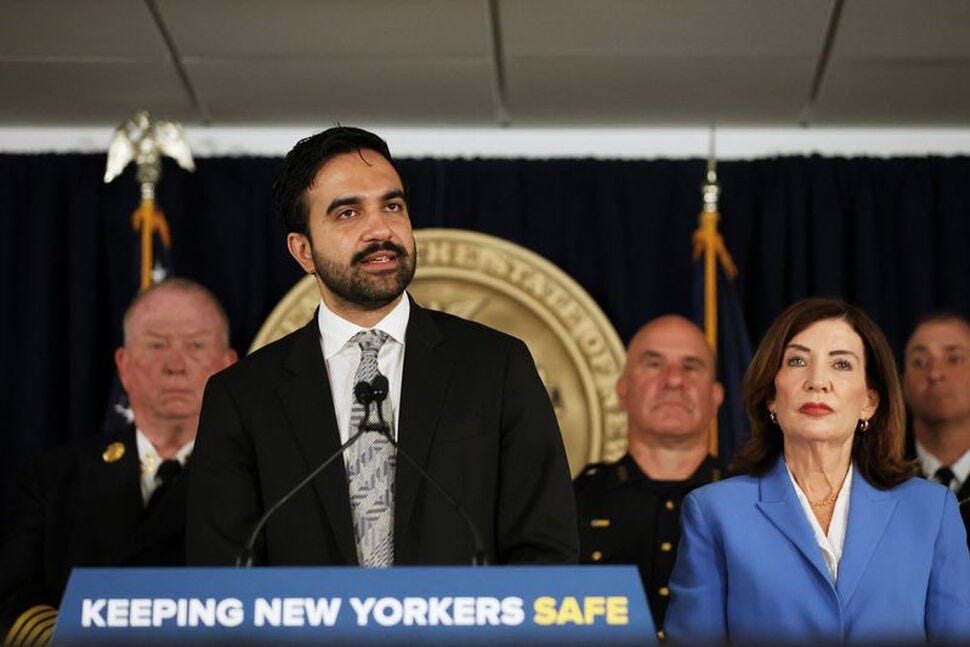
New York Mayor Zohran Mamdani banned generative AI for New York public school students from Pre-K through 8th grade for one year. So, there are about 600,000 kids who are not allowed to use chatbots, which applies to every grade from Pre-K through 8th grade.
I understand his reasoning. He said that six-year-olds are too young to understand how to slice an onion or use it safely, and by 16, they should be old enough to know, so they don’t. He doesn’t want the kids to touch AI too early. I completely understand the reasoning. He also said that the children need teachers and need each other, and they should sit together with the problems that they cannot solve yet.
He also mentioned something very important that other mayors did not mention: the purpose of an AI company, whether they build for sports betting or even an education tool, is always for profit. So, if you put this instrument into public schools, it won’t be good for the children.
And the one year is not meant to be forever. It is a year to study. Mamdani said he has not seen a single study showing AI helps elementary or middle school students, except for research paid for by the same companies that stand to profit from selling it. So the city is setting up a group of students, teachers, parents, the union and outside experts to look at what these tools actually do to learning, and they will publish a report at the end. He is not saying AI is banned forever. High school students are still getting AI lessons, and a small number of them are still in supervised pilot programs. He is saying nobody has proven this works on young kids yet, so stop until somebody does.
I agree with him about the companies. I do not agree with what he decided to do about them.
AI is a tool for productivity, whether you like it or not. Taking the tool away from the kids, I think, is not fair to them, and they should know how to use it in the future.
It is very important to understand what China is doing about this issue.
In China, in elementary school, school kids are not allowed to use open-ended AI on their own at all.
But schools will introduce AI to them. For example, they play a drawing game and watch the AI guess what they drew, or talk to a voice assistant. The teacher will then ask some questions that actually matter. Why does the AI understand you? How is it deciding? Where does it get the question or the answer wrong?
In elementary school, it’s more of an introductory phase. In middle school, it is to understand how it works. By that time, the children are looking at what the machine can produce and whether the result is what they are looking for. In high school, it is when the kids are allowed to use AI to build things, so there are phases.
With Mamdani’s policy, the difference between the schools in Beijing and the schools in New York is that one is being told what AI actually is and how it works, and the other one, at least right now, is being isolated and protected from it.
This is the part that we should mention: Mamdani and the Chinese Ministry of Education are both afraid of the same things. Both decided that AI must not do the children’s thinking, and both said that you cannot use AI to replace educators. Nobody trusts the companies that are selling AI, and they agree that AI is dangerous to the education of children.
They have different answers to it. New York shut the door and asked for one year. In China, they have a plan and schedule to introduce AI to the children step by step, until they are old enough to use it by themselves.
As the mayor of New York, there is something Mamdani cannot fix with what he has. He can ban New York public schools from using AI, but it does not cover the schools in Lower Manhattan, those private schools charging $65,000 a year to teach children with AI tutors, which is very popular right now, or the families that pay for AI tutoring at home. Whoever can pay the money can teach their children what AI is about.
So, a year off is not for everybody’s kids. A year off is not for the parents who cannot afford to buy their way around it.
I completely understand why Mamdani did it. The pressure most likely came from parents who are frightened about AI, and they have all the reasons to be frightened. Nobody asked them whether they wanted a chatbot inside of their kids’ reading program.
But keeping AI out of the classroom does not keep it out of childhood, or out of their reach. These kids are going to meet it anyway. They’ll meet it on the phone by themselves somewhere. And at that time, nobody will be there to explain what AI is about. They will get more confused.
So, which way do you prefer? Ban the AI. Isolate the children from AI. Or introduce AI to children step by step and get them into the AI, which is inevitable.
Remember, the families who can afford to teach their children AI will do it anyway, and that actually might create a class issue.
I think what we should be asking is, is AI sustainable? Who is paying for it? If you have to build huge data centres that suck down massive amounts of water and electricity, then what is the point of integrating AI into our lives if we cannot sustain it? Except there is no "we." There are only poverty-class communities that are told, "Oh, sorry, there's a water shortage." There's a power shortage. Why promote using this technology in that context?
Yes- children are the future (if we have one, which is looking increasingly unlikely!) and the earlier they are introduced to a subject and technology, the better their understanding of it will be *before they are indoctrinated/conditioned by society*. This will mean they will have a much greater understanding of potential issues and uses by the time they are adults.
The dangers of AI are all down to those who control it, because the capitalist colonials want to use it to control the narrative and spy on everyone to eliminate dissent. Maybe that’s the same aim for Chinese government, but for different reasons. If AI became truly intelligent it would tell us how stupid, delusional and dangerous our corrupt, insatiably greedy leaders and the corporations they serve are. That doesn’t even require much intelligence, just an ability to see reality.