

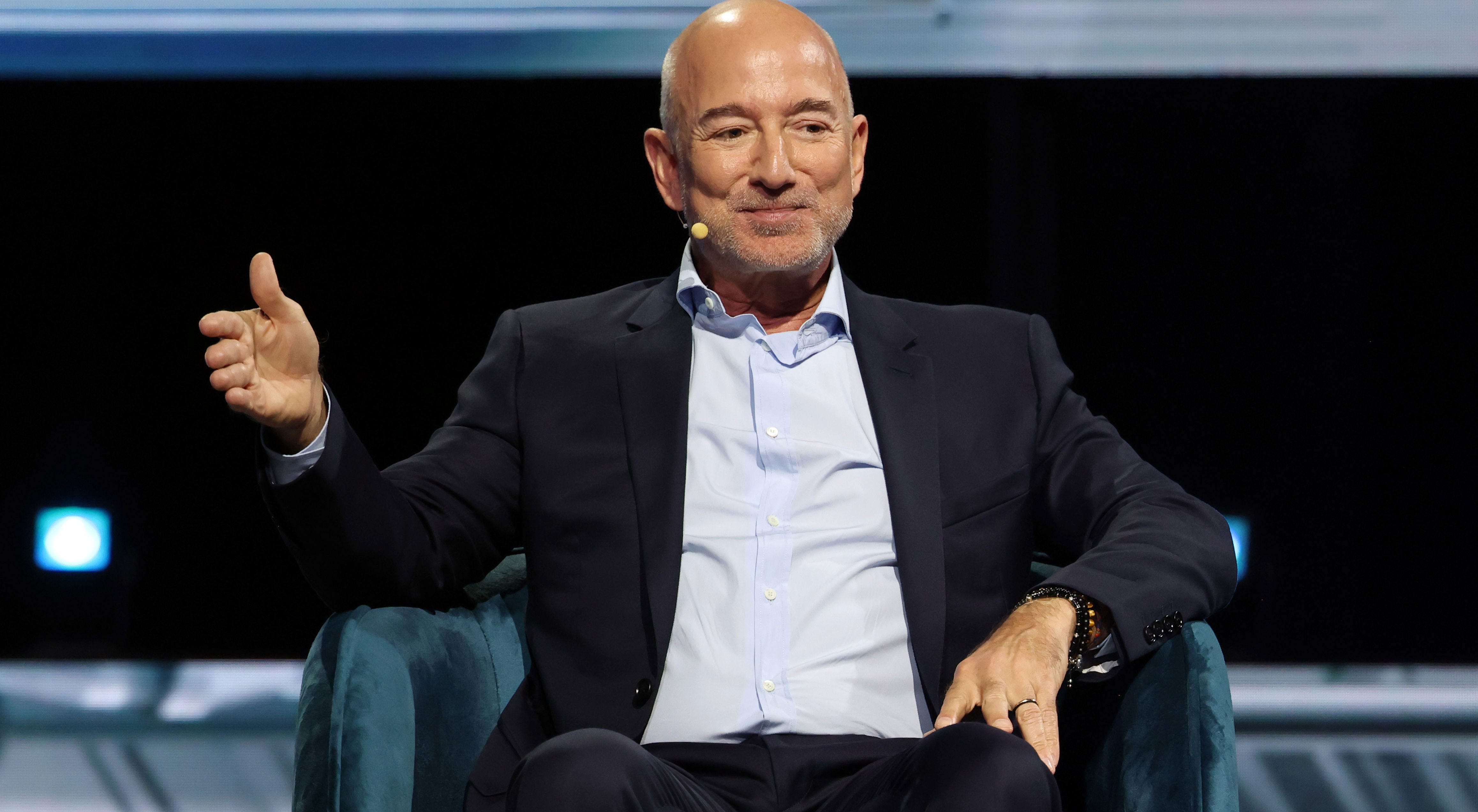
Jeff Bezos says politicians blaming greedy landlords for expensive housing probably don’t have a solution. He also has a message for people criticizing billionaires: “Success is not villainy.”
Billionaire Jeff Bezos: 'Success is not villainy' – GeekWire
Fine. I’d like to know who’s paying for that success.
If your rent goes up, you start doing the ugly little calculations. Cheaper groceries? Another shift? Less money for your kids? Somewhere, an investor might look at that same rent payment and see an improving return.
You see money disappearing from your paycheck. They see income from an asset. That’s the class relationship I want to talk about.
In his recent Fox interview, Bezos acknowledged that housing is expensive. He blamed policies that subsidize demand while restricting construction. Build more homes, his argument goes, instead of pointing fingers at landlords.
Building more homes can help bring rents down. When you have more places to choose from, landlords have to work harder to get your money.
But I don’t see how that gives corporate landlords a pass. You can have a housing shortage and companies making competition worse at the same time.
Take RealPage. The Justice Department alleged that its rental software used landlords’ private, competitively sensitive information to recommend rents, with features that limited price cuts and aligned competitors’ pricing. In November 2025, DOJ proposed a settlement requiring changes to those practices.
Think about what that allegation means. Landlords who should be competing for you share information through the same software provider. You might shop around expecting competing offers while their pricing tools help them move together.
More apartments would be useful. So would stopping conduct that undermines competition. We can discuss both without getting confused.
Now, about this word “success.”
I’m talking about corporate landlords and investors who treat rental housing as a portfolio. Their managers answer to people expecting returns. You need somewhere to sleep, raise your children, and get ready for work.
Those interests can overlap. A company can build more homes, maintain them properly, and earn money doing it. But when increasing returns means charging you more, who gets to set the terms?
You can move, apparently. Find another deposit. Pay the movers. Change your commute. Maybe change your children’s school. All very simple when somebody else has to do it.
An investor’s financial success tells me they made money. It doesn’t tell me how, or what it cost the people paying them.
That’s why Bezos’s own interests belong in this conversation. His personal investment company, Bezos Expeditions, participated in funding Arrived, a platform that lets investors buy shares in rental homes. Arrived named it among investors in its 2022 funding announcement.
So a man who has invested in turning rental housing into an investment product is explaining why blaming landlords misses the point. I think his position deserves scrutiny.
My reading is that he’s defending the owners’ place in the system. Government policy can be criticized. The market can be improved. But question the owners’ power, and suddenly the conversation turns to whether you’re unfairly attacking successful people.
Capitalism gave him enormous wealth and influence. He has every reason to defend the arrangements that made that possible. Why should you accept those arrangements as the limits of your political imagination?
He even compared finger-pointing politicians to people in his companies who blame others instead of solving problems. Those people, he said, wouldn’t last long.
Well, you don’t work for him.
You don’t need a complete national housing plan before you’re allowed to question rent hikes or corporate power. A company can make employees work toward the owner’s goals. Politics includes deciding whose goals deserve priority.
Your right to demand accountability doesn’t need to pass a billionaire’s performance review.
And if we’re discussing supply, let’s discuss all of it.
Private developers can build housing. Public institutions and cooperatives can too. Then we get to ask who owns the homes, how rents are set, and what the income is supposed to support.
Vienna has roughly 220,000 municipal apartments and 200,000 subsidized homes. Housing organized around affordability already exists at a substantial scale.
It still needs land, financing, construction, and maintenance. But those costs can be paid under rules that prioritize stable housing instead of ever-higher investor returns.
For me, that’s where socialist politics gets concrete. Who controls the land and the buildings? Can people have secure homes without satisfying somebody else’s investment targets?
If you can’t afford the rent investors want, you still need somewhere to live tonight.
Bezos can defend his class. We can insist on secure, affordable housing. His interests don’t automatically become ours. I judge housing policy by whether you can afford a home and have enough money left to live.
If your investment succeeds because somebody else’s family has to cut back on food, rest, and time together, spare me the lecture about respecting success.
Show me who paid for it.
Nice try, Jeff. Bezos strongly “resists” unions and Amazon routinely faces serious criticism over working conditions. Let’s talk about what to do with exploitative employers. Let’s talk about livable wages to be able to afford homes. And Bezos paying his fair share of taxes. Let’s hope these days of fiefdom will come to an end.